You approved the perfect bushing sample, but now mass production is failing. The real challenge isn't making the sample, but replicating it consistently. This is where the true test begins.
The short answer is no. A perfect sample does not guarantee successful mass production. The true test for an OEM supplier is the ability to consistently replicate that quality across thousands of units, managing process stability, material consistency, and tight tolerances without fail[^1].
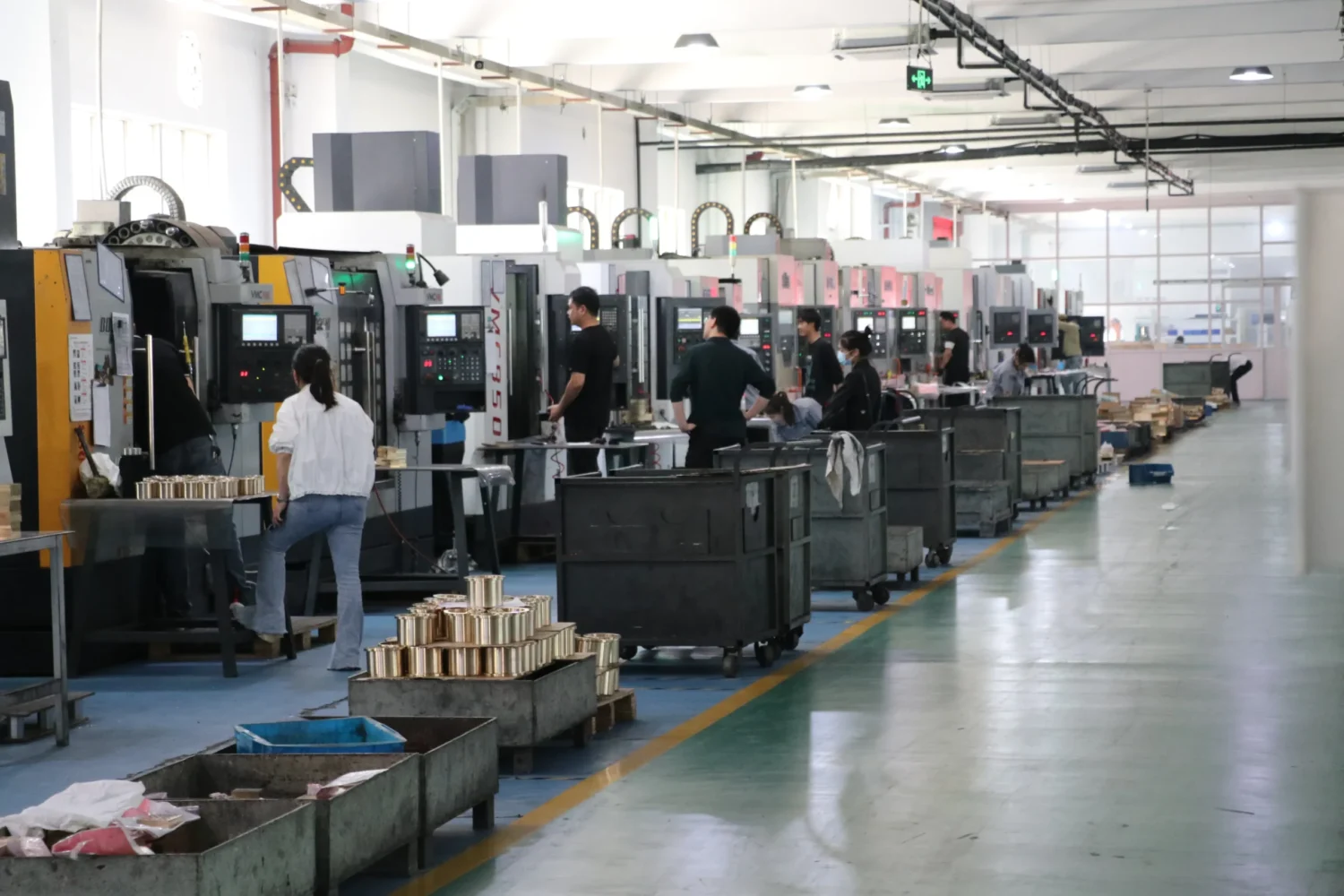
From a factory's point of view, the journey from a single approved sample to thousands of identical, high-quality parts is where the real work happens. Many OEM buyers believe that once the sample is approved, the project is halfway to success. However, I've seen countless projects pass the sample stage with flying colors only to run into serious problems during mass production. These issues can range from dimensional variations and assembly difficulties to reduced service life and even costly recalls. The reason is simple: making one perfect part is very different from making ten thousand perfect parts[^2]. Let's explore why the real challenge begins after the sample is approved.
What's the True Goal of the Bushing Sample Stage?
You received a sample that looks and feels perfect. But in testing, it wears out too quickly. The goal wasn't just to check size, but to validate the entire solution.
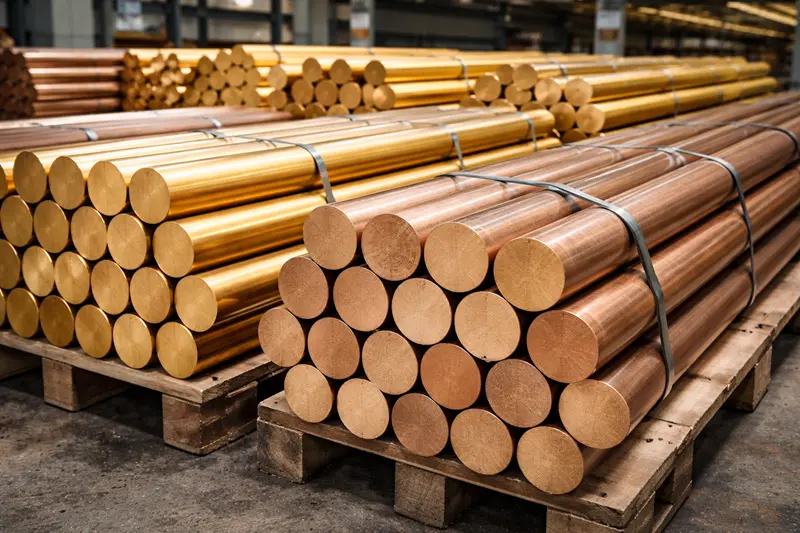
The main goal of the sample stage is to validate the design concept itself. This means confirming that the material selection, structure, and dimensions are the correct and most effective solution for the intended load, working environment, and required service life of your application.
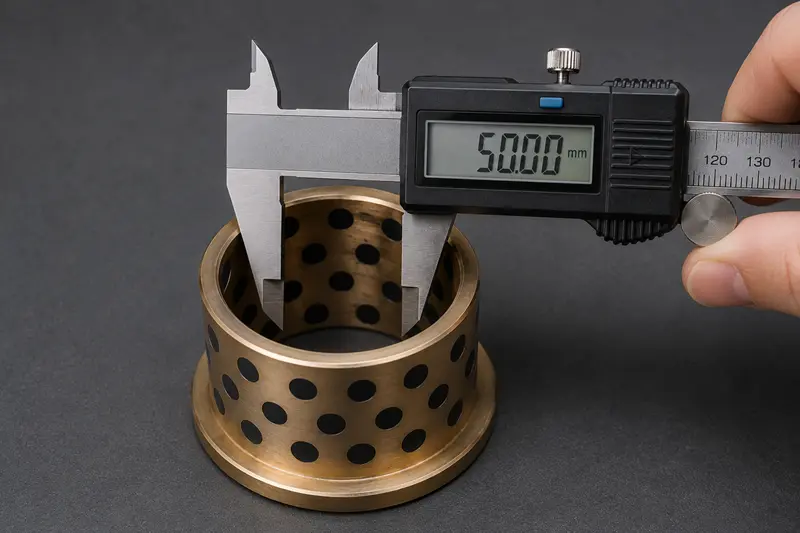
When we work on a new OEM project, the sample stage is all about validation, not just verification. It's easy to make a part that matches the dimensions on a drawing. The real question is whether that drawing represents the best solution for the job. We need to confirm several key things to prevent future problems. For example, a PTFE composite bushing sample might perform wonderfully in a lab test. But if the initial assessment underestimated the real-world shock loads or abrasive conditions, the mass-produced parts could fail prematurely. Therefore, the sample stage is our chance to ask: did we choose the right design?
Key Validation Points in Sampling
We focus on confirming the entire solution is sound. This means looking beyond just the numbers on a spec sheet. Here are the core areas we validate:
| Validation Point | What We're Checking |
|---|---|
| Material | Is it the right choice for the load, speed, and environment? |
| Dimensions | Do the specs allow for proper fit and function? |
| Assembly Fit | Can it be installed easily and correctly on the assembly line? |
| Load Capacity | Will it withstand the maximum expected forces? |
| Service Life | Does it meet the durability requirements for the application? |
Why Do Designs Almost Always Change After Sampling?
The sample passed all your tests. But now you need a small change. That tiny adjustment can completely change the manufacturing process, cost, and lead time, creating unexpected delays.
Designs often change because real-world testing reveals opportunities for optimization that weren't obvious on paper. Buyers request adjustments to tolerances, materials, or features like oil grooves to improve performance, assembly, or cost-effectiveness before committing to mass production.
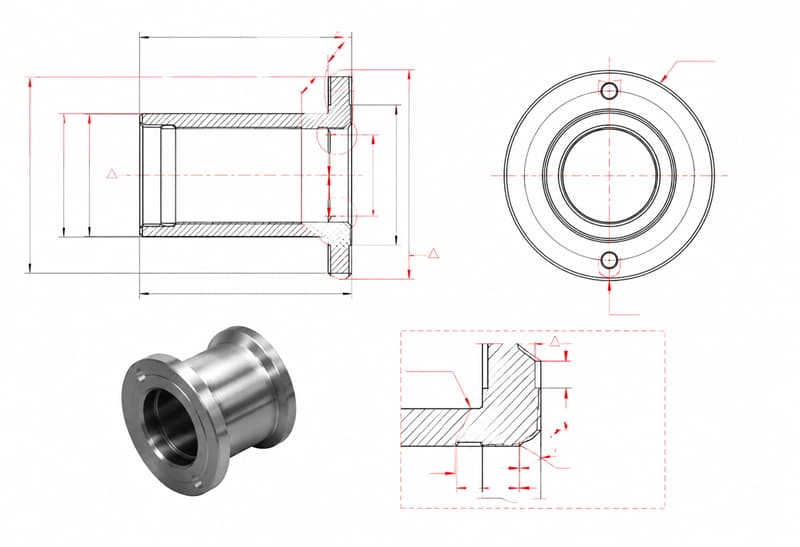
In my experience with OEM projects, it's very common for customers to request changes after they've tested the initial samples. This is a normal and healthy part of the development process. Testing a physical part in its actual working environment often brings new insights[^3]. A customer might find that a slightly tighter tolerance improves performance, or that adding an oil groove extends the maintenance interval. These changes might seem small, but they can have a big impact on the manufacturing process. A change in material could require different tooling, and adding a flange could change how the part is formed[^4]. That is why a mature factory will insist on a final confirmation process before starting mass production.
Locking in the Final Design
To avoid confusion and errors, we always lock in the final design. This involves a few key steps:
- Final Drawing Confirmation: The customer signs off on the final, updated technical drawing. This becomes the single source of truth.
- Process Review: We review our manufacturing steps to ensure they align with the updated design.
- PPAP-style Validation[^5]: Depending on the industry, we may perform a Production Part Approval Process (PPAP) to formally document that our process can reliably produce the part to spec.
How Do Mass Production Challenges Differ from Sampling?
Your single sample worked perfectly. But in the first big batch, many parts don't fit right. The manufacturing focus has to shift from one perfect part to every single part being perfect.
In sampling, the focus is on function: "Does this one part work?" In mass production, the focus shifts to consistency: "Does every single one of these thousands of parts work?" This demands strict control over every aspect of the production process.
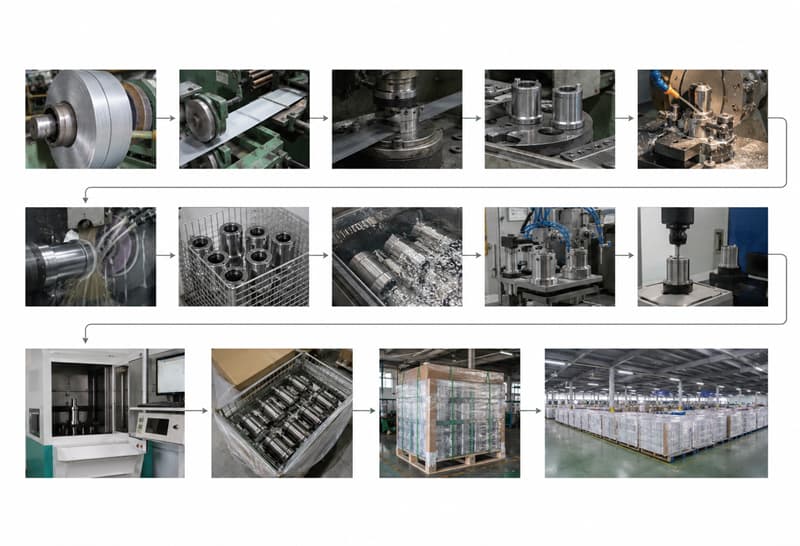
When we make a sample, our team can give it special attention. We can use our most skilled machinists and take extra time to get every detail perfect. The goal is to prove the concept works. But in mass production, the game changes completely. The new goal is repeatability and consistency at scale. We are no longer focused on if we can make one good part. We are focused on ensuring that the 1st part and the 10,000th part are functionally identical. For an OEM customer, even one bad part in a batch can be a disaster. It can shut down an assembly line, cause delays, and increase labor costs. This is why our attention shifts from function to consistency.
The Focus Shifts from Function to Consistency
To ensure every part is the same, a factory must control:
- Material Consistency: Every coil of steel or batch of bronze powder must have the exact same properties.
- Process Stability: Machines must be calibrated, and processes must be monitored to prevent any drift over time.
- Dimensional Repeatability: Every part must be within the specified tolerance, every single time.
- Inspection Standards: Clear, objective inspection methods must be used to catch any deviations.
Why is Tolerance Control So Critical in Mass Production?
The material is correct and the design is approved. But your assembly line is struggling with inconsistent fits. The problem is often hidden in tiny dimensional variations between parts.
Many bushing problems come from inconsistent dimensions, not bad material. Small variations in inner diameter, outer diameter, or roundness might not show in one sample but can cause major assembly issues and performance failures when multiplied across a batch of thousands.
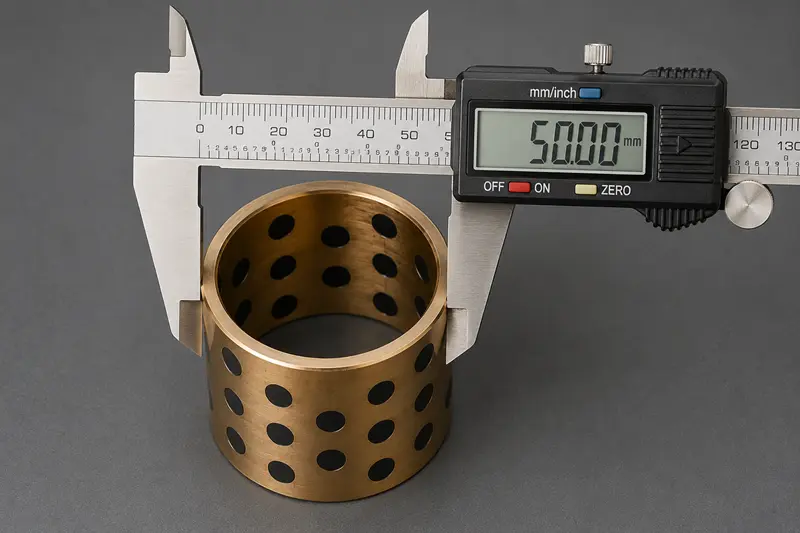
If you ask me what separates a good supplier from a great one, a big part of the answer is tolerance control. A single sample can easily be made to be perfect. But holding those same tight tolerances over a run of thousands or tens of thousands of parts is a massive challenge. This is where many problems in mass production come from. For example, if the outer diameter (OD) of a bushing varies by a tiny amount, some parts might be too loose in the housing, while others might be too tight to press in. This can bring an automated assembly line to a grinding halt. These small issues are often invisible in a single sample but become glaring problems at scale.
Common Tolerance Issues in Mass Production
- ID/OD Variation: Inconsistent inner or outer diameters affect press-fit and running clearance.
- Roundness Issues: Parts that are not perfectly circular can cause uneven wear and vibration.
- Concentricity Issues: If the inner and outer diameters are not perfectly centered, it leads to imbalanced loads and premature failure.
To prevent this, we use in-process inspection, Statistical Process Control (SPC) monitoring[^6], and final quality checks to guarantee every part meets the standard.
Is Product Quality the Only Thing That Matters for OEM Projects?
You found a supplier with amazing quality. But their delivery dates are always shifting. This unpredictability can shut down your entire production schedule, costing you more than a few bad parts ever would.
No, for OEM customers, supply stability is just as critical as product quality. An unstable lead time is as damaging as a quality defect[^7] because it disrupts production schedules, creates inventory chaos, and can halt your entire operation.
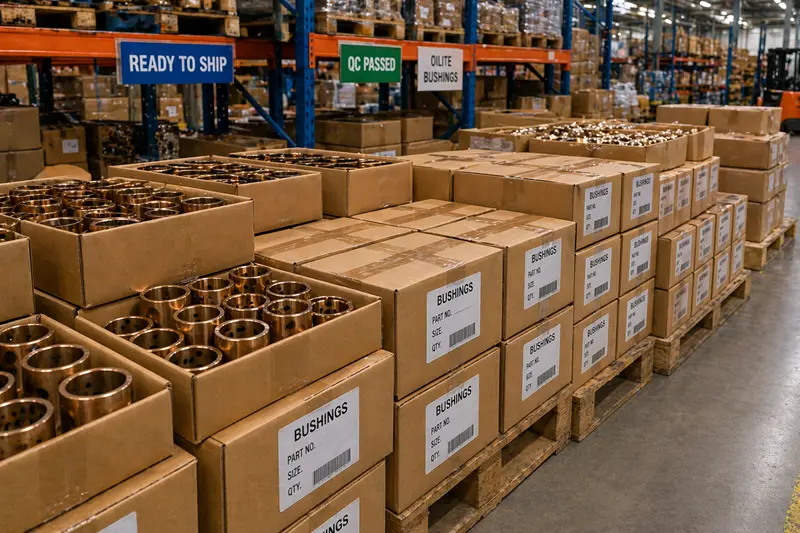
A perfect bushing that arrives a month late is not a perfect bushing. For our long-term OEM partners, predictable and reliable delivery is not a "nice to have"—it's a core requirement. These customers run complex production lines where every component needs to arrive at the right time to keep things moving. A delay in a simple component like a bushing can cause a domino effect, leading to idle machines, wasted labor, and missed deadlines for their own customers. That is why we place as much importance on our supply chain management and production planning as we do on our quality control. A supplier who doesn't understand this isn't a true partner.
Beyond Quality: What Stable Supply Means
For our clients, a stable supply chain involves several factors:
- Lead Time Stability: Consistent and predictable delivery schedules.
- Capacity Planning: Ensuring we have the production capacity to meet their demand, even during peak times.
- Raw Material Availability: Proactively managing our stock of raw materials to avoid shortages.
- Inventory Strategy: Working with clients on strategies like holding safety stock to buffer against unexpected demand[^8].
What Do the Best OEM Bushing Suppliers Focus On?
Your supplier delivered the first order perfectly. But when you need to scale up or optimize costs, they are lost. A short-sighted partner can limit your long-term growth and success.
The best suppliers think beyond the first order. They don't just focus on making a good sample; they proactively plan for your long-term needs by considering future cost optimizations, process improvements, and production scalability from day one.
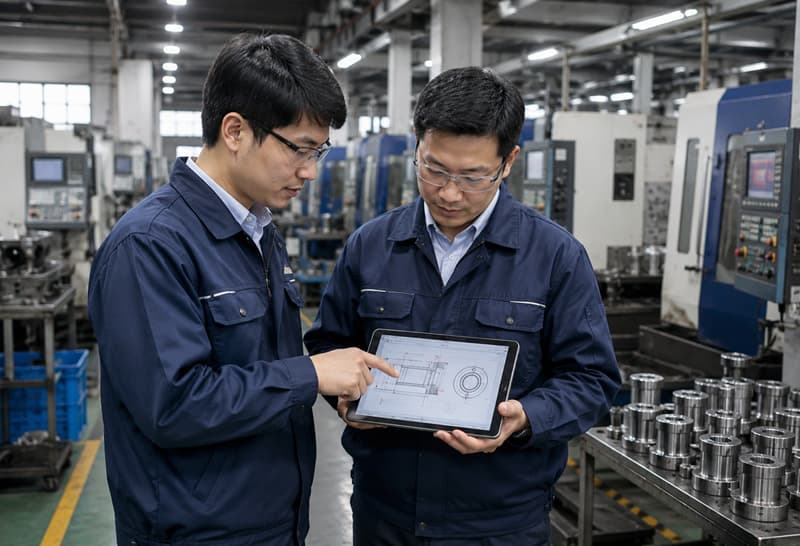
There's a big difference in mindset between a supplier who just wants to complete an order and a true OEM manufacturing partner. The first type of supplier focuses on getting the sample made and shipping the first batch. Their job is done when the invoice is paid. A true partner, however, is already thinking about the second, third, and twentieth order. They are thinking about your business three to five years down the road. They ask questions about your growth plans and look for ways to support that growth. This proactive mindset is what separates a simple transaction from a strategic partnership. We always aim to be that long-term partner for our clients.
A Partner's Long-Term Focus
A supplier who is invested in your success will think about:
- Cost Optimization: How can we refine the process or material to reduce the cost per unit over time[^9]?
- Process Improvement: Continuously looking for ways to make the product more efficiently and with higher quality.
- Tooling Life: Planning for tool maintenance and replacement[^10] to avoid unexpected downtime in the future.
- Production Scalability: Ensuring our factory can handle your increased demand as your business grows.
This long-term thinking helps our customers lower their total cost of ownership and build a more resilient supply chain[^11].
Conclusion
The biggest risk in OEM projects is the leap from a perfect sample to mass production. True OEM capability is not making one good part, but reliably replicating it thousands of times.
[^1]: "Material efficiency: providing material services with less ... - PMC - NIH", https://pmc.ncbi.nlm.nih.gov/articles/PMC3575569/. This source explains the challenges of maintaining process stability, material consistency, and tight tolerances in mass production environments. Evidence role: mechanism; source type: education. Supports: Mass production requires strict control over process stability, material consistency, and tolerances to ensure consistent quality.. [^2]: "Mass production - Wikipedia", https://en.wikipedia.org/wiki/Mass_production. This source discusses the differences between prototype manufacturing and mass production, emphasizing the challenges of scaling up production. Evidence role: expert_consensus; source type: education. Supports: Producing a single prototype is fundamentally different from achieving consistent quality in mass production.. [^3]: "Case Studies in Physical Therapy: Transitioning A “Hands-On ... - PMC", https://pmc.ncbi.nlm.nih.gov/articles/PMC6095681/. This source highlights the importance of real-world testing in uncovering design flaws or optimization opportunities. Evidence role: mechanism; source type: research. Supports: Real-world testing of physical parts often reveals insights that are not apparent during initial design or lab testing.. [^4]: "Adaptive design change considering making small impact on the ...", https://www.sciencedirect.com/science/article/abs/pii/S1474034623004317. This source explains how design changes, such as adding a flange, can impact manufacturing processes and tooling requirements. Evidence role: mechanism; source type: education. Supports: Design changes like adding a flange can significantly alter manufacturing processes and tooling requirements.. [^5]: "Production part approval process - Wikipedia", https://en.wikipedia.org/wiki/Production_part_approval_process. This source provides an overview of the Production Part Approval Process (PPAP) and its role in ensuring manufacturing consistency. Evidence role: definition; source type: education. Supports: PPAP-style validation is a formal process used to document and ensure manufacturing consistency for OEM parts.. [^6]: "Application of statistical process control in healthcare improvement", https://pmc.ncbi.nlm.nih.gov/articles/PMC2464970/. This source explains how Statistical Process Control (SPC) is used to monitor and maintain manufacturing quality. Evidence role: mechanism; source type: education. Supports: Statistical Process Control (SPC) monitoring is essential for maintaining quality and consistency in mass production.. [^7]: "Why Focusing on Lead Time—Not Just Efficiency—Drives Success", https://interpro.wisc.edu/lead-time-drives-manufacturing-success/. This source explains how unpredictable lead times can disrupt production schedules and increase costs for OEM customers. Evidence role: mechanism; source type: education. Supports: Unpredictable lead times can disrupt production schedules and increase costs for OEM customers.. [^8]: "Safety stock - Wikipedia", https://en.wikipedia.org/wiki/Safety_stock. This source discusses inventory strategies like safety stock to mitigate risks of demand fluctuations. Evidence role: mechanism; source type: education. Supports: Holding safety stock is a strategy to buffer against unexpected demand fluctuations in manufacturing.. [^9]: "The Impact of Unit Cost Reductions on Gross Profit: Increasing or ...", https://www.gsb.stanford.edu/faculty-research/working-papers/impact-unit-cost-reductions-gross-profit-increasing-or-decreasing. This source discusses strategies for reducing cost per unit in manufacturing through process optimization and material selection. Evidence role: mechanism; source type: education. Supports: Reducing cost per unit over time is achievable through process optimization and material selection strategies.. [^10]: "A Maintenance Revolution: Reducing Downtime With AI Tools", https://sloanreview.mit.edu/article/a-maintenance-revolution-reducing-downtime-with-ai-tools/. This source explains the importance of planning for tool maintenance and replacement to avoid production downtime. Evidence role: mechanism; source type: education. Supports: Planning for tool maintenance and replacement is crucial to avoid unexpected downtime in manufacturing.. [^11]: "Building Resilient Supply Chains: Strategies and Successes for ...", https://www.nist.gov/blogs/manufacturing-innovation-blog/building-resilient-supply-chains-strategies-and-successes. This source explains how strategic planning and inventory management contribute to building a resilient supply chain. Evidence role: mechanism; source type: education. Supports: Strategic planning and inventory management are key to building a resilient supply chain in manufacturing..