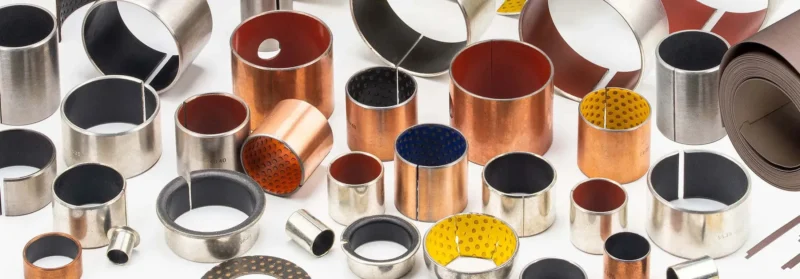
Struggling with friction in tight, no-lube spaces? These spots cause early wear and noise. PTFE lined bushings offer a simple, self-lubricating solution for these exact problems.[^1]
You should use PTFE lined bushings in applications that require low friction and zero maintenance, especially in dry or minimally lubricated conditions. They are perfect for medium loads and speeds in compact designs where adding grease or oil is difficult or simply not an option.[^2]
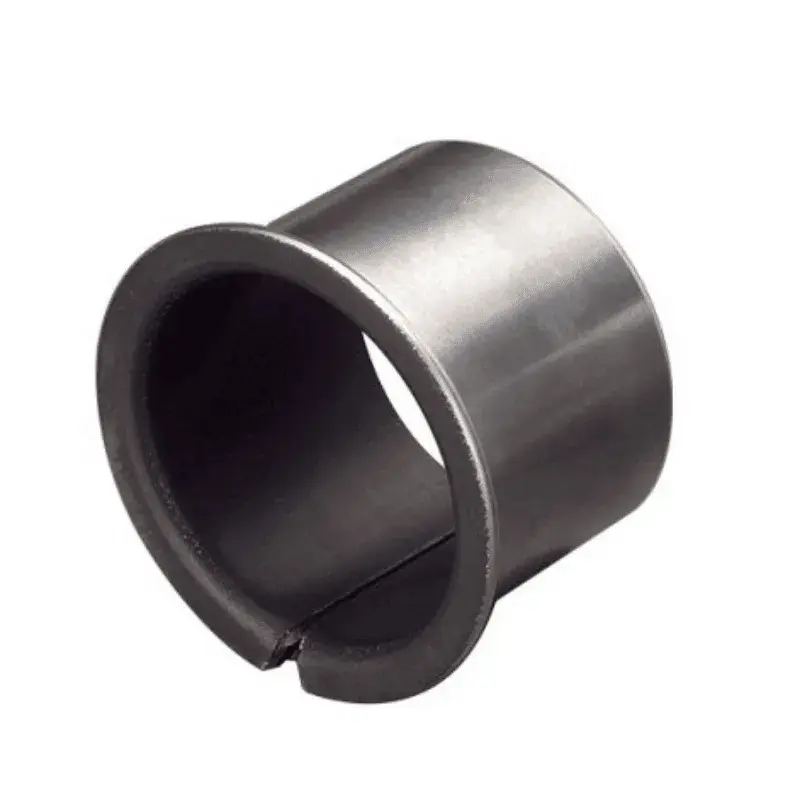
Many of my B2B customers first see PTFE lined bushings as a simple "maintenance-free" part. From our factory's perspective, their true value is more specific. They provide a stable, low-friction solution in places where space is limited, lubrication is difficult, and low noise is a must. It's not just a plastic bushing; it’s a smart composite material. Understanding where they fit best is the first step to using them successfully. Let's dig into the specific jobs where these bushings truly excel.
What Are the Best Applications for PTFE Lined Bushings?
Need a quiet, smooth-moving part in a device you can't easily service? Traditional bearings need oiling.[^3] PTFE lined bushings work perfectly in these maintenance-free, low-noise situations.
The best applications are oil-free environments with medium loads and speeds. Think of automotive hinges, office equipment, hydraulic cylinders, and packaging machinery.[^4] They shine where space is tight, noise is a big concern, and regular maintenance is impossible.
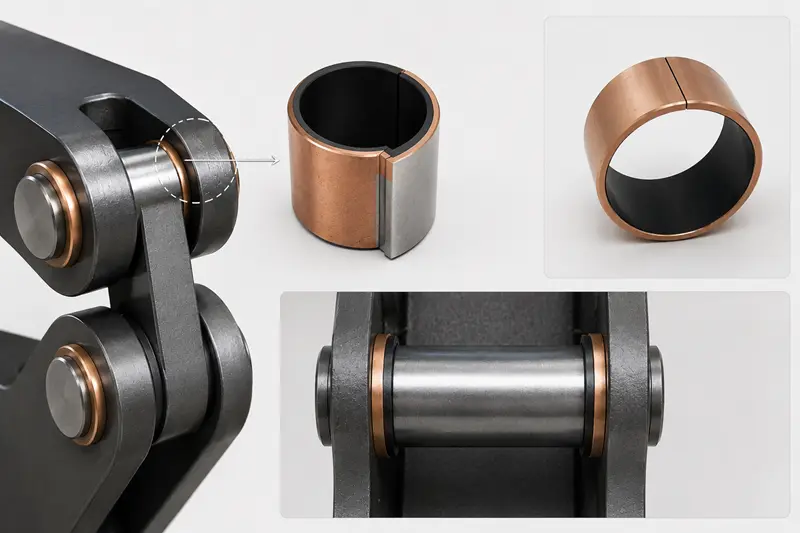
When we talk about PTFE lined bushings, it's important to remember they are composite parts. They have a strong metal backing, usually steel, bronze, or stainless steel. This backing provides the structural strength to handle loads. A special self-lubricating layer, made of Polytetrafluoroethylene (PTFE), is bonded to this metal shell. This layer is what touches the moving shaft, providing an extremely low-friction surface. So, you get the strength of metal with the slipperiness of PTFE. This unique structure makes them ideal for certain jobs. For OEM projects, this often means you can design a product that you can "fit and forget," reducing warranty claims and maintenance costs for the end-user.
Key Application Characteristics
We've seen these bushings succeed in a huge range of products. They work best when the operating conditions match what the material was designed for.
| Ideal Condition | Why It Works | Common Examples |
|---|---|---|
| No Oil or Grease | The PTFE layer is a solid lubricant, so no external lubrication is needed.[^5] | Office chairs, printers, textile machinery. |
| Low to Medium Speed | Prevents heat buildup that could damage the thin PTFE layer. | Automotive seat adjusters, pivot points. |
| Medium Load | The metal backing provides enough strength for many common applications. | Hydraulic pumps, shock absorbers, valves. |
| Low Noise Required | The smooth plastic-on-metal contact avoids the noise of metal-on-metal. | Medical equipment, home appliances. |
| Limited Space | These bushings are thin-walled, saving critical space in compact designs. | Small motors, robotic arms, automation equipment. |
This combination of features makes them a go-to choice for engineers who need reliable, quiet performance without the hassle of a lubrication system.
When Should You Avoid Using PTFE Lined Bushings?
Worried a bushing might fail too early in a tough environment? Choosing the wrong material leads to costly downtime. Knowing the limits of PTFE bushings prevents these expensive mistakes.
You should avoid using PTFE lined bushings with high impact loads, heavy contamination like dust or sand, or continuous high temperatures. Also, a rough or soft shaft surface will quickly wear away the essential PTFE layer, causing the bushing to fail.
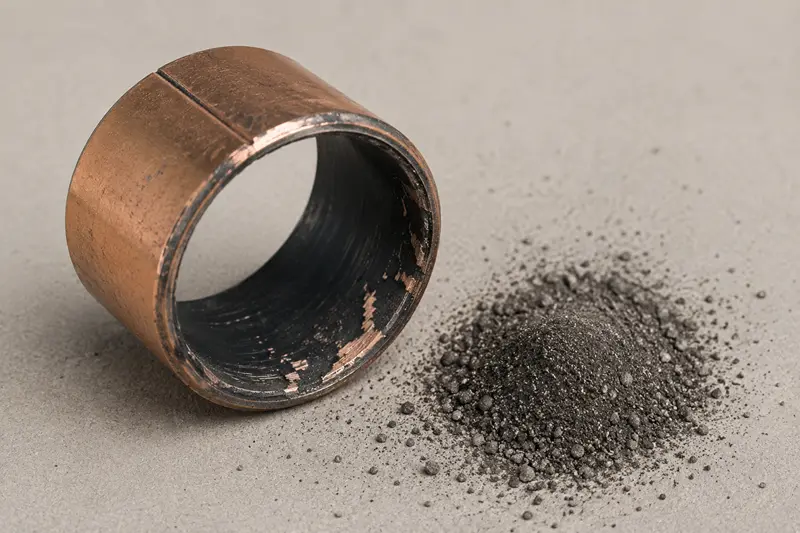
While PTFE lined bushings are incredibly versatile, they are not invincible. The key to their performance is the very thin PTFE layer. If that layer gets damaged or wears away, the bushing's lifespan drops dramatically. The metal backing is not designed to be a bearing surface, and direct contact will cause high friction and rapid failure. I remember a client who tried to use our standard PTFE bushings in a piece of mining equipment. The environment was full of abrasive dust. The bushings failed within a month because the dust acted like sandpaper, grinding away the self-lubricating layer. We had to switch them to a sealed bronze bushing with grease grooves, which was much better suited for that dirty, high-load job. Understanding these limits is just as important as knowing their strengths.
Conditions That Cause Premature Failure
It is critical to check if your application involves any of these deal-breakers. Mismatching the bushing to the environment is the most common reason we see for failure.
| Unsuitable Condition | Reason for Failure | Better Alternatives |
|---|---|---|
| High Impact Loads | The thin PTFE layer can be deformed or squeezed out by sudden, strong forces. | Solid bronze bushings, hardened steel bushings. |
| Abrasive Contamination | Dust, sand, or dirt will quickly wear away the soft PTFE surface. | Sealed bearings, greased bronze bushings. |
| High Temperatures | Continuous heat above 280°C (536°F) can degrade the PTFE material itself.[^6] | High-temperature metallic or graphite bushings. |
| Poor Shaft Surface | A rough shaft (e.g., Ra > 0.6 μm) acts like a file, scraping off the PTFE layer.[^7] | Requires improving shaft finish before installation. |
| Chemical Corrosion | While PTFE is very resistant, the metal backing might not be. | Stainless steel backed PTFE, or full plastic bushings. |
Before you specify a PTFE lined bushing, always review the entire system. The bushing is just one part of it. The shaft it runs on and the world it lives in are equally important for a successful design.
How Do You Choose the Right PTFE Lined Bushing for Your OEM Project?
Overwhelmed by technical specs when choosing a bushing? Picking the wrong one can derail your project. A simple checklist can help you make the right choice every time.
To choose the right one, first confirm your load and speed (PV value) are within the bushing's limits. Next, check your shaft's hardness and surface finish. Finally, consider environmental factors like contamination and temperature to ensure a long service life.
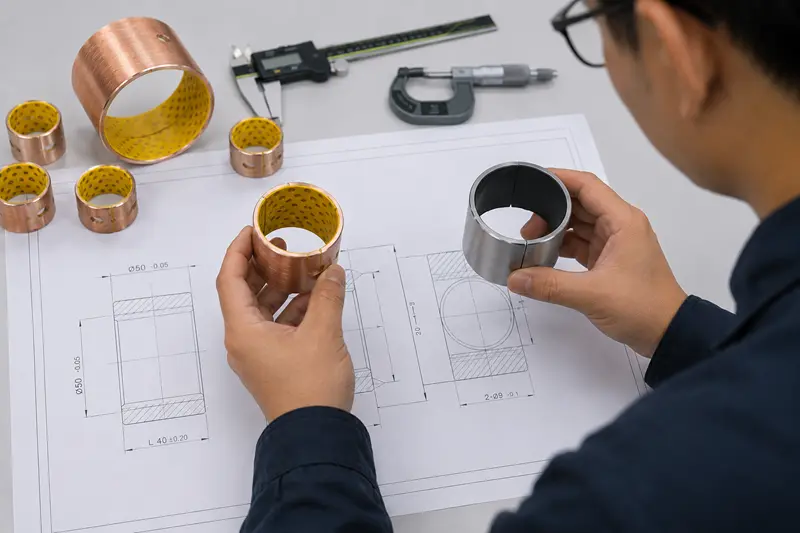
For my OEM customers, choosing the right component is about long-term reliability and cost-effectiveness. A bushing that costs a few cents less but fails in the field is a massive expense. That's why we always walk our partners through a simple but effective selection process. It's not about becoming a material science expert. It's about asking the right questions about your specific application. The goal is to match the bushing's capabilities with the real-world demands it will face. This ensures the final product is dependable, quiet, and performs as expected for its entire intended lifecycle. As a manufacturer, our goal is to supply a part that you never have to think about again once it's installed. This checklist helps us get there together.
A Practical Checklist for OEM Buyers
Use these questions to guide your selection process. If you can answer them, you're well on your way to choosing the perfect bushing.
-
What is the Load and Speed? (PV Value)
- P (Pressure): The load on the bushing in N/mm² or psi.
- V (Velocity): The sliding speed of the shaft in m/s or fpm.
- The PV value (P x V) is the most important factor. Every PTFE lined bushing has a maximum PV rating.[^8] Exceeding it will cause the bushing to overheat and wear out very quickly. Always make sure your application's PV value is well within the manufacturer's specified limit.
-
What Are the Shaft's Properties?
- Surface Finish: This is critical. For a PTFE lined bushing to work, the shaft must be smooth. We recommend a surface roughness of Ra < 0.4 μm. A rougher shaft will act like a file and destroy the PTFE layer.
- Hardness: The shaft should be harder than any potential abrasive particles.[^9] A hardness of over 200 HB is usually sufficient for clean environments.[^10]
-
What is the Operating Environment?
- Temperature: Will the bushing operate within its rated temperature range? (Typically -200°C to +280°C).[^11]
- Contamination: Is there dust, dirt, water, or chemical exposure? If so, you might need a stainless steel backing or additional seals.
This process ensures that the bushing you select is not just a part that fits, but the right part for the job.
Conclusion
PTFE lined bushings are an excellent choice for low-friction, maintenance-free applications.[^12] The key is to match the bushing's capabilities to your specific operational needs to ensure reliable, long-lasting performance.
[^1]: "[PDF] Performance of PTFE-Lined Composite Journal Bearings", https://ntrs.nasa.gov/api/citations/19820009389/downloads/19820009389.pdf. PTFE lined bushings are designed to reduce friction and eliminate the need for external lubrication in tight spaces, as supported by their widespread use in engineering applications. Evidence role: mechanism; source type: encyclopedia. Supports: PTFE lined bushings provide a self-lubricating solution for friction and noise issues in tight spaces.. [^2]: "[PDF] Performance of PTFE-Lined Composite Journal Bearings", https://ntrs.nasa.gov/api/citations/19820009389/downloads/19820009389.pdf. PTFE lined bushings are commonly recommended for medium-load applications due to their composite structure and self-lubricating properties. Evidence role: expert_consensus; source type: research. Supports: PTFE lined bushings are ideal for medium loads and speeds in compact designs without lubrication.. Scope note: The recommendation may vary depending on specific load and speed conditions. [^3]: "Lubrication is necessary for ball bearings - Facebook", https://www.facebook.com/groups/homeracingworld/posts/25786402474334466/. Traditional bearings typically require external lubrication to reduce friction and wear, as documented in mechanical engineering standards. Evidence role: definition; source type: education. Supports: Traditional bearings require oiling for proper operation.. [^4]: "[PDF] Performance of PTFE-Lined Composite Journal Bearings", https://ntrs.nasa.gov/api/citations/19820009389/downloads/19820009389.pdf. PTFE lined bushings are widely used in automotive hinges, office equipment, and hydraulic systems due to their low-friction and maintenance-free properties. Evidence role: case_reference; source type: institution. Supports: PTFE lined bushings are suitable for applications like automotive hinges and hydraulic cylinders.. Scope note: Specific examples may vary depending on the design and operational requirements. [^5]: "PDA/PTFE Solid Lubricant Coating for 60NiTi Applications", https://scholarworks.uark.edu/etd/4969/. PTFE is recognized as a solid lubricant that eliminates the need for external lubrication in many engineering applications. Evidence role: mechanism; source type: research. Supports: PTFE acts as a solid lubricant, removing the need for external lubrication.. Scope note: The effectiveness of PTFE as a lubricant depends on the specific application conditions. [^6]: "Polytetrafluoroethylene - Wikipedia", https://en.wikipedia.org/wiki/Polytetrafluoroethylene. PTFE material is known to degrade at temperatures exceeding 280°C, as documented in material science studies. Evidence role: statistic; source type: paper. Supports: PTFE degrades at temperatures above 280°C.. Scope note: The degradation temperature may vary slightly depending on the specific PTFE formulation. [^7]: "Study of Tribological Properties and Evolution of Morphological ...", https://pmc.ncbi.nlm.nih.gov/articles/PMC10490335/. Surface roughness exceeding Ra > 0.6 μm can damage the PTFE layer, as supported by tribological studies. Evidence role: mechanism; source type: research. Supports: A rough shaft surface can scrape off the PTFE layer, leading to bushing failure.. Scope note: The exact roughness threshold may depend on the specific PTFE bushing design. [^8]: "Photovoltaic Reliability and Standards Development", https://www.energy.gov/cmei/systems/photovoltaic-reliability-and-standards-development. The maximum PV rating of PTFE bushings is a critical parameter for their performance, as outlined in tribological engineering standards. Evidence role: definition; source type: education. Supports: PTFE bushings have a maximum PV rating that determines their performance limits.. Scope note: The specific PV rating depends on the bushing design and material composition. [^9]: "Comparative Evaluation of the Tribological Properties of Polymer ...", https://pmc.ncbi.nlm.nih.gov/articles/PMC9865190/. Harder shaft materials are recommended to resist wear from abrasive particles, as documented in tribology and material science research. Evidence role: expert_consensus; source type: research. Supports: The shaft material should be harder than abrasive particles to prevent wear.. Scope note: The recommendation may vary based on the type of abrasive particles and operating conditions. [^10]: "Shaft Specifications and Requirements | PDF | Building Materials", https://www.scribd.com/document/613307408/25. A shaft hardness of over 200 HB is generally recommended for clean environments to ensure durability, as supported by material science guidelines. Evidence role: expert_consensus; source type: education. Supports: A shaft hardness of over 200 HB is sufficient for clean environments.. Scope note: The hardness requirement may vary depending on the specific application and material used. [^11]: "[PDF] Performance of PTFE-Lined Composite Journal Bearings", https://ntrs.nasa.gov/api/citations/19820009389/downloads/19820009389.pdf. PTFE bushings are typically rated for temperatures between -200°C and +280°C, as specified in material engineering guidelines. Evidence role: statistic; source type: education. Supports: PTFE bushings are rated for a temperature range of -200°C to +280°C.. Scope note: The temperature range may vary depending on the specific PTFE formulation and design. [^12]: "[PDF] Performance of PTFE-Lined Composite Journal Bearings", https://ntrs.nasa.gov/api/citations/19820009389/downloads/19820009389.pdf. PTFE lined bushings are widely recognized for their low-friction and maintenance-free properties in engineering applications. Evidence role: general_support; source type: encyclopedia. Supports: PTFE lined bushings are suitable for low-friction, maintenance-free applications.. Scope note: The suitability may depend on specific operational conditions and design requirements.