Are you thinking bimetal bushings are just a cheap substitute? This common view misses their real value, leading many to pick the wrong part for demanding jobs.
Bimetal bushings are used in medium-to-high load applications where a balance between strength, wear resistance, and cost is crucial.[^1] They are common in construction machinery, agricultural equipment, and automotive systems, providing a durable and cost-effective solution for pivot points and linkages.
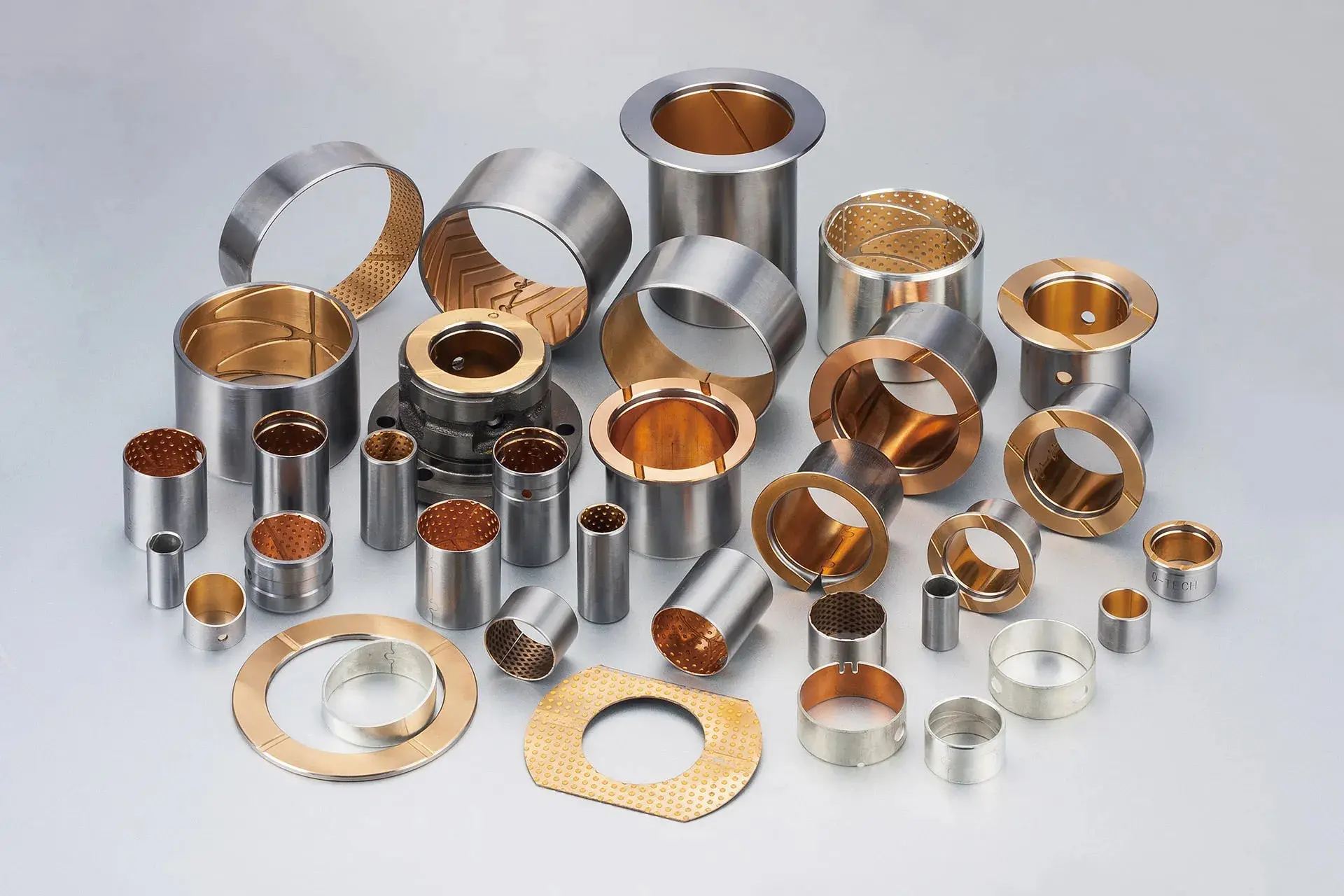
From our factory floor, I can tell you that bimetal bushings are one of the most specified components for a reason. They are not always the strongest or the most advanced, but they are often the smartest choice. They are a classic engineering solution that perfectly balances performance with the practical budget needs of large-scale manufacturing. Let's explore the specific industries where these components have become absolutely essential and why they are chosen over other options.
Why Are Bimetal Bushings Essential for Construction Machinery?
Your heavy equipment faces massive stress and impact daily. Using a weak bushing in a critical pivot point can lead to sudden failure, expensive repairs, and project-stopping downtime.
They are essential because they handle the high radial forces and shock loads found in excavator booms, loader arms, and dozer blades.[^2] Their steel backing provides the strength, while the bronze layer manages wear, offering a reliable solution that helps control manufacturing costs.[^3]
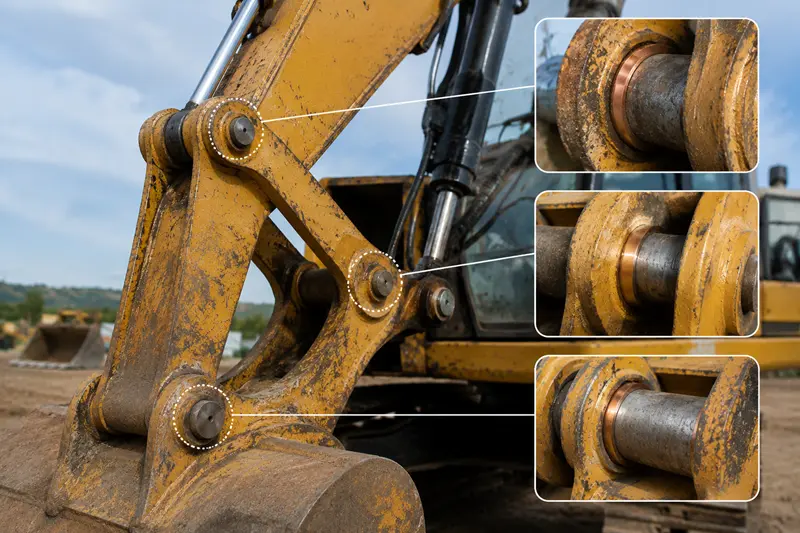
When we talk about construction equipment, we're talking about extreme forces. The pivot points on an excavator arm or a wheel loader bucket don't just carry weight; they endure constant shock, vibration, and oscillating movements. A bimetal bushing is perfectly designed for this. The outer part is a strong low-carbon steel backing. This steel shell gives the bushing its rigidity and allows it to be press-fit securely into the housing, where it can withstand immense impact without deforming.
Inside this steel shell is the working surface: a layer of sintered bronze alloy. This isn't just a simple coating. We fuse bronze powder onto the steel, creating a porous layer that can be machined with patterns like oil pockets or grooves. These features act as reservoirs for grease, ensuring that the joint stays lubricated even under heavy load. This combination provides a tough, wear-resistant surface that reduces friction and extends the life of the machine's critical pins and joints.
| Feature | Bimetal Bushing | Hardened Steel Bushing |
|---|---|---|
| Load Capacity | High | Very High |
| Shock Resistance | Excellent | Good |
| Cost | Low | High |
| Mating Shaft | Standard Steel Pin | Hardened & Ground Pin |
How Do Bimetal Bushings Survive in Agricultural Machinery?
Farm equipment works in the worst conditions imaginable: mud, dust, and constant vibration.[^4] A standard bearing can get clogged with dirt and fail quickly, bringing critical farm work to a halt.
They survive because their durable construction resists contamination.[^5] The steel back handles the rough vibrations, and the bronze layer, often paired with grease grooves, effectively holds lubricant while pushing dirt and debris away from the contact surface, ensuring reliability.
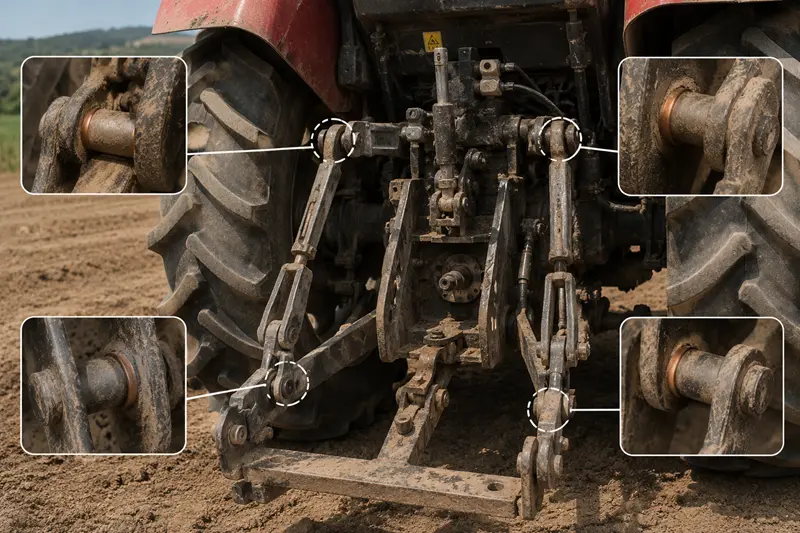
I've worked with many agricultural OEMs, and their number one enemy is contamination. Fine dust from a dry field or mud from a wet one can act like sandpaper inside a moving joint. Bimetal bushings are a great defense against this. The key is how they manage lubrication. The sintered bronze layer naturally has some porosity, but we often machine specific grease grooves or diamond-shaped pockets onto the surface for our agricultural clients.
When grease is pumped into the joint, these pockets hold a significant amount of it. This creates a "grease barrier" that not only lubricates the pivot pin but also actively pushes contaminants out. As the joint moves, old grease carrying dirt is purged, and fresh grease is drawn from the reservoir pockets. This self-cleaning action is vital for equipment like tractors, combines, and planters that have dozens of pivot points exposed to the elements. Their simple, tough design means they can take the punishment of a bumpy field and keep working with just basic maintenance. This reliability is exactly what farmers and equipment manufacturers need.
What Makes Bimetal Bushings a Top Choice for the Automotive Industry?
The automotive industry needs millions of identical, reliable parts at the lowest possible cost. Even a small, inexpensive component failing can lead to a massive and costly vehicle recall.
Their blend of consistent performance, high load capacity, and low unit cost for mass production makes them a top choice.[^6] They are perfect for suspension systems, steering knuckles, and pedal assemblies where long-term reliability is absolutely critical for vehicle safety.
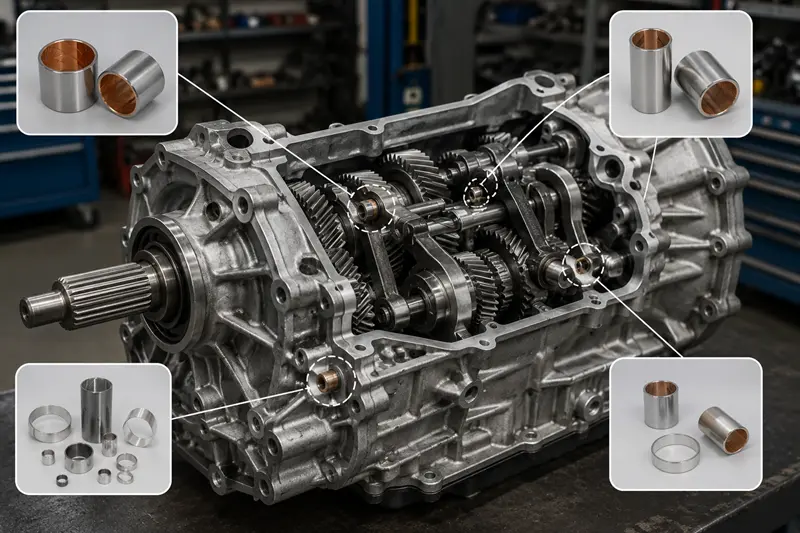
For our automotive clients, two things matter above all else: consistency and cost. When you are making hundreds of thousands of vehicles, every single component must perform exactly as designed, and every fraction of a cent in cost matters. Our manufacturing process for bimetal bushings is built for this. We use stamping and rolling processes that are fast, repeatable, and produce parts with very tight tolerances. This ensures that every bushing that comes off our line will fit and function perfectly in an automated assembly environment.
You’ll find these bushings in many places in a car that you might not expect. They are in suspension control arms, where they have to handle the car's weight and road shocks.[^7] They are in the kingpin assemblies of trucks, which carry enormous steering loads. You’ll even find them in smaller but critical spots like brake and clutch pedal pivots. In each case, they provide a smooth, quiet, and durable pivot point that will last for the life of the vehicle, all at a cost that makes sense for mass production.
| Application | Key Requirement | Why Bimetal is a Fit |
|---|---|---|
| Suspension Arm | High Load, Oscillation | Strong, durable, and quiet operation. |
| Kingpin | Very High Load, Steering | Handles extreme forces with reliability. |
| Pedal Pivot | Long Life, Smooth Feel | Consistent performance over millions of cycles. |
When Should You Choose a Different Bushing Instead?
Believing a bimetal bushing is always the answer can lead to trouble. Using it in the wrong environment can cause premature wear and unexpected failure, even if the part is well-made.
Choose a different bushing for extreme conditions.[^8] For applications with no lubrication, a PTFE composite bushing is a better choice.[^9] For extremely high loads at very slow speeds, a solid bronze or graphite-plugged bushing will provide superior performance.
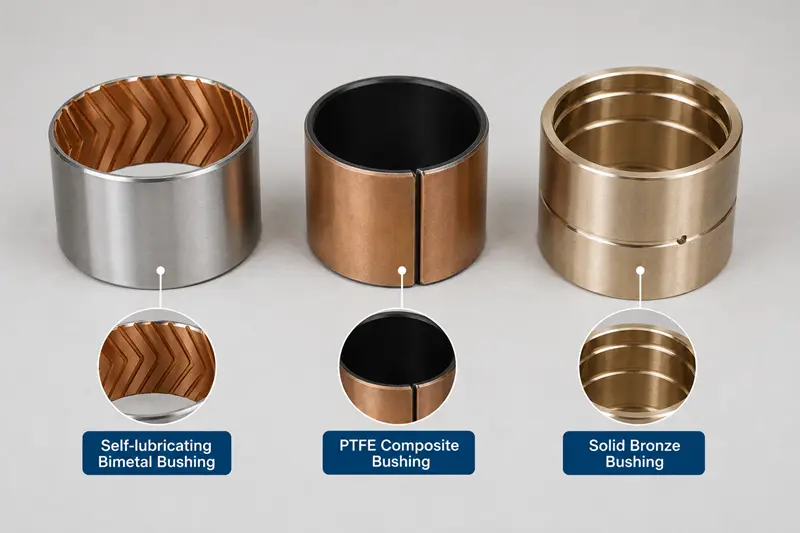
As a manufacturer, I want my clients to succeed, and that means helping them choose the right component, even if it's not a bimetal one. Bimetal bushings need some form of lubrication—either initial grease packing or periodic maintenance—to work properly. If your application must run completely dry, you should look at a different type. A PTFE-lined composite bushing (often called a DU or dry-running bushing) has a self-lubricating layer that is perfect for maintenance-free operation.
Likewise, while bimetal bushings are strong, they have their limits. For applications with massive, crushing loads and very slow movement—think of a bridge support or a massive industrial press—a solid, machined bronze bushing or a graphite-plugged bronze bushing is the better choice. These are more expensive and heavier, but they are designed specifically for those top-tier load conditions. Understanding these boundaries is key to good engineering.[^10] Bimetal bushings are the workhorse, but sometimes you need a specialized racehorse instead.
| Condition | Bimetal Bushing | PTFE Composite Bushing | Solid Bronze Bushing |
|---|---|---|---|
| Lubrication | Required | Not Required | Recommended |
| Load Capacity | High | Medium | Very High |
| Best For | Balanced performance with grease | Maintenance-free, dry operation | Extreme loads, slow speed |
Conclusion
In short, bimetal bushings are a balanced solution. They are the go-to choice for major industries because they deliver the right mix of strength, durability, and cost for OEMs.
[^1]: "Bushing", https://en.wikipedia.org/wiki/Bushing. This source explains the typical applications and material advantages of bimetal bushings in industrial settings. Evidence role: general_support; source type: encyclopedia. Supports: Bimetal bushings are used in medium-to-high load applications where a balance between strength, wear resistance, and cost is crucial.. [^2]: "Bimetal Bushings: The Strength and Performance", https://mybushing.com/bimetal-bushings-the-strength-and-performance/. This source provides technical details on the load-handling capabilities of bimetal bushings in construction machinery. Evidence role: mechanism; source type: research. Supports: They are essential because they handle the high radial forces and shock loads found in excavator booms, loader arms, and dozer blades.. [^3]: "Metal & Bimetal - Bronze Bearings - Steel Bushings | GGB", https://www.ggbearings.com/en/our-products/metal-and-bimetal-bearings. This source discusses the material composition and cost-effectiveness of bimetal bushings. Evidence role: mechanism; source type: education. Supports: Their steel backing provides the strength, while the bronze layer manages wear, offering a reliable solution that helps control manufacturing costs.. [^4]: "Safe Farm Machinery Operation - Tobacco Growers Information", https://tobacco.ces.ncsu.edu/safe-farm-machinery-operation/. This source outlines the environmental challenges faced by agricultural machinery and the role of bushings in mitigating these issues. Evidence role: historical_context; source type: institution. Supports: Farm equipment works in the worst conditions imaginable: mud, dust, and constant vibration.. [^5]: "Aging Failure Mechanism of Transformer Bushing Sealing Rings ...", https://pmc.ncbi.nlm.nih.gov/articles/PMC12897839/. This source explains how bimetal bushings resist contamination in agricultural machinery. Evidence role: mechanism; source type: research. Supports: They survive because their durable construction resists contamination.. [^6]: "Wear resistant bimetallic bushings - ISB Industries", https://www.isb-industries.com/en/products/bushings/bm-bimetal-bushings/. This source discusses the advantages of bimetal bushings in automotive mass production. Evidence role: general_support; source type: institution. Supports: Their blend of consistent performance, high load capacity, and low unit cost for mass production makes them a top choice.. [^7]: "BETTER THAN BUSHINGS? Control Arm Bearings with ... - YouTube", https://www.youtube.com/watch?v=CvLZzBYp3Vk. This source provides examples of bimetal bushings used in automotive suspension systems. Evidence role: case_reference; source type: research. Supports: They are in suspension control arms, where they have to handle the car's weight and road shocks.. [^8]: "Performance of Dry Bushings Under Extreme Environmental ... - EPRI", https://www.epri.com/research/products/000000003002015693. This source compares bimetal bushings with alternatives for extreme conditions. Evidence role: expert_consensus; source type: education. Supports: Choose a different bushing for extreme conditions.. [^9]: "Performance of PTFE-Lined Composite Journal Bearings", https://ntrs.nasa.gov/api/citations/19820009389/downloads/19820009389.pdf. This source explains the advantages of PTFE composite bushings in dry-running applications. Evidence role: definition; source type: research. Supports: For applications with no lubrication, a PTFE composite bushing is a better choice.. [^10]: "The Importance of Material Selection in Mechanical Engineering", https://www.agt-tech.co.il/blog-posts/the-importance-of-material-selection-in-mechanical-engineering-ensuring-optimal-performance-and-longevity. This source emphasizes the importance of selecting the right bushing type for specific engineering applications. Evidence role: expert_consensus; source type: education. Supports: Understanding these boundaries is key to good engineering..