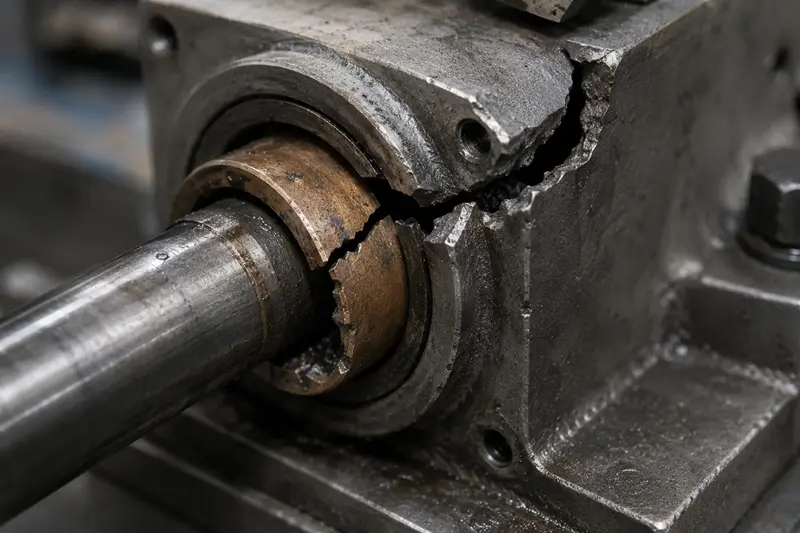
Bushings failing causes expensive downtime. You replace them, but the problem returns, feeling like a quality issue you just can't solve. It's a frustrating and costly cycle.
Most bushing failures are not from manufacturing defects. Over 80% of failures come from incorrect material selection, poor lubrication, overload, bad installation, or contamination. The key is to fix the system, not just the part.
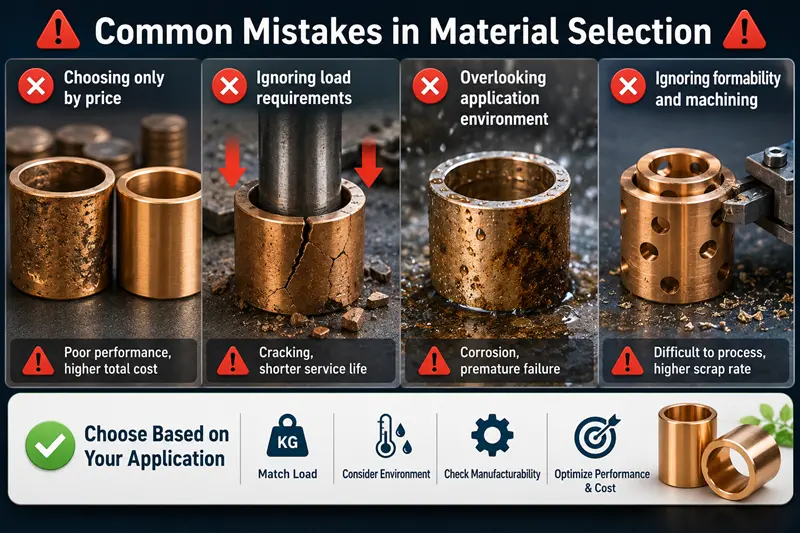
As a manufacturer, we see this all the time. A customer is frustrated because a replacement part failed just as quickly as the original. They believe the bushings are low quality, but that's rarely the case. The real problem is usually hidden in the application itself. When a bushing fails, it's telling you a story about the system it's working in. Let's break down the five most common reasons we see for these failures. Understanding them will help you stop replacing parts and start solving the root problem for good.
Is Using the Wrong Material the Real Problem?
You've specified a bushing, but it wears out fast. This leads to unplanned maintenance and questions about the part's quality, even when it meets all the specifications.
Yes, selecting the wrong material is the number one cause of premature bushing failure. If the material can't handle the load, speed, or environment, failure is almost guaranteed from the moment of installation. It's a fundamental mismatch between the part and the job.
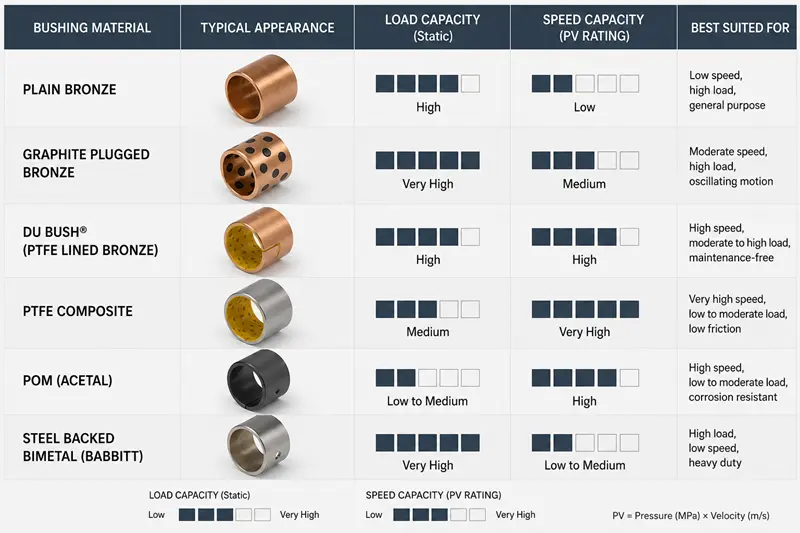
In our experience with OEM projects, this is the first thing we check. The material must match the working conditions perfectly. A failure here creates a problem that no amount of perfect manufacturing can solve. For example, we often see plastic bushings used in high-load applications where a metal-backed composite bushing would be necessary. The plastic deforms under the pressure, leading to a rapid loss of clearance and eventual failure. Another common mistake is using a standard bronze bushing in an environment where lubrication is infrequent or impossible. This results in metal-on-metal contact, high friction, and seizure. The right choice would have been a self-lubricating composite or sintered bushing. It's about looking at the entire system.
Here’s a simple way to think about it:
| Condition | Bad Material Choice | Good Material Choice | Why it Matters |
|---|---|---|---|
| High Load | Standard Plastic Bushing | Metal-Backed Composite or Bronze Bushing | The stronger material prevents deformation and maintains its shape under pressure. |
| No Lubrication | Plain Bronze Bushing | Self-Lubricating Composite (e.g., PTFE-lined) | The self-lubricating layer provides a low-friction surface without needing external grease. |
| Corrosive Environment | Carbon Steel Backing | Stainless Steel or Bronze Bushing | The material resists rust and chemical attack, preventing structural failure. |
Getting the material right from the start is the most cost-effective way to ensure reliability.
Could a Lack of Lubrication Be the Cause?
Your equipment is running hot and making noise. The bushings wear out quickly, and you suspect they are defective. This forces you to halt production for another replacement.
Absolutely. Insufficient lubrication is a direct path to failure for many bushing types. It allows direct metal-to-metal contact, which rapidly increases friction, generates heat, and accelerates wear, drastically shortening the bushing's service life.
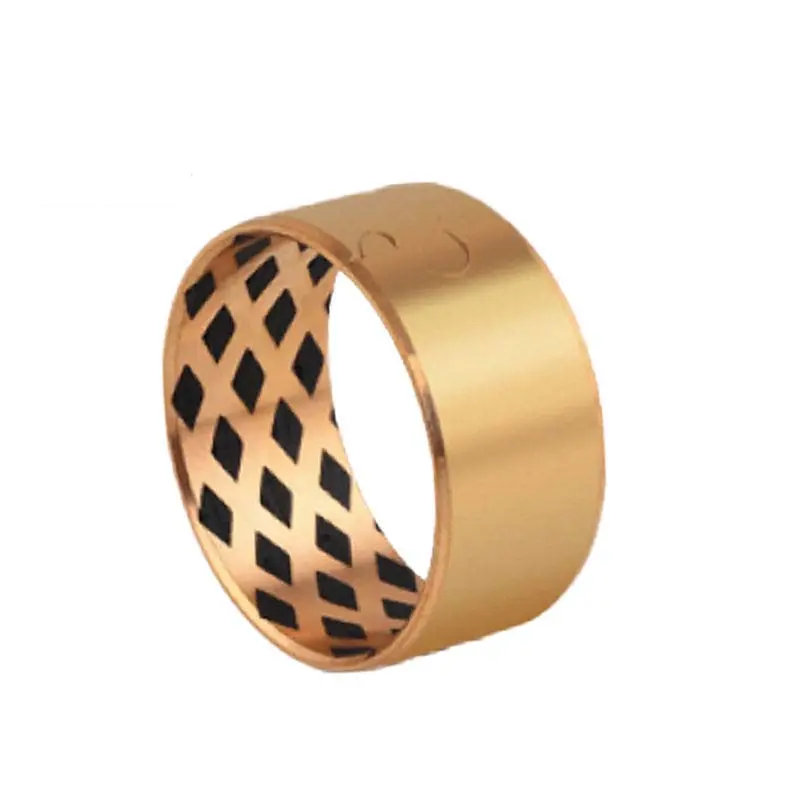
Many bushings, like bronze-wrapped or bimetal types, are designed to work with a lubricant. The lubricant creates a thin film that separates the bushing surface from the shaft. This film does the hard work of reducing friction and carrying away heat. When that film is gone, things go wrong very quickly. We've seen cases where a simple mistake in the lubrication plan cut a bushing's life by 90%. The problem isn't always a total lack of grease; sometimes it's more subtle. Using the wrong type of grease, for example, one that isn't designed for the load or temperature, can be just as bad. Another issue is the lubrication schedule. If the time between greasing is too long, the film breaks down before it's replenished. Finally, the design itself can be the problem. If the oil grooves or holes aren't designed correctly for the application's movement, the lubricant never even reaches the high-pressure areas where it's needed most.
For any bushing that requires it, lubrication is not optional—it's a critical part of the system design.
Are You Overloading Your Bushings?
A bushing has cracked or severely deformed in the field. The machine was supposed to handle the job, but now it's broken down, causing major delays and repair costs.
Yes, excessive loads or shock forces are a common reason for failure. If a bushing is pushed beyond its designed load capacity, it can deform, crack, or wear out extremely fast. Real-world conditions are often much tougher than design specifications.
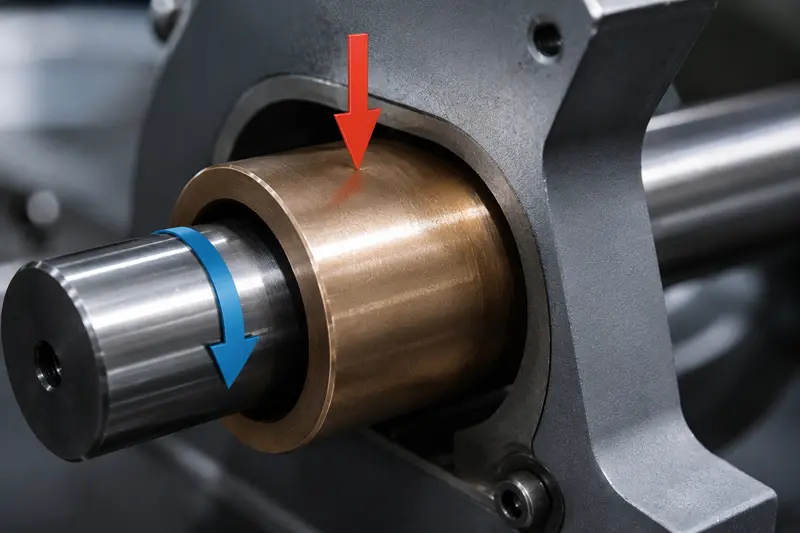
A bushing has a specific load capacity, which is the maximum pressure it can withstand without being damaged. This is often listed as a "static" load (when not moving) and a "dynamic" load (when in motion). Many equipment failures happen because the actual dynamic loads are much higher than the engineer planned for. Frequent start-stop cycles, sudden impacts, and heavy vibrations all create shock loads that can spike the pressure on the bushing to several times the normal operating level. We see this often in construction and agricultural machinery. Another hidden issue is edge loading. If the shaft and bushing are not perfectly aligned, the load isn't distributed evenly across the bushing's surface. Instead, it concentrates on the edges, creating intense pressure points that exceed the material's limit. This leads to localized wear, deformation, and eventually, a complete breakdown of the bushing. It’s a reminder that a bushing doesn’t exist in a perfect world; it has to survive the messy reality of the machine's operation.
Did You Consider Installation Errors?
You replaced a failed bushing with an identical new one, but it failed again in a short time. You're starting to lose faith in your supplier and the parts.
It's highly likely. Bushings are precision components that require correct installation. If the press-fit is too tight or too loose, it creates problems that lead directly to premature failure. The assembly process is just as critical as the part itself.
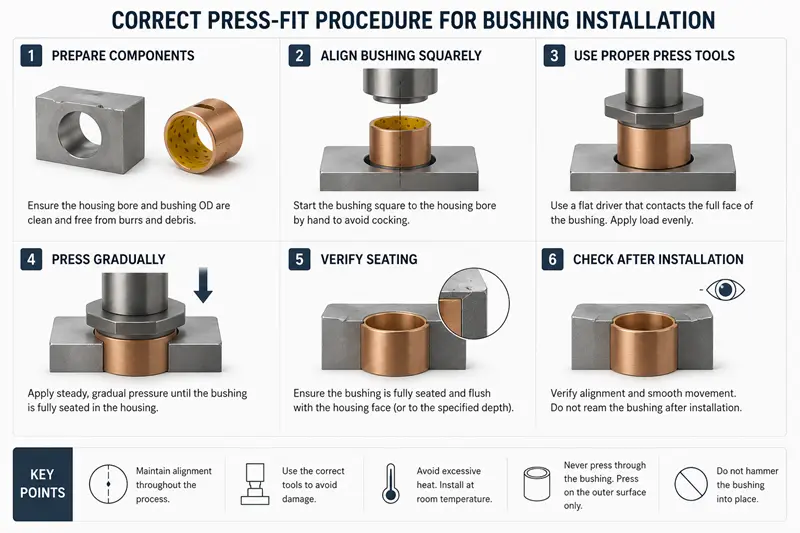
This is a frustrating problem for many of our customers, but it's one we can usually diagnose quickly. A bushing works by being pressed into a housing. This press-fit must be exact. If the fit is too tight, it squeezes the bushing and reduces its inner diameter. This is called "bore closure." The smaller hole leaves no room for the shaft and the necessary lubrication film, causing immediate high friction and seizure. On the other hand, if the fit is too loose, the bushing can move or spin inside its housing. This movement causes vibration and fretting wear on the outside of the bushing, while the unstable alignment leads to uneven wear on the inside. Many maintenance teams replace a bushing without checking the condition of the housing bore or the shaft. If the housing is worn or damaged, a new bushing will never fit correctly. This is why a simple part swap often fails to fix the underlying issue. Proper installation requires the right tools and adherence to the specified tolerances for the housing and shaft.
Is Contamination Silently Destroying Your Bushings?
Your outdoor equipment, like excavators or tractors, needs constant bushing replacements. The parts seem to wear down to dust, no matter how often you lubricate them.
Without a doubt. In dirty and wet environments, contamination is a silent killer. Dust, sand, mud, and water get into the bearing area and act like sandpaper, grinding away the bushing and shaft at an incredible speed.
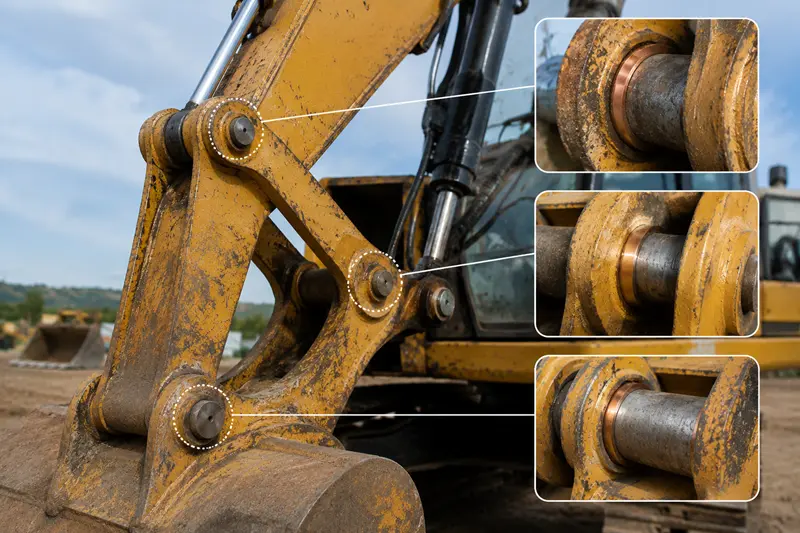
This type of failure is called three-body abrasion. The "three bodies" are the shaft, the bushing, and the hard contaminant particles trapped between them. The damage from this is far more severe than normal friction-related wear. We see this constantly in industries like agriculture, mining, and construction. A brand-new bushing can be destroyed in a matter of hours if it's not protected from the environment. The contaminant particles embed themselves into the softer bushing material, turning it into a grinding lap that then wears down the much harder steel shaft. This not only destroys the bushing but can also lead to costly shaft repairs or replacement. The solution is not just a better bushing, but a better system. Effective seals are critical. They act as a barrier to keep dirt and water out and keep grease in. When we work with OEM clients on these types of applications, a huge part of the discussion is about the sealing design. Without good seals, any bushing will fail.
Conclusion
Most bushing failures are system problems, not part defects. Matching the bushing, lubrication, and installation to the real-world application is the key to preventing costly downtime and repairs.