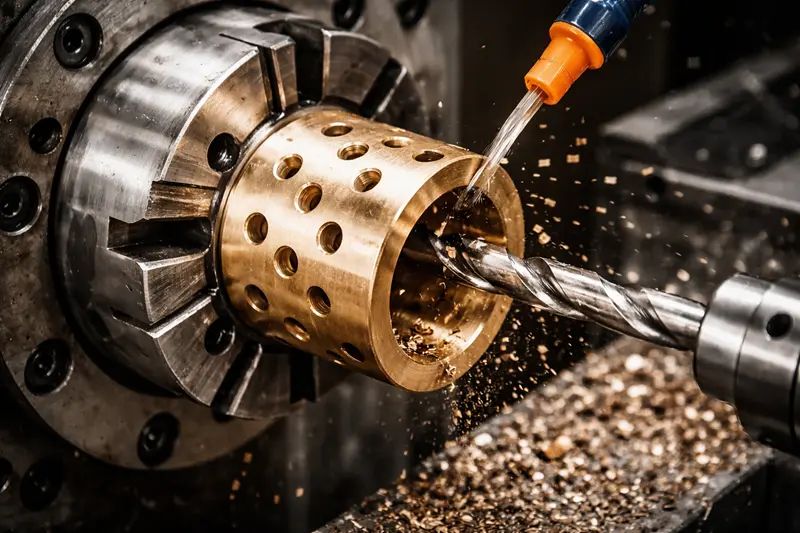
Your heavy machinery needs bushings that last. But frequent lubrication is costly and difficult[^1], leading to wear and unexpected downtime. What if a bushing could lubricate itself?
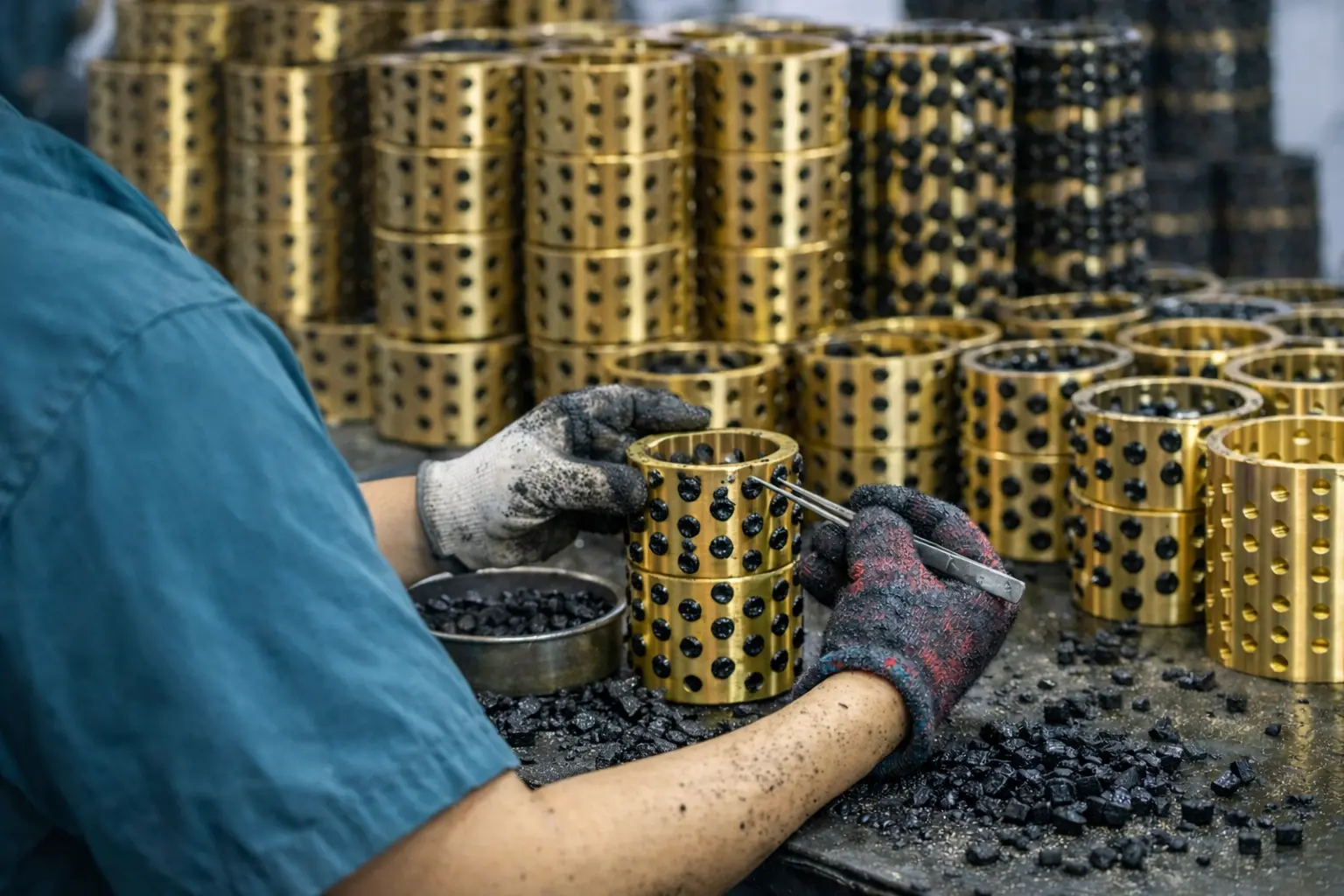
A graphite plugged bushing is a strong bronze alloy bushing with solid graphite plugs embedded into it. The bronze base carries the heavy load, while the graphite provides continuous self-lubrication[^2]. This design is perfect for tough jobs where regular oiling is not possible.
This combination of strength and self-lubrication is what makes these components so valuable. But to really understand if they're right for your equipment, you need to know how they actually work. Let's look closer at the mechanics behind this smart design and see how it keeps machines running smoothly for the long haul.
How Do Graphite Plugged Bushings Work?
You see a bronze bushing with dark spots and wonder how it works. It seems simple, but how do those graphite plugs actually keep a machine running smoothly under pressure?
The strong bronze base handles all the pressure. When the shaft moves, friction creates a little bit of heat. This heat causes the graphite plugs to release a very thin layer of lubricating film. This film prevents direct metal-to-metal contact and reduces wear[^3].
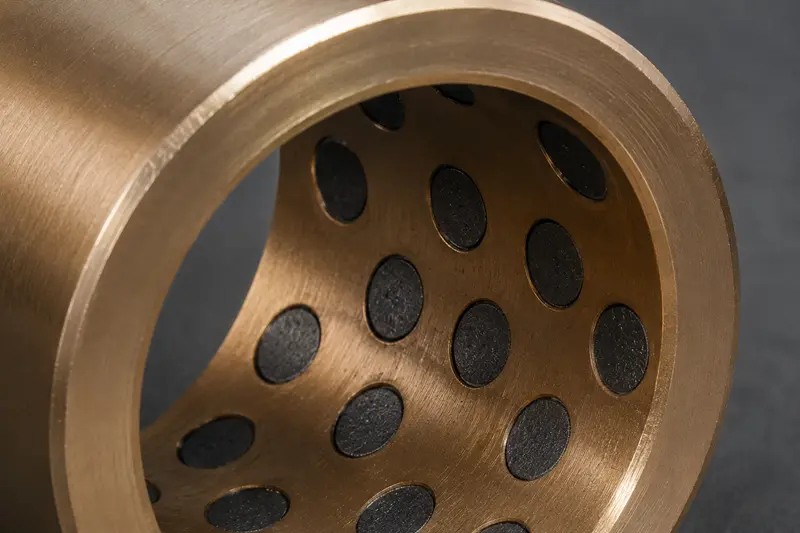
From a manufacturing standpoint, a graphite plugged bushing is first and foremost a copper alloy bushing. We start with a high-strength metal base that provides the structural integrity. The choice of material is critical and depends on the specific load and environmental conditions of the application.
Base Materials We Use
| Material | Key Characteristics |
|---|---|
| Bronze | Good all-around performance and wear resistance. |
| High-Strength Brass | Excellent for very high loads and pressure. |
| Tin Bronze | Great for resisting corrosion and wear[^4]. |
After we machine the bushing to its final dimensions, we drill a precise pattern of holes into its surface. Solid graphite plugs are then pressed into these holes under high pressure[^5], ensuring they stay put. When the bushing is put into service, the magic happens. The initial movement between the shaft and the bushing generates slight friction and heat. This is enough to cause the graphite to transfer a microscopic, dry lubricating film onto the shaft. This solid film separates the metal surfaces, drastically reducing friction and preventing the wear and tear[^6] you'd see with an unlubricated bushing. This process is continuous, so the bushing is constantly re-lubricating itself.
Why Are They Popular in Heavy-Duty Applications?
Heavy equipment operates in dirty, demanding environments. Regular maintenance is a huge challenge, but ignoring it leads to breakdowns. There has to be a more reliable way to keep things moving.
They are popular because they combine the strength of bronze with the self-lubricating power of graphite. This is ideal for heavy loads and slow speeds. It drastically cuts down on maintenance needs, especially in hard-to-reach spots or harsh working conditions.
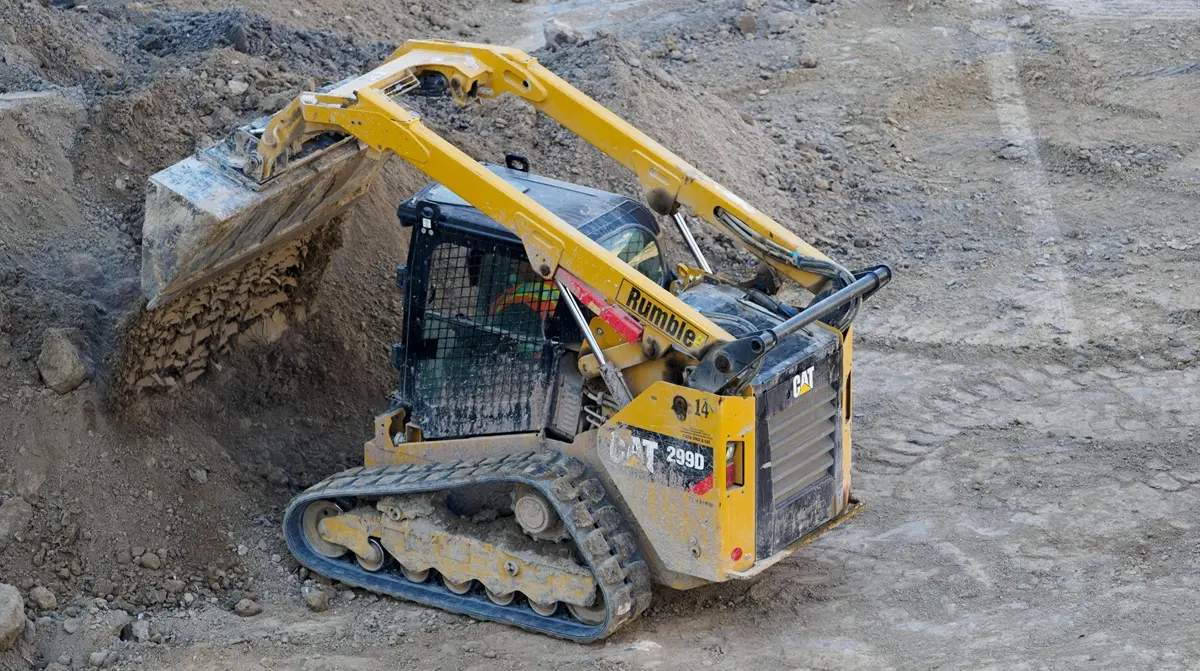
In our experience working on OEM projects, many heavy-duty machines actually have lubrication systems. The problem is that they are often impractical. A grease point might be inaccessible without partially disassembling the machine, or the environment might be so dirty that grease attracts abrasive particles. In these cases, graphite plugged bushings provide a simple and robust solution. They excel in a few specific conditions:
Key Operating Conditions
-
High Load Many people think the graphite helps carry the load, but it does not. The high-strength bronze alloy base is what bears the full force. The graphite's only job is to provide lubrication, allowing the bushing to handle immense pressure without seizing.
-
Low Speed & Oscillating Motion At very low speeds or in back-and-forth oscillating movements, a traditional oil or grease film can be easily squeezed out or wiped away. This leads to metal-on-metal contact. A solid graphite film does not have this problem. It stays on the surface, providing constant protection, which is why it's perfect for pivot points on excavators, cranes, and loaders[^7].
-
Difficult Lubrication Think about the pivot joint on a dam gate, a slide plate in a steel mill, or a guide post in an injection mold. These are all places where stopping for manual greasing is either impossible, unsafe, or extremely expensive due to production downtime. Graphite plugged bushings are a "fit and forget" solution in these scenarios.
These advantages make them a go-to component in industries like construction, mining, agriculture, and heavy industrial machinery[^8].
Are Graphite Plugged Bushings Better Than Bronze Bushings?
You're choosing a bushing and see two options. The graphite plugged version costs more. Making the wrong choice means you either overspend or face surprise repair bills later on.
No, one is not always better than the other. Standard bronze bushings are cheaper and work great if you can lubricate them properly. Graphite plugged bushings are the right choice when lubrication is difficult, maintenance is expensive[^9], or you have high-load, low-speed conditions.
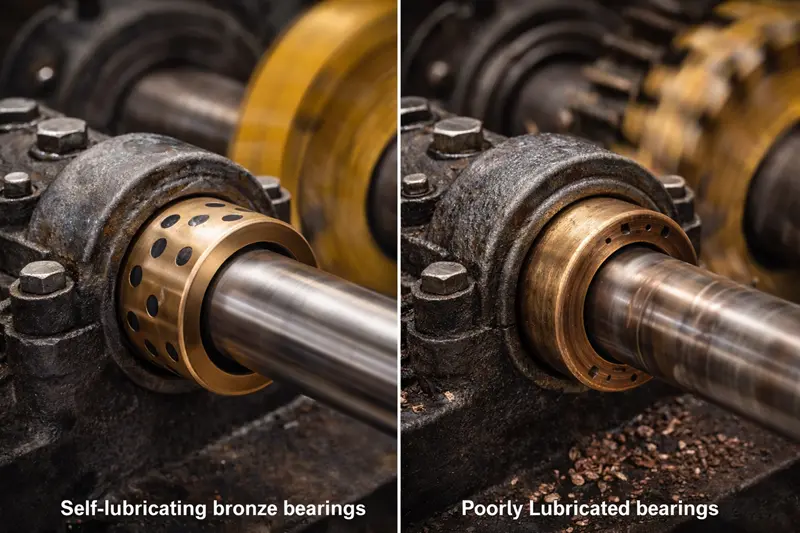
Many of our customers ask this question. The best way to think about it is not as a simple upgrade, but as choosing the right tool for the job. From our factory's perspective, graphite plugged bushings are an engineering solution to solve specific problems. Most often, they solve two things: difficult lubrication and high maintenance costs.
A standard bronze bushing is an excellent, economical choice if your equipment has a reliable lubrication system and operates at speeds that can maintain a stable oil film. We produce millions of them for exactly these kinds of applications.
However, if your lubrication is unreliable or you want to reduce maintenance, the graphite plugged bushing becomes the smarter choice. Buyers often focus on the initial unit price. But you have to consider the total cost of ownership[^10]. What is the cost of machine downtime? How much labor is spent on manual greasing? What is the cost of a premature failure? The slightly higher upfront cost for a graphite plugged bushing often pays for itself many times over by eliminating these long-term expenses.
Choosing the Right Bushing
| Factor | Standard Bronze Bushing | Graphite Plugged Bushing |
|---|---|---|
| Lubrication Need | Requires regular oil or grease | Self-lubricating, no maintenance needed |
| Best For | Higher speeds, consistent lubrication | Low speeds, high loads, oscillation |
| Initial Cost | Lower | Higher |
| Long-Term Cost | Higher (maintenance, downtime) | Lower (no maintenance, high reliability) |
| Key Advantage | Economical for standard applications | Solves lubrication and maintenance problems |
Ultimately, the choice depends on your equipment's operating conditions, not just the material itself.
Conclusion
Graphite plugged bushings are not a luxury item. They are a strategic engineering solution for heavy-duty, low-speed jobs where reliable lubrication is a challenge, saving you money on maintenance and downtime[^11].
[^1]: "Strategies for lubricating heavy machinery", https://www.machinerylubrication.com/Read/30765/lubricating-heavy-machinery. Frequent lubrication in heavy machinery can be both expensive and logistically challenging, particularly in environments where access is limited or conditions are harsh. Evidence role: general_support; source type: research. Supports: Frequent lubrication is costly and difficult, leading to wear and unexpected downtime in heavy machinery.. [^2]: "Graphene layers dramatically reduce wear and friction on sliding ...", https://www.anl.gov/article/graphene-layers-dramatically-reduce-wear-and-friction-on-sliding-steel-surfaces. Graphite is known for its self-lubricating properties due to its layered structure, which allows it to reduce friction effectively. Evidence role: mechanism; source type: encyclopedia. Supports: Graphite provides continuous self-lubrication in bushings.. [^3]: "Graphite lubrication mechanisms under high ...", https://www.sciencedirect.com/science/article/abs/pii/S0043164821001836. The use of self-lubricating materials like graphite in bushings significantly reduces wear by minimizing direct metal-to-metal contact. Evidence role: mechanism; source type: research. Supports: The graphite film reduces wear in machinery components.. [^4]: "Bronze - Wikipedia", https://en.wikipedia.org/wiki/Bronze. Tin bronze is widely recognized for its excellent resistance to corrosion and wear, making it suitable for demanding industrial applications. Evidence role: expert_consensus; source type: encyclopedia. Supports: Tin bronze is great for resisting corrosion and wear.. [^5]: "Exploring the Benefits: Bronze Bushings with Graphite Plugs", https://www.roccarbon.com/bronze-bushings/. Graphite plugs are typically inserted into pre-drilled holes in bushings using high-pressure techniques to ensure they remain securely in place during operation. Evidence role: mechanism; source type: research. Supports: Solid graphite plugs are pressed into pre-drilled holes under high pressure to ensure they stay in place.. [^6]: "[PDF] The Tribological Performance of Self-Lubricating Bearings Following ...", https://docs.lib.purdue.edu/cgi/viewcontent.cgi?article=2888&context=icec. The lubricating film formed by graphite in bushings reduces friction and prevents wear by creating a barrier between moving metal surfaces. Evidence role: mechanism; source type: research. Supports: The graphite film reduces friction and prevents wear and tear in bushings.. [^7]: "Gold graphite Bucket Bushing For Excavator 90100100MM (ID*OD ...", https://www.ebay.com/itm/357237589079. Graphite plugged bushings are particularly effective in pivot points of heavy machinery like excavators, cranes, and loaders, where low-speed and high-load conditions prevail. Evidence role: case_reference; source type: research. Supports: Graphite plugged bushings are ideal for pivot points on excavators, cranes, and loaders.. [^8]: "Exploring the Benefits: Bronze Bushings with Graphite Plugs", https://www.roccarbon.com/bronze-bushings/. Graphite plugged bushings are widely used in industries such as construction, mining, agriculture, and heavy industrial machinery due to their durability and self-lubricating properties. Evidence role: general_support; source type: research. Supports: Graphite plugged bushings are commonly used in construction, mining, agriculture, and heavy industrial machinery.. [^9]: "The Value of Preventative Equipment Maintenance", https://wheelercat.com/blog/the-value-of-preventative-equipment-maintenance/. In heavy-duty applications, lubrication challenges and high maintenance costs often make self-lubricating components like graphite plugged bushings a cost-effective solution. Evidence role: general_support; source type: research. Supports: Graphite plugged bushings are the right choice when lubrication is difficult and maintenance is expensive.. [^10]: "TOTAL COST OF OWNERSHIP (TCO) 1. Facilities", https://www.chaffey.edu/purchasing/docs/tco-implementation-summary.pdf. The total cost of ownership for machinery components includes not just the initial purchase price but also maintenance, downtime, and replacement costs. Evidence role: definition; source type: education. Supports: The total cost of ownership includes factors beyond the initial purchase price, such as maintenance and downtime costs.. [^11]: "Exploring the Benefits: Bronze Bushings with Graphite Plugs", https://www.roccarbon.com/bronze-bushings/. Graphite plugged bushings can reduce maintenance and downtime costs by eliminating the need for frequent lubrication and minimizing wear. Evidence role: general_support; source type: research. Supports: Graphite plugged bushings save money on maintenance and downtime..