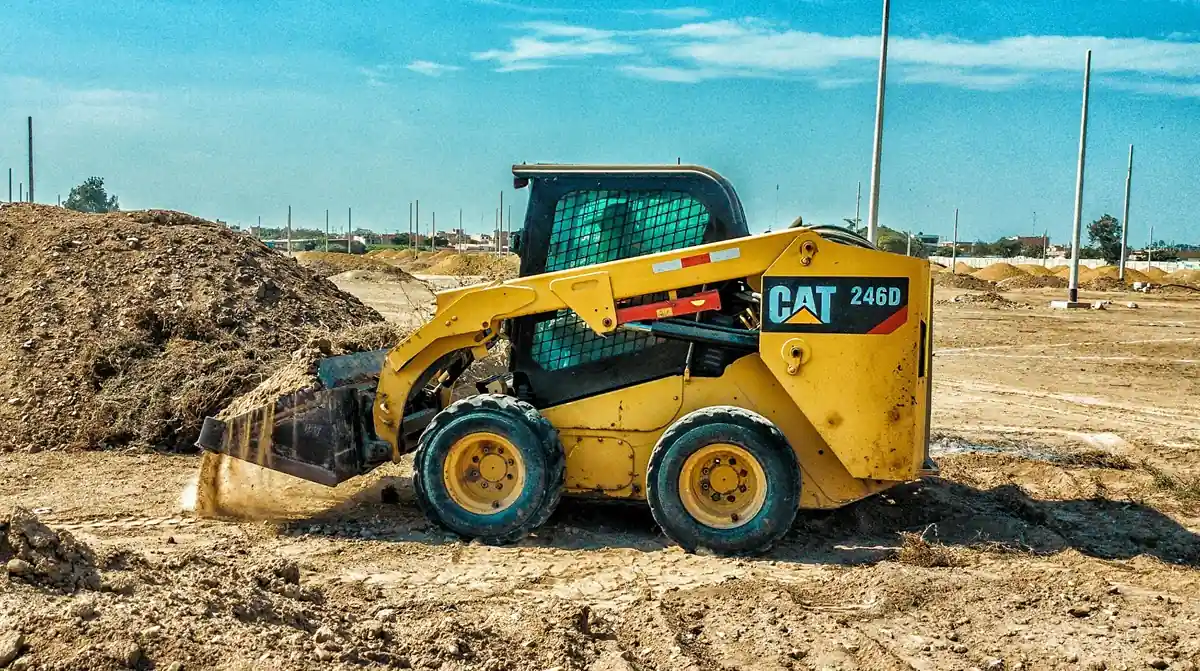
Your heavy equipment is failing, and downtime is costing you money. The problem is often a small but critical part: the bushing, worn out by high loads and slow speeds.
The best bushings for low-speed, high-load applications are ones that manage pressure and lubrication effectively. Top choices include graphite-plugged bronze, high-strength cast bronze, bimetal, and specific composite bushings. The right one depends on your exact operating conditions, lubrication, and environment.
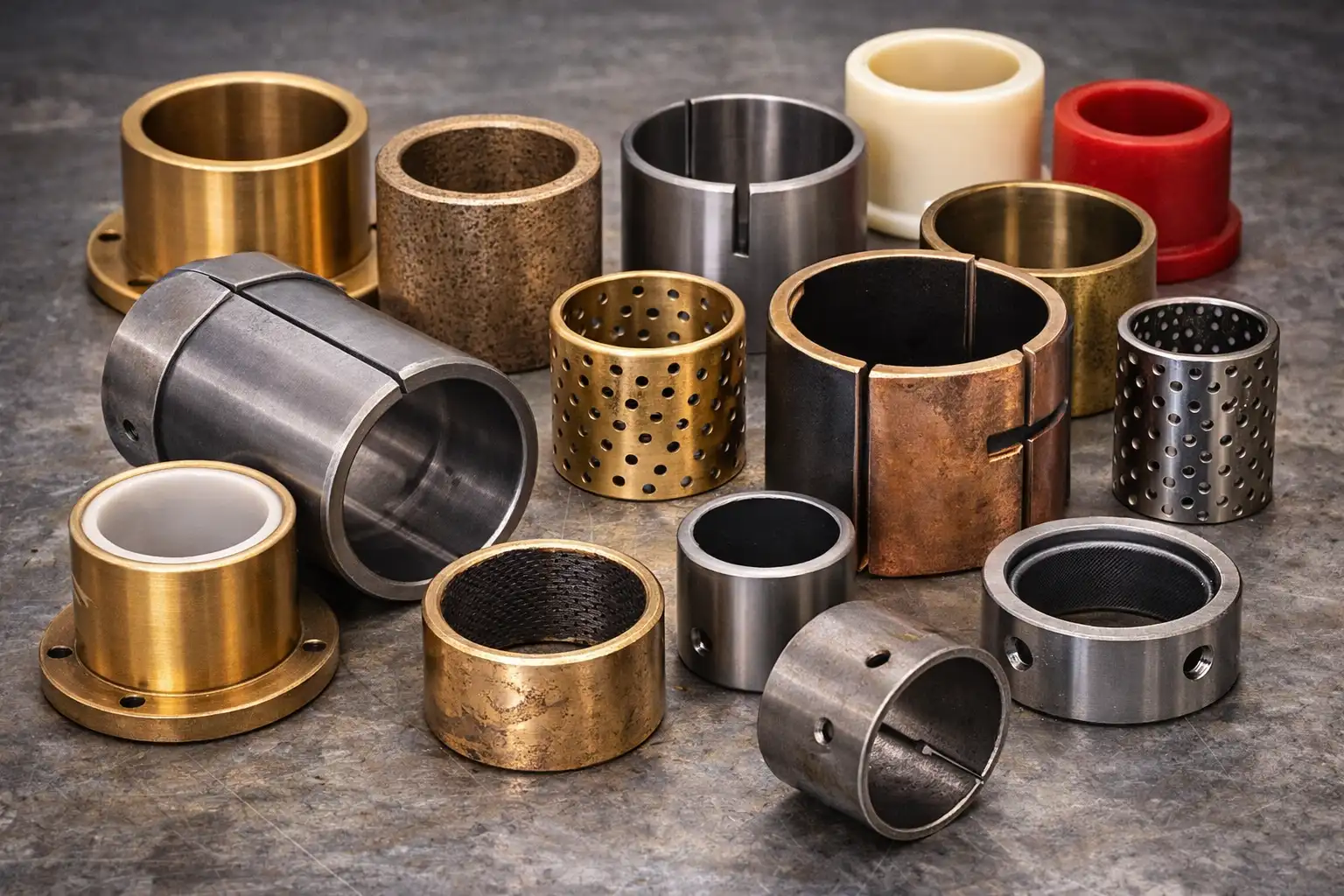
Choosing the right bushing for these tough conditions can feel confusing. Many buyers simply ask for the "most wear-resistant" material. From my experience in the factory, I can tell you that the problem is more complex. It's not just about resisting wear. It's about how the bushing handles extreme pressure and maintains lubrication when it's moving slowly. Let's break down the best options so you can make a more informed choice for your equipment.
Why Do Low-Speed Applications Wear Out Bushings So Quickly?
Does it seem strange that slow-moving parts wear out so fast? You might think less speed means less stress, but the opposite is often true, leading to unexpected failures.
Bushings in low-speed applications wear out quickly because they can't form a protective oil film.[^1] The slow movement prevents hydrodynamic lubrication, leading to direct metal-to-metal contact, high friction, and rapid wear under heavy loads.
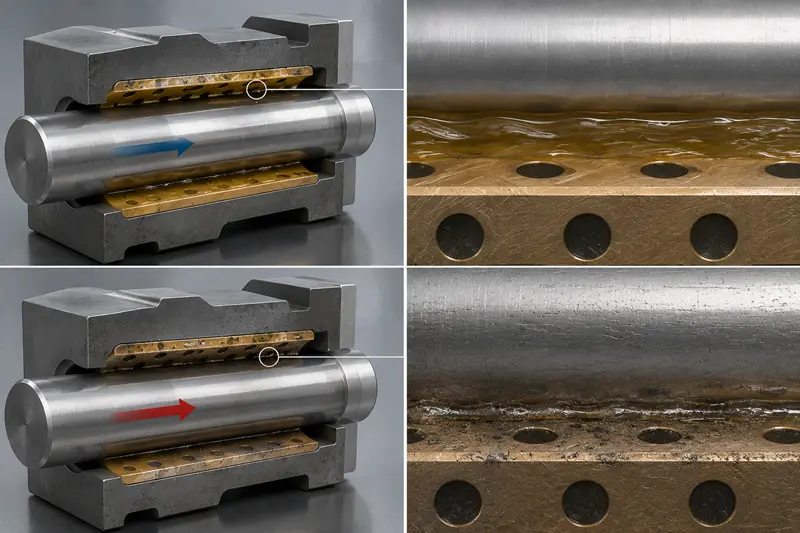
To understand this better, we need to talk about how lubrication works. In many machines, a fast-spinning shaft pulls a wedge of oil between itself and the bushing. This is called a hydrodynamic film. The shaft essentially floats on the oil, so there is no metal-to-metal contact.
But at low speeds, the shaft doesn't move fast enough to create this film. The bushing operates in a state called "boundary lubrication." Here, only a very thin, molecular layer of lubricant separates the surfaces. When you add a heavy load, this thin layer can break down completely. This results in direct contact, which causes high friction, heat, and accelerated wear. If the movement is oscillating—back and forth—it's even worse, as the bushing never gets a chance to build up any protective film.
| Lubrication State | Shaft Speed | Load Capacity | Contact | Common in... |
|---|---|---|---|---|
| Hydrodynamic | High | Low to Medium | No contact (Oil film) | Engines, Turbines |
| Boundary | Low | High | Intermittent contact | Cranes, Excavators |
| Dry Friction | Very Low / None | Any | Full contact | Unlubricated Joints |
This is the core problem we must solve in low-speed, high-load applications.
Are Graphite Plugged Bronze Bushings a Good Choice for High Loads?
You have a heavy machine with a pivot point that's hard to grease regularly. It moves slowly but carries a massive load, and standard bushings keep failing. What can you do?
Yes, graphite plugged bronze bushings are an excellent choice for high loads and low speeds, especially where liquid lubrication is difficult or unreliable. The graphite provides continuous solid lubrication, preventing seizure and reducing wear under extreme pressure.[^2]
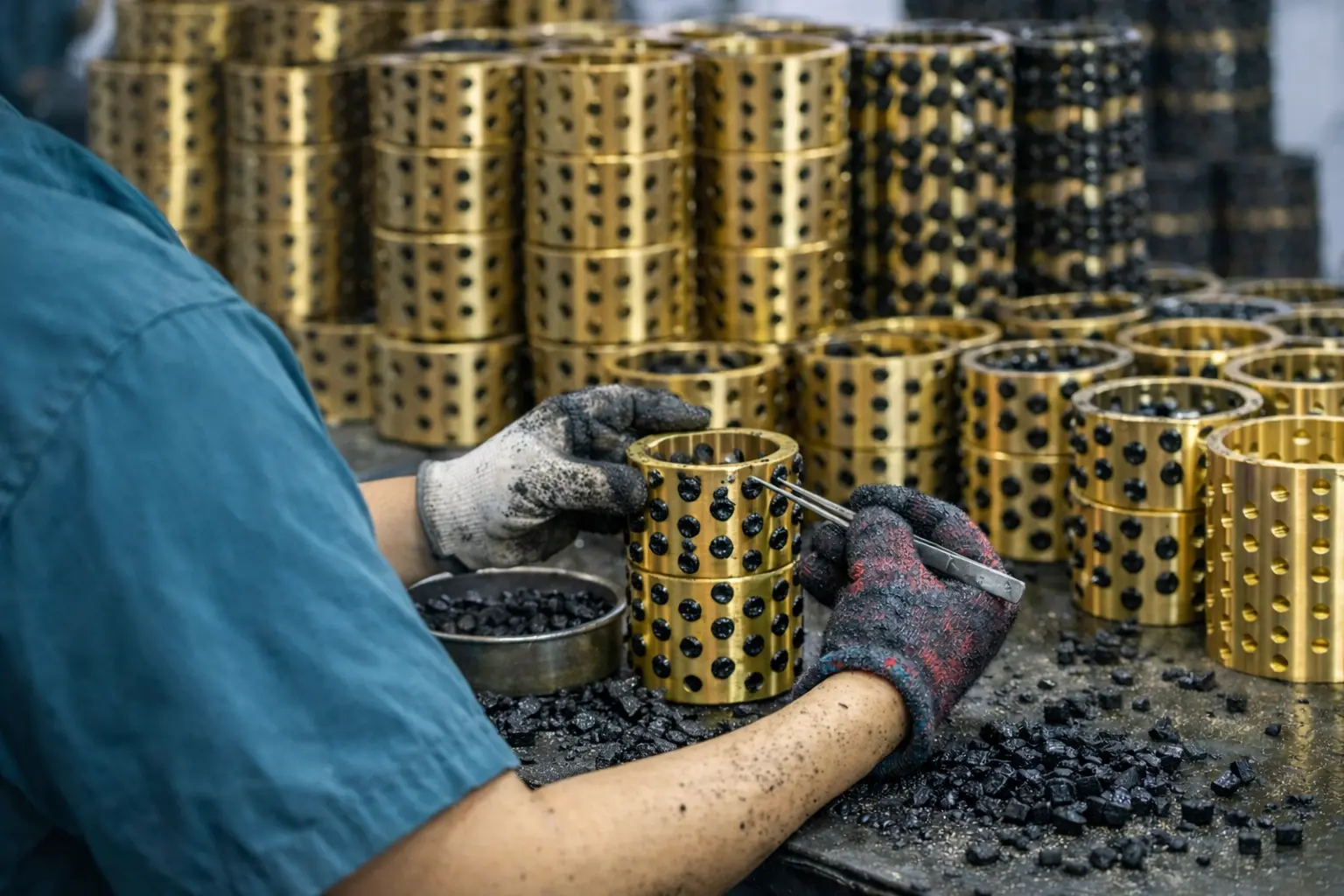
These bushings offer a clever solution to the lubrication problem. We start with a strong cast bronze bushing material. Then, we drill holes into it and press solid graphite plugs into them. The bronze provides the high load-carrying capacity and strength to resist deformation. The graphite acts as a self-lubricating reservoir.
Here’s how it works in your machine. As the shaft begins to move, it rubs against the bushing surface and picks up a micro-thin layer of graphite. This graphite film coats both the shaft and the bushing, creating a solid, low-friction surface between them. This solid film is extremely durable and can withstand very high pressures that would squeeze out normal grease. It doesn't rely on speed to work, making it perfect for slow, heavy, or oscillating movements. We see these used successfully in the toughest jobs.
Common Applications for Graphite Plugged Bushings
- Heavy Machinery: Pivot points on excavators, cranes, and loaders.
- Industrial Molds: Guide pins and slides in plastic injection and die-casting molds.
- Hydroelectric Equipment: Wicket gates and linkages in dams and turbines.
- Bridge and Structural Bearings: Supports that need to allow for slow thermal expansion.
When Should You Use High-Strength Bronze or Bimetal Bushings?
Your project requires good load capacity, but graphite-plugged bushings seem too specialized. You need a reliable, cost-effective solution for a large production run. What are your options?
Use high-strength bronze for extreme loads where you can ensure consistent grease lubrication. Choose bimetal bushings for a cost-effective balance of strength and performance in high-volume OEM applications with some lubrication.
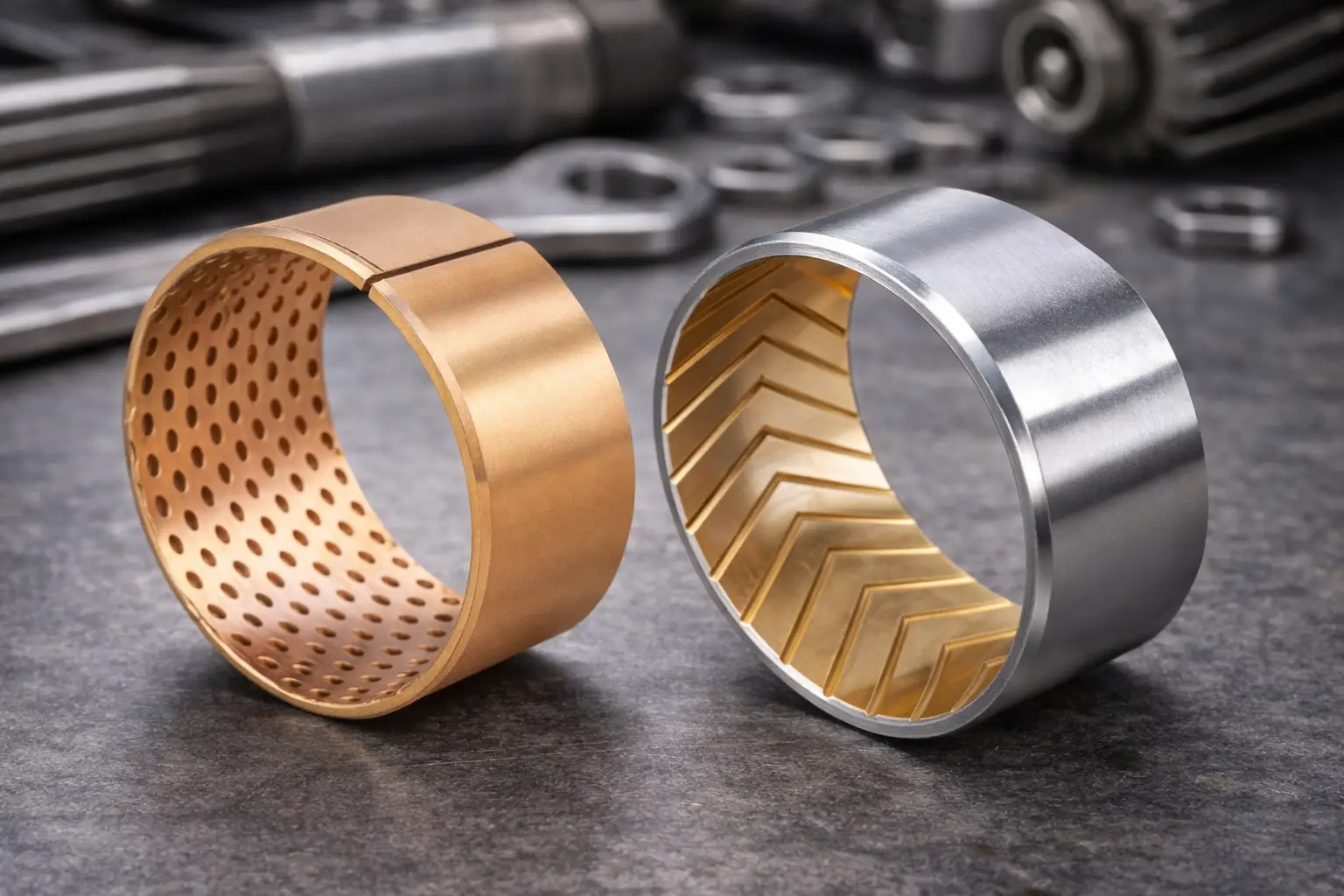
These two options solve the load problem in different ways, and the choice often comes down to load intensity and budget.
High-Strength Bronze Bushings[^3]
When we talk about "high-strength bronze," we don't mean the standard stuff. We are referring to specific alloys like Aluminum Bronze (e.g., C95400) or High-Tin Bronze. These materials are cast and then machined to their final shape. Their main advantage is immense compressive strength. They resist getting squashed or deformed under extreme static loads or sudden impacts. However, they are not self-lubricating. To prevent wear and seizure, they absolutely depend on a consistent supply of grease, often delivered through grooves machined into the bushing surface. Think of them as the heavyweight champion, but one that needs a good support team (grease).
Bimetal Bushings
Bimetal bushings are a smart, economical design.[^4] They have a strong steel backing and a thin inner layer of a bronze alloy. The steel provides the structural rigidity and allows for a tight press-fit into the housing. The inner bronze layer is porous. During manufacturing, this porous layer gets impregnated with grease or oil. In use, it acts like a sponge, holding lubricant right where it's needed at the bearing surface. This provides a good balance of load capacity and wear resistance at a lower cost than solid bronze, making them a favorite for automotive, agricultural, and hydraulic applications.
| Feature | High-Strength Bronze | Bimetal Bushing |
|---|---|---|
| Structure | Solid, single alloy | Steel back + Bronze layer |
| Load Capacity | Very High to Extreme | Medium to High |
| Cost | High | Low to Medium |
| Best For | Extreme shock loads, static loads | High-volume, cost-sensitive projects |
| Lubrication | Requires constant greasing | Pre-lubricated, requires some grease |
Can PTFE Composite Bushings Handle High-Load, Low-Speed Conditions?
You need a solution for a clean environment, maybe in food processing or packaging machinery. You can't have any grease or oil contamination, but the load is still significant. Is there a dry-running option?
Yes, steel-backed PTFE composite bushings can handle medium-to-high loads at low speeds without any lubrication.[^5] However, they are sensitive to impact loads and abrasive contamination, which can quickly destroy the sliding layer.
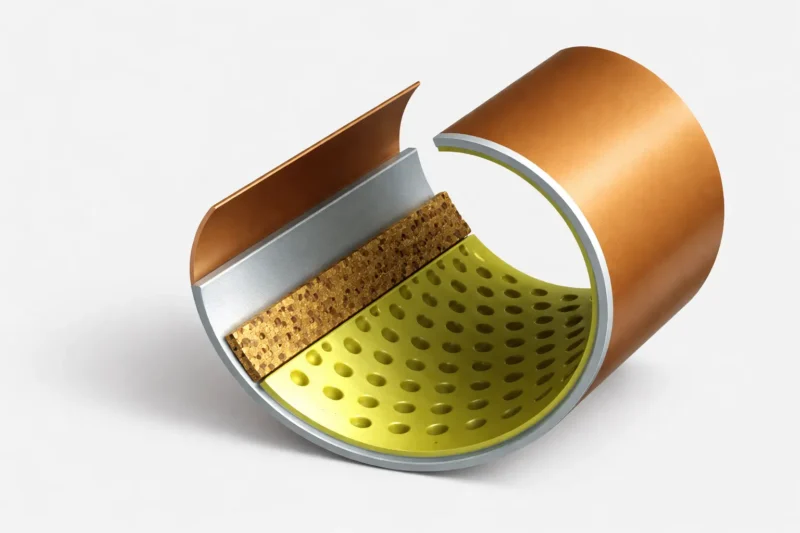
These bushings are sometimes called dry-running bushings, DU bushings, or metal-polymer bearings.[^6] They are a multi-layer marvel of engineering. On the outside, there's a steel or bronze backing for strength. In the middle, a porous bronze layer is sintered to the backing. This bronze layer does two things: it anchors the top layer and helps conduct heat away from the friction surface. The innermost layer, the one that touches the shaft, is a mix of PTFE (the material in non-stick pans) and other fillers like carbon or glass fiber.[^7]
The PTFE provides an extremely low coefficient of friction, so the bushing can run completely dry. This is a huge advantage where lubrication is impossible or undesirable. They are also compact and lightweight. However, this PTFE layer is very thin. It can be damaged by heavy shock loads that deform the steel backing. Also, if abrasive particles like sand or dirt get into the joint, they can embed in the soft PTFE and act like sandpaper, destroying both the bushing and the shaft very quickly. For this reason, we advise customers to be cautious when considering them for dirty environments like construction or mining.
What Factors Beyond Material Should OEM Buyers Consider?
You've reviewed the material options and have an idea of what might work. Are you ready to place an order? Not quite. As a factory, we know that a successful application depends on the whole system.
Choosing the right material is only the start.[^8] For reliable performance in an OEM project, you must analyze the load type, lubrication plan, shaft properties, environment, and installation tolerances carefully.
I've seen too many projects fail because a great bushing was put into a bad system. A bushing doesn't work in isolation. It's part of a partnership with the shaft and the housing. To ensure long life for your equipment, you must think like an engineer and consider the entire context. Before you finalize your choice, work through this checklist with your supplier. It’s the same process we use with our OEM partners to prevent problems down the line.
Your Final OEM Checklist:
- Load Direction and Type: Is the load constant in one direction? Does it oscillate back and forth? Are there heavy shock loads? An oscillating load on a bimetal bushing might require different grease grooves than a rotating one.
- Lubrication Strategy: Will it be greased at assembly and then forgotten? Is there a schedule for re-lubrication? Is it an automated system? The answer determines if you need a self-lubricating bushing or one with storage capacity like grooves or pockets.
- Shaft Hardness and Surface Finish: The shaft should always be harder than the bushing material. A soft shaft will wear out instead of the replaceable bushing.[^9] A rough shaft surface will act like a file and tear up the bushing liner.[^10]
- Operating Environment: Is the machine working in a dusty quarry, a wet marine environment, or a clean food-grade facility? Dirt, water, and chemicals will attack certain materials and require proper sealing.[^11]
- Clearance and Installation: The fit is critical. If the running clearance is too tight, the shaft can seize when it heats up. If it's too loose, the load is concentrated on a small area, and the bushing will get hammered out of shape.
Thinking through these points ensures you're building a reliable system, not just buying a part.
Conclusion
The best bushing for a low-speed, high-load job is not just one material.[^12] It's a system solution that matches the right material to your specific load, lubrication, and environmental conditions.
[^1]: "[PDF] Boundary Lubrication Mechanisms - A Systems Approach", https://www.eere.energy.gov/vehiclesandfuels/pdfs/hvso_2006/08_ajayi.pdf. This source explains the mechanics of lubrication failure in low-speed applications, emphasizing the challenges of maintaining hydrodynamic lubrication under heavy loads. Evidence role: mechanism; source type: education. Supports: Bushings in low-speed applications wear out quickly due to the inability to form a protective oil film.. [^2]: "[PDF] Solid Lubrication Fundamentals and Applications", https://ntrs.nasa.gov/api/citations/19980218923/downloads/19980218923.pdf. This source discusses the role of graphite as a solid lubricant in reducing wear and preventing seizure under high-pressure conditions. Evidence role: mechanism; source type: research. Supports: Graphite in bushings provides solid lubrication, reducing wear and preventing seizure under extreme pressure.. [^3]: "A Guide to Different Types of Bronze Alloys", https://www.metaltek.com/blog/a-guide-to-different-types-of-bronze-alloys/. This source provides information on the properties and applications of high-strength bronze alloys, including their compressive strength and lubrication requirements. Evidence role: definition; source type: encyclopedia. Supports: High-strength bronze bushings are suitable for extreme loads but require consistent grease lubrication.. [^4]: "Bimetal Bushings: The Strength and Performance", https://mybushing.com/bimetal-bushings-the-strength-and-performance/. This source explains the structure and advantages of bimetal bushings, including their cost-effectiveness and lubrication mechanisms. Evidence role: definition; source type: education. Supports: Bimetal bushings are cost-effective and provide a balance of strength and lubrication.. [^5]: "[PDF] Performance of PTFE-Lined Composite Journal Bearings", https://ntrs.nasa.gov/api/citations/19820009389/downloads/19820009389.pdf. This source describes the load capacity and dry-running capabilities of steel-backed PTFE composite bushings, highlighting their suitability for clean environments. Evidence role: definition; source type: research. Supports: Steel-backed PTFE composite bushings can handle medium-to-high loads at low speeds without lubrication.. Scope note: The source may not address specific limitations like sensitivity to impact loads or abrasive contamination. [^6]: "What Are The Alternative Names For Ptfe Bush? A Guide To ... - Kintek", https://kintek-solution.com/faqs/what-are-the-alternative-names-for-ptfe-bush. This source provides terminology and classification for PTFE composite bushings, including their alternative names and applications. Evidence role: definition; source type: encyclopedia. Supports: PTFE composite bushings are also known as dry-running bushings, DU bushings, or metal-polymer bearings.. [^7]: "5 Reasons To Replace PTFE-lined Bearings | igus®", https://www.igus.com/company/plain-bearings-replace-ptfe-lined-bushings?srsltid=AfmBOorvI_cRGOcRgnCvJuoQTPjo103ySUCqh8F1wjBe0VG33ob8j8mX. This source explains the composition and function of the PTFE layer in composite bushings, including the role of fillers like carbon and glass fiber. Evidence role: mechanism; source type: research. Supports: The PTFE layer in composite bushings includes fillers like carbon and glass fiber to enhance performance.. [^8]: "Essential Components for Mechanical Engineers - Five Flute", https://www.fiveflute.com/guide/bearings-and-bushings-essential-components-for-mechanical-engineers/. This source emphasizes the importance of system-level considerations, such as load type and lubrication, in bushing applications. Evidence role: general_support; source type: education. Supports: Material selection is just one part of ensuring reliable bushing performance; system-level factors are equally important.. [^9]: "Loads and Speeds Related to Shaft Hardness - Purdue University", https://historicalnewspapers.lib.purdue.edu/?a=d&d=EGR19530501-01.2.74&. This source explains the importance of shaft hardness relative to bushing material to prevent premature wear. Evidence role: mechanism; source type: education. Supports: A shaft softer than the bushing material will wear out prematurely, compromising the system.. [^10]: "iglide® Plastic Bushings: Shaft Materials - Igus", https://www.igus.com/plastic-bearings/resources/plain-bearings-iglide-plastic-bushings-shaft-materials-ca?srsltid=AfmBOor3Ffhuqc6xBt8t7G2IkBOFbkxYRl5IDZUxjtLVIiTjFEftA7O3. This source discusses the impact of shaft surface finish on bushing wear and performance. Evidence role: mechanism; source type: research. Supports: A rough shaft surface can accelerate bushing liner wear by acting like a file.. [^11]: "[PDF] TESTING AND MAINTENANCE OF HIGH-VOLTAGE BUSHINGS", https://www.usbr.gov/power/data/fist/fist3_2/vol3-2.pdf. This source highlights the environmental factors that affect bushing materials and the importance of sealing in harsh conditions. Evidence role: mechanism; source type: education. Supports: Environmental factors like dirt, water, and chemicals can degrade bushing materials, necessitating proper sealing.. [^12]: "Should I use a bushing or bearing? - High force, very low RPM ...", https://www.reddit.com/r/MechanicalEngineering/comments/1kro21x/should_i_use_a_bushing_or_bearing_high_force_very/. This source discusses the importance of matching bushing material to specific operating conditions for optimal performance. Evidence role: expert_consensus; source type: education. Supports: Selecting the best bushing for low-speed, high-load applications requires considering operating conditions beyond material choice..