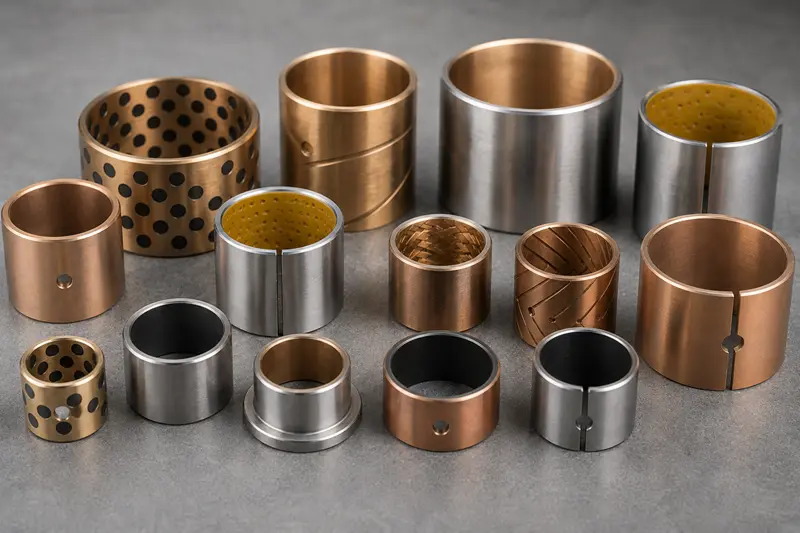
Your equipment must run without oil, but you worry about wear and failure. Choosing the wrong bushing leads to costly downtime. Understanding the right material for your conditions is key.
For dry running, the best bushing depends on your specific needs. PTFE composite bushings are great for low friction, graphite plugged bushings excel under heavy loads, and engineering plastics are ideal for corrosive environments. The key is matching the material to your load, speed, and environment.
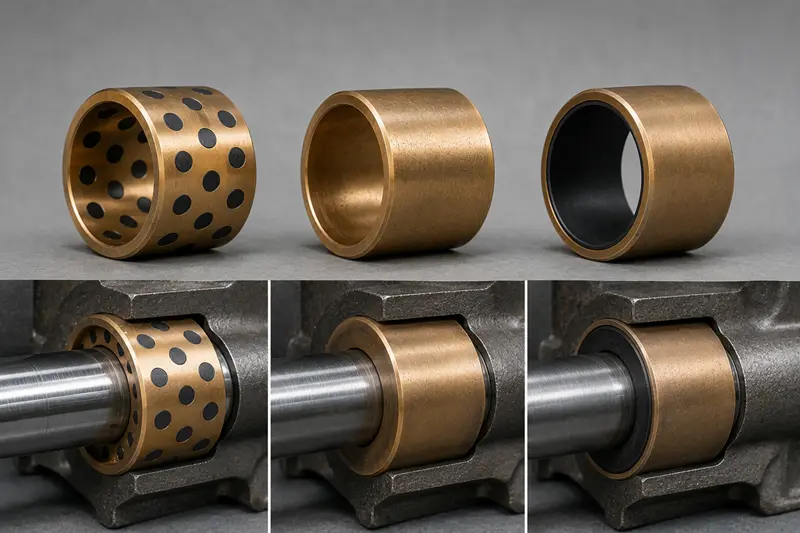
As a manufacturer, we see many buyers looking for a simple answer to this question. They want one "best" material that solves all their lubrication problems. But from our factory's perspective, the challenge of dry running isn't just about eliminating oil; it's about controlling heat and wear without it. The real question isn't "which material is best," but "which material is right for your machine?" Let's break down the options to help you find that answer.
Are PTFE Composite Bushings Always the Best Choice for Dry Running?
PTFE bushings are famous for low friction, making them a default choice.[^1] But in high-load or abrasive environments, they can fail unexpectedly, halting production. Knowing their limits prevents costly mistakes.
PTFE composite bushings are excellent for maintenance-free, low-friction needs.[^2] However, they are sensitive to high loads, abrasive particles, and edge pressure. They perform best in clean environments under moderate loads where smooth, quiet motion is the top priority.
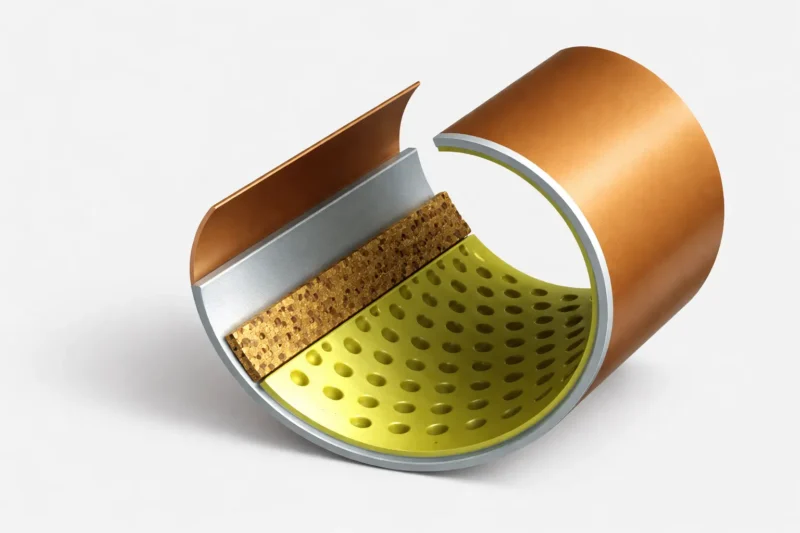
When people think of "dry running," they often think of PTFE composite bushings, also known as DU-type bushings. From our factory floor, we can tell you they are a fantastic product, but they are not a universal solution. Their magic comes from a three-layer structure: a steel backing for strength, a porous bronze middle layer, and a top layer of PTFE and lead (or other fillers). During initial use, a thin film of this PTFE mixture transfers to the mating shaft, creating an incredibly low-friction surface. This is why they are so good for applications that need smooth, stick-slip-free movement.
However, this thin PTFE layer is also their main limitation.
When They Work Best
- High-Speed, Low-Load: Think of office equipment, automotive hinges, or hydraulic pumps where motion is fast but the pressure isn't extreme.
- Clean Environments: The transfer film is very thin and can be quickly destroyed by abrasive dust, dirt, or other contaminants.
When to Be Cautious
- Heavy or Shock Loads: High pressure can overwhelm and wear away the soft PTFE layer.
- Dirty Environments: In applications like construction or agriculture, dirt acts like sandpaper on the bushing surface, leading to rapid failure.
- Edge Loading: If the shaft is misaligned, it puts all the pressure on the edge of the bushing, which can scrape off the lubricating layer.
For an OEM buyer, the takeaway is clear: PTFE bushings are a high-tech solution for the right problem, not a heavy-duty workhorse.
When Should You Choose Graphite Plugged Bushings Instead?
Your heavy-duty machine runs at low speeds and can't be lubricated. A standard bushing will seize up, causing major damage and downtime. Graphite plugged bushings are designed for exactly this challenge.[^3]
Choose graphite plugged bushings for low-speed, high-load applications where regular oiling is impossible. The solid graphite provides continuous lubrication under extreme pressure, making them ideal for tough environments like steel mills or construction equipment where other dry bushings would fail.
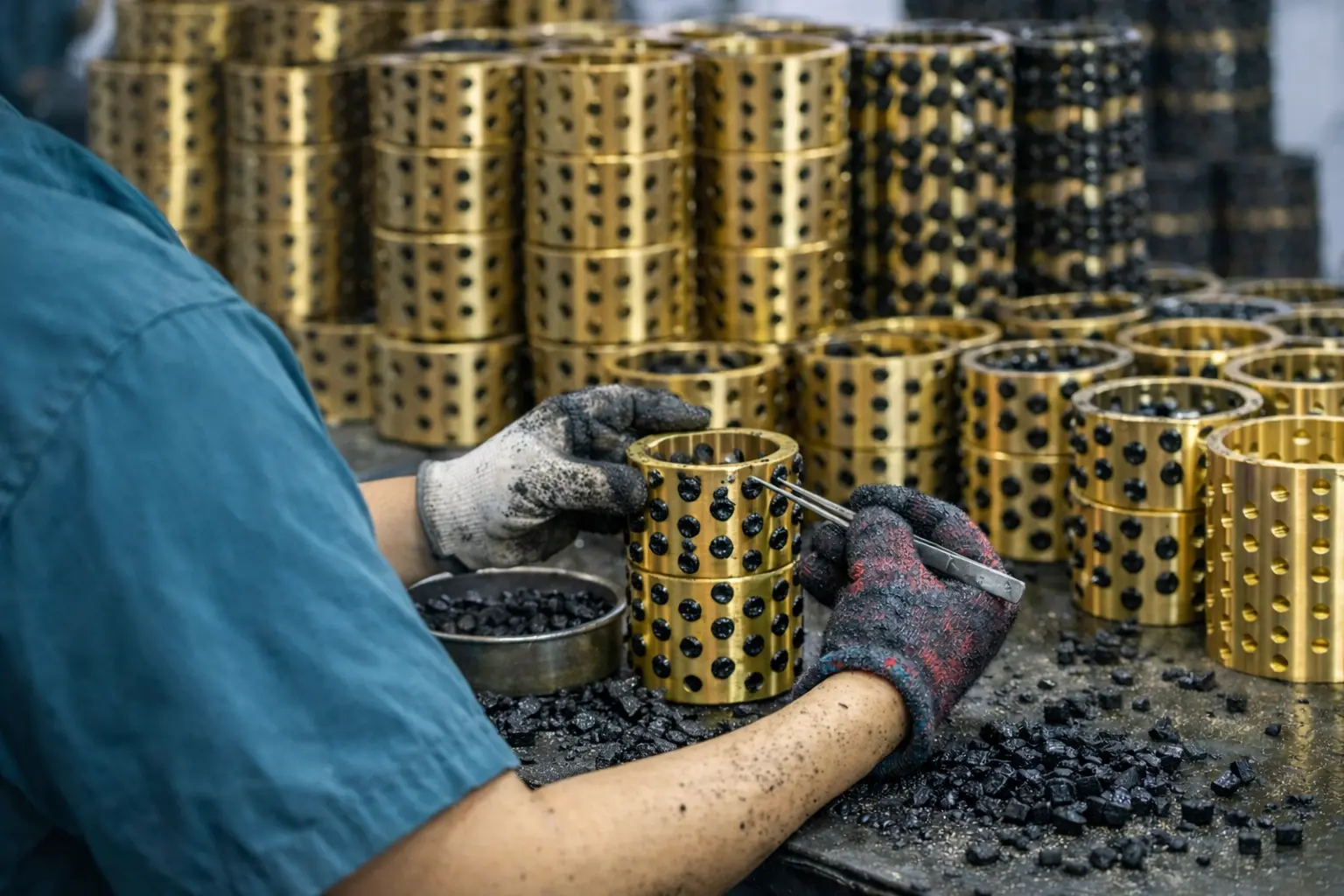
Now let's talk about the opposite end of the spectrum. If a PTFE bushing is a precision instrument, a graphite plugged bronze bushing is a powerful hammer. These are built for brute force. We start with a strong bronze base—often aluminum bronze or tin bronze—and then we machine holes into it, which we fill with solid graphite plugs. The bronze provides massive load-bearing capacity, while the graphite provides a constant source of solid lubricant as the bushing wears. There is no thin layer to scrape off.
This design makes them perfect for some of the toughest jobs out there. They don't care about a little dirt, and they thrive under immense pressure, as long as the movement is slow. Fast speeds would generate too much heat.
Here is a simple comparison to help you decide:
| Feature | Graphite Plugged Bushing | PTFE Composite Bushing |
|---|---|---|
| Load Capacity | Very High | Moderate |
| Speed Limit | Very Low | Moderate to High |
| Contamination | High Tolerance | Low Tolerance |
| Primary Use | Heavy pivots, extreme pressure | Smooth, fast, and clean motion |
We often supply these for equipment like injection molding machines, turbines in dams, and steel mill machinery. In these cases, the goal isn't speed; it's the ability to withstand crushing forces without seizing up, year after year.
What About Engineering Plastic and Other Special Bushings?
Your application involves water, chemicals, or needs to be lightweight. Metal bushings will corrode or add weight, compromising your design. Engineering plastic bushings offer a unique, corrosion-free alternative.[^4]
Engineering plastic bushings are ideal for light-to-medium load applications that require corrosion resistance, low weight, or operation in water. Materials like POM, Nylon, or PEEK offer good self-lubricating properties and are perfect for food processing, marine, or textile machinery.
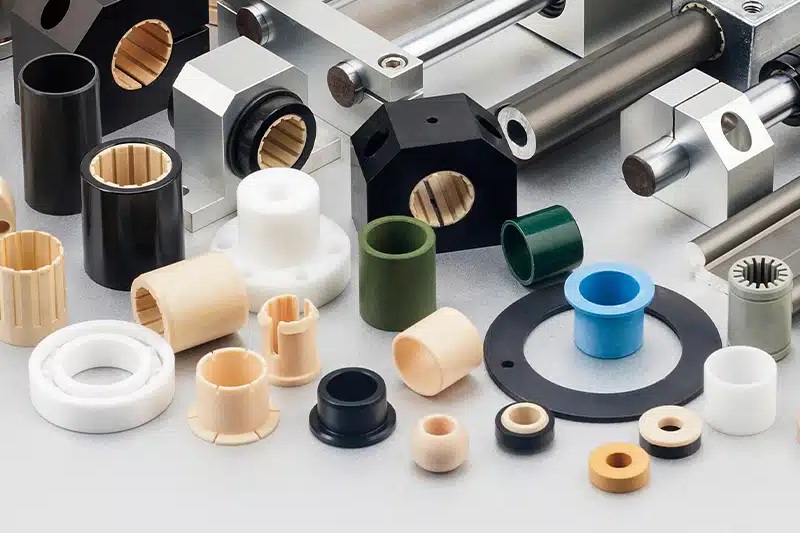
Metal isn't always the answer. In our experience, many OEM clients come to us with problems that metal bushings simply can't solve. That’s where engineering plastics come in. These are not your everyday plastics; they are advanced polymers designed for mechanical applications. They are naturally self-lubricating, lightweight, and completely resistant to rust.
We manufacture these for a wide range of specialized industries. The choice of plastic is critical and depends entirely on the operating environment.
For Corrosion Resistance
If your machine operates in water, like in food processing or marine equipment, plastic bushings are a perfect choice. Materials like POM (Polyoxymethylene) have very low moisture absorption and are compliant with food-grade standards. They won't corrode or contaminate the product.
For Lightweight Designs
In industries like aerospace or automation, every gram counts. Plastic bushings offer good mechanical strength at a fraction of the weight of their bronze or steel counterparts.[^5]
For Special Environments
For extreme conditions, we turn to high-performance plastics like PEEK (Polyetheretherketone). PEEK can handle high temperatures, aggressive chemicals, and high loads, making it suitable for demanding applications in the chemical or medical industries. It's more expensive, but when nothing else works, it's the right solution.
The key point here is that plastic bushings are problem-solvers for specific challenges that metal bushings can't address.
Why Do My Dry Running Bushings Fail?
You chose a "maintenance-free" bushing, but it failed much sooner than expected. This unexpected failure caused costly downtime and made you question your supplier's quality. Understanding the real reason is crucial.
Dry running bushings often fail not because the material is bad, but because application demands exceed the bushing's limits.[^6] Common mistakes include underestimating loads, ignoring contamination, or replacing a greased bushing in a heavy-duty system without redesigning for dry operation.
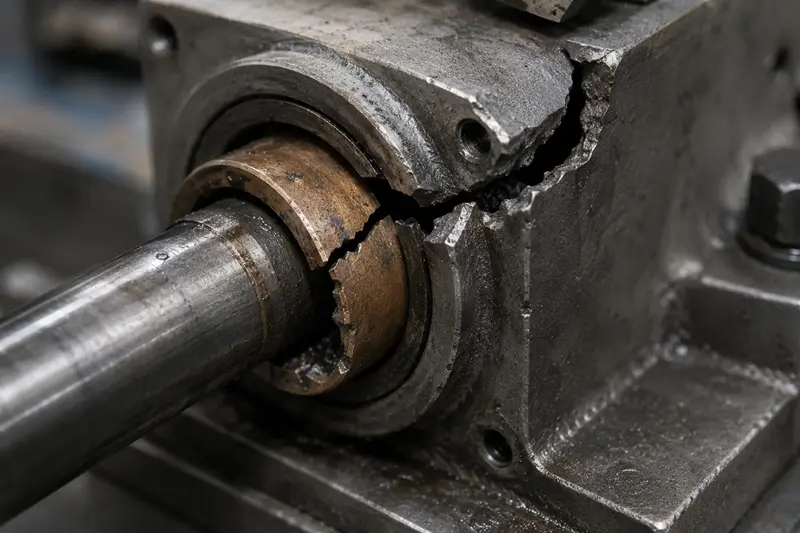
This is the most important question we get. From a factory perspective, most failures are not due to a "bad bushing." They are due to a mismatch between the bushing and the job it was asked to do. The term "self-lubricating" can be misleading; it doesn't mean "invincible."[^7]
I remember a client who used our PTFE composite bushings to replace greased bronze bushings in a rock crushing machine. The new bushings failed in less than a week. The client was upset, but the problem wasn't the bushing's quality. The application was extremely high-impact and full of abrasive dust—the worst possible environment for a PTFE bushing.
Here are the most common reasons for failure:
Exceeding the PV Limit
Every dry running bushing has a PV limit, which stands for Pressure (P) multiplied by Velocity (V).[^8] It’s a measure of how much load and speed it can handle before it overheats and fails. Simply choosing a bushing based on shaft size is a common and costly mistake.
Heat Buildup
In a lubricated system, oil or grease does two jobs: it reduces friction and carries away heat. A dry running bushing has to handle heat all on its own. At high speeds, this heat can build up, causing the bushing material to soften, deform, or wear out rapidly.
Contamination
As mentioned before, dirt and debris are killers for many dry running bushings, especially PTFE composites. The particles get embedded in the soft surfaces and act like grinding paste, destroying both the bushing and the shaft.
The most critical mistake we see is when a design that relies on grease is switched to dry running without a full analysis. A greased bronze bushing can handle immense abuse because the grease provides a protective, cooling film. Taking that away requires choosing a dry running bushing that is specifically designed for that same level of abuse.[^9]
Conclusion
Choosing the right dry-running bushing isn't about one magic material. It's about matching a material’s strengths to your specific load, speed, and environment to ensure long-term reliability.
[^1]: "[PDF] Performance of PTFE-Lined Composite Journal Bearings", https://ntrs.nasa.gov/api/citations/19820009389/downloads/19820009389.pdf. This source explains why PTFE bushings are widely used for low-friction applications, supporting their reputation as a default choice. Evidence role: expert_consensus; source type: encyclopedia. Supports: PTFE bushings are famous for low friction, making them a default choice.. Scope note: The source may not address limitations in high-load or abrasive environments. [^2]: "[PDF] Performance of PTFE-Lined Composite Journal Bearings", https://ntrs.nasa.gov/api/citations/19820009389/downloads/19820009389.pdf. This source explains the structure and typical applications of PTFE composite bushings, supporting their suitability for low-friction environments. Evidence role: mechanism; source type: education. Supports: PTFE composite bushings are excellent for maintenance-free, low-friction needs.. Scope note: The source may not address specific industrial applications or extreme conditions. [^3]: "Self-Lubricating Graphite Plugged Bronze Sleeve Bushings Now ...", https://www.nationalbronze.com/News/self-lubricating-graphite-plugged-bronze-sleeve-bushings-now-available-online/. This source provides an overview of graphite plugged bushings, including their design and suitability for high-load, low-speed applications. Evidence role: mechanism; source type: education. Supports: Graphite plugged bushings are designed for exactly this challenge.. Scope note: The source may not cover all possible use cases or alternative materials. [^4]: "Plastic Bushings Guide 2026 | Bost High-Quality Solutions", https://www.gz-bost.com/blog/ultimate-guide-to-plastic-bushings-2026-selection-types-performance.html. This source discusses the properties of engineering plastic bushings, including their corrosion resistance and suitability for specific environments. Evidence role: mechanism; source type: education. Supports: Engineering plastic bushings offer a unique, corrosion-free alternative.. Scope note: The source may focus on general properties rather than specific industrial applications. [^5]: "Material Matters: Choosing the Right Plastic Bushings for Industries", https://www.zetwerk.com/resources/knowledge-base/miscellaneous/how-to-choose-the-best-quality-bushing-plastic-for-various-industrial-needs/. This source compares the mechanical strength and weight of plastic bushings to metal alternatives, supporting the claim. Evidence role: statistic; source type: research. Supports: Plastic bushings offer good mechanical strength at a fraction of the weight of their bronze or steel counterparts.. Scope note: The source may not address specific load capacities or durability comparisons. [^6]: "What Are Bushings? Materials, How They Work & How to Choose", https://www.lily-bearing.com/resources/blog/what-are-bushings?srsltid=AfmBOookSNMyKSrU1GMPfuqTNfVWSBpN_hoDztQv-DkuyNvmnqHu5H1b. This source discusses common reasons for dry running bushing failures, supporting the claim about mismatched application demands. Evidence role: expert_consensus; source type: education. Supports: Dry running bushings often fail not because the material is bad, but because application demands exceed the bushing's limits.. Scope note: The source may not address all failure scenarios or specific industries. [^7]: "Self-Lubricating Materials for Extreme Condition Applications - PMC", https://pmc.ncbi.nlm.nih.gov/articles/PMC8510052/. This source explains the limitations of self-lubricating bushings, supporting the claim about the term being potentially misleading. Evidence role: definition; source type: education. Supports: The term "self-lubricating" can be misleading; it doesn't mean "invincible.". Scope note: The source may not address specific misconceptions in industrial contexts. [^8]: "Bernoulli's Equation", https://www.princeton.edu/~asmits/Bicycle_web/Bernoulli.html. This source defines the PV limit and explains its importance in selecting dry running bushings. Evidence role: definition; source type: education. Supports: Every dry running bushing has a PV limit, which stands for Pressure (P) multiplied by Velocity (V).. Scope note: The source may not provide specific PV limits for different materials. [^9]: "Dry-Run Plastic Sleeve Bearings - Grainger Industrial Supply", https://www.grainger.com/category/power-transmission/bearings/plain-bearings/dry-run-plastic-sleeve-bearings. This source discusses the importance of selecting bushings designed for specific load and environmental conditions, supporting the claim. Evidence role: expert_consensus; source type: education. Supports: Taking that away requires choosing a dry running bushing that is specifically designed for that same level of abuse.. Scope note: The source may not address all types of abuse or specific industries.