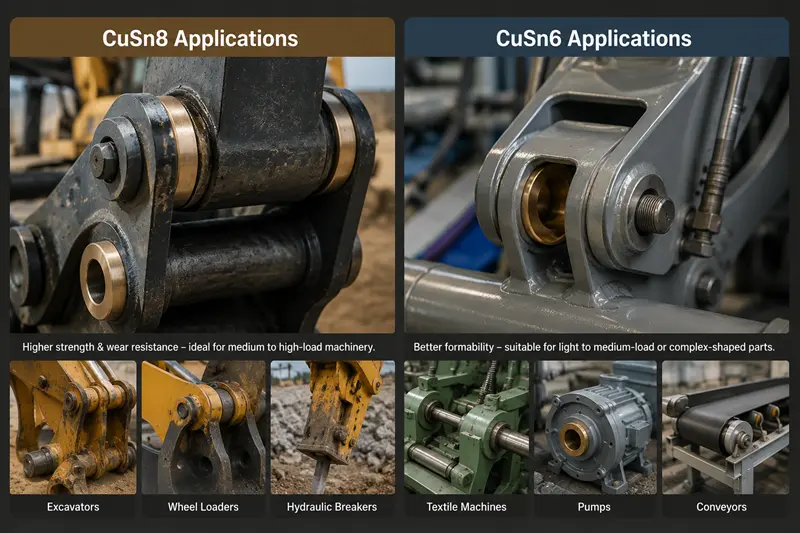
Your heavy equipment bushings are failing too soon, causing costly downtime and repairs. You thought you chose a strong material, but it still wears out, leaving you frustrated and searching for answers.
To choose the right bushing for a high-load application, you must look beyond material strength. The best approach is to create a reliable system by matching the bushing to the load type (stable vs. impact), motion (rotation vs. oscillation), lubrication conditions, and the mating shaft's properties.
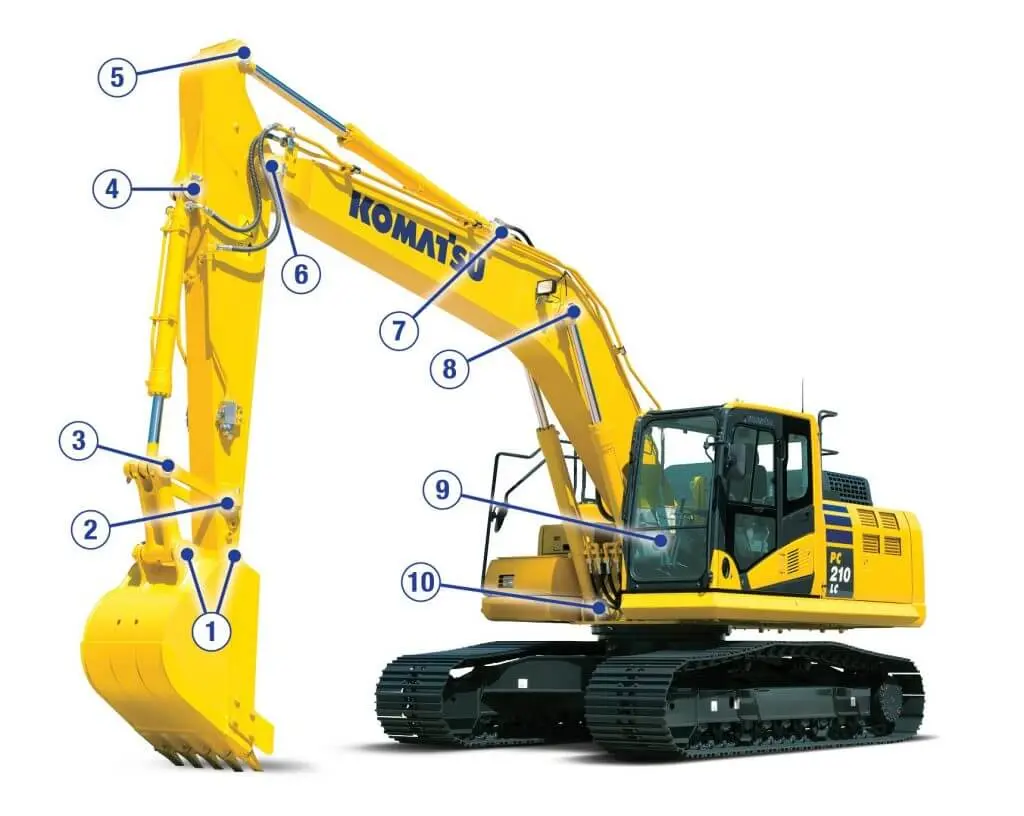
Over the years, I've had countless conversations with buyers for major OEM projects. So many of them start by asking, "What's your strongest material for heavy loads?" While it seems like a logical question, it often leads to the wrong solution. A high-load application is a complex environment, and simply picking the "hardest" material is like using a hammer for every problem. To truly prevent early failures like wear, deformation, or seizure, we need to dig a little deeper. Let's walk through the exact questions we ask at the factory to engineer a solution that lasts.
Is Your Bushing Facing Stable or Impact Loads?
You specified a bushing for a 10-ton static load, but it failed under what seemed like normal use. Sudden shocks and vibrations are invisible enemies, creating peak forces that are far greater than the rated load.[^1]
For a simple static load, a standard bronze or steel-backed material might be enough. But for impact loads, common in heavy machinery pivots and hydraulic cylinders, you need a material with high compressive strength and excellent fatigue resistance to avoid deformation and catastrophic failure.
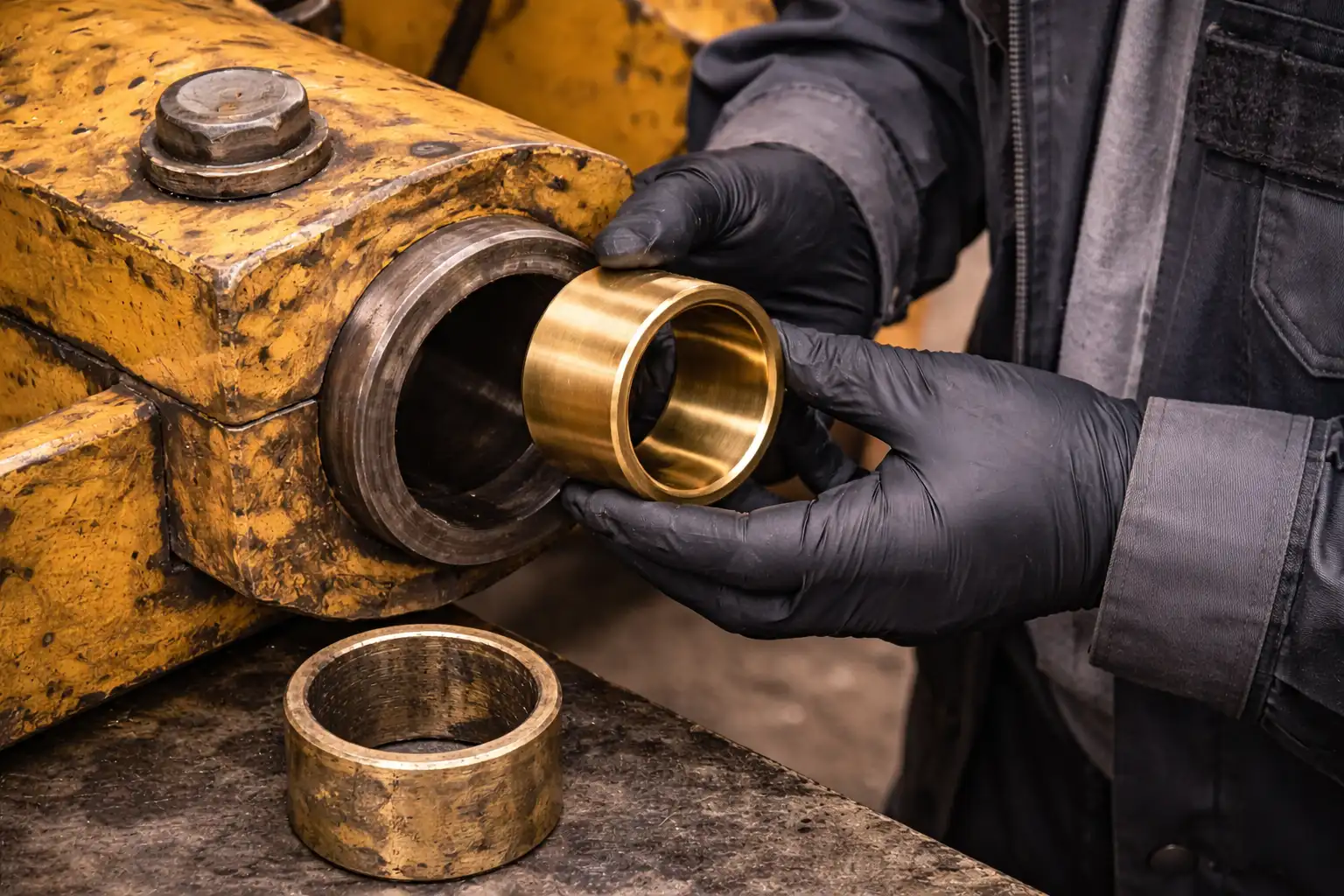
When we look at a high-load application, the first thing we clarify is the nature of that load. Is it a constant, predictable force, or is it subject to sudden shocks and jolts? The answer completely changes our material recommendation.
Understanding Static Load
A static load is a constant, unchanging force. Think of a bushing supporting a heavy, stationary part of a machine. In these cases, the main concern is the material's compressive strength—its ability to resist being crushed. The selection process is relatively straightforward, and often a standard, cost-effective material will perform perfectly well for years.
The Danger of Impact Loads
Impact loads are a different beast entirely. These are the sudden, high-energy forces you see in excavator arm joints, hydraulic cylinder mounts, and landing gear. The actual force during an impact can be many times higher than the machine's rated load.[^2] This is where material fatigue becomes the enemy. A bushing might withstand a single impact, but repeated shocks will cause micro-cracks that grow over time, leading to eventual failure.
| Load Type | Common Applications | Recommended Bushing Characteristics |
|---|---|---|
| Stable Load | Conveyor rollers, support structures | Standard material strength is sufficient. Focus on cost and wear life. |
| Impact Load | Excavator arm joints, hydraulic cylinder mounts | High compressive strength, fatigue resistance, good shock absorption. |
This is why we often recommend high-strength bronze alloys or specially designed composite bushings for these applications. They are engineered not just to be strong, but to be tough and resilient against the repeated punishment of impact forces.
Does Your Application Involve Rotation or Oscillation?
Your bushing works perfectly in a fast-rotating motor but fails quickly in an oscillating crane arm. This happens because the back-and-forth motion creates unique wear patterns that full rotation doesn't, leading to premature failure.
Full 360-degree rotation helps maintain a stable lubrication film. In contrast, high-load, low-speed oscillation constantly breaks this film, causing metal-to-metal contact and severe boundary wear. For this, graphite-plugged bronze, high-strength solid bronze, or composite self-lubricating bushings are far more effective.
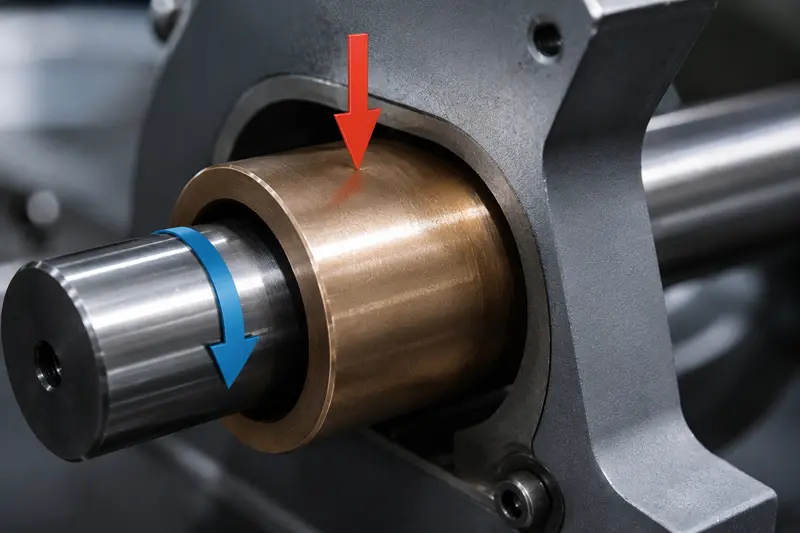
The type of movement is just as critical as the load itself. A bushing that is perfect for a spinning shaft can be a terrible choice for a pivoting joint, even if the load and speed seem similar.
The Challenge of Oscillating Motion
Oscillating motion involves small, repetitive back-and-forth movements, common in the joints of construction and agricultural machinery. This motion is incredibly tough on bushings. The lubricant gets squeezed out of the high-pressure zone and doesn't have a chance to be replenished by full rotation.[^3] This leads to a condition called "boundary lubrication," where the metal surfaces are barely separated. The result is accelerated wear, fretting corrosion, and a high risk of the bushing seizing to the shaft.
Why Full Rotation is Different
In a fully rotating application, like an electric motor shaft, the movement helps create and maintain a "hydrodynamic wedge" of lubricant. This wedge physically separates the shaft from the bushing, preventing metal-to-metal contact. Wear is distributed evenly around the entire circumference of the bushing, leading to a much longer and more predictable service life.
| Motion Type | How it Affects Lubrication & Wear | Recommended Bushing Solutions |
|---|---|---|
| Full Rotation | Maintains a consistent hydrodynamic lubrication film. Wear is distributed evenly. | Standard bronze bushings with oil grooves, bimetal bushings. |
| Oscillation | Constantly breaks the oil film. Concentrates wear in a small arc. High risk of fretting and seizure. | Graphite-plugged self-lubricating bushings, PTFE-lined composite bushings, high-strength solid bronze. |
For B2B buyers, telling us that the application involves "low-speed oscillation" is one of the most helpful pieces of information you can provide. It immediately tells us to look beyond standard lubricated bearings and consider self-lubricating solutions designed for this exact challenge.
Should You Prioritize Lubrication Access or a Maintenance-Free Design?
You're tired of scheduling constant maintenance just to grease a hard-to-reach bushing. But maintenance-free options seem expensive, and you're not sure if they can handle the heavy load your application demands.
If your equipment allows for easy and regular greasing, traditional bronze or bimetal bushings with well-designed oil grooves are a very cost-effective choice. If lubrication is difficult, costly, or impossible, a self-lubricating bushing (like graphite-plugged bronze or a PTFE composite) is the superior long-term solution.
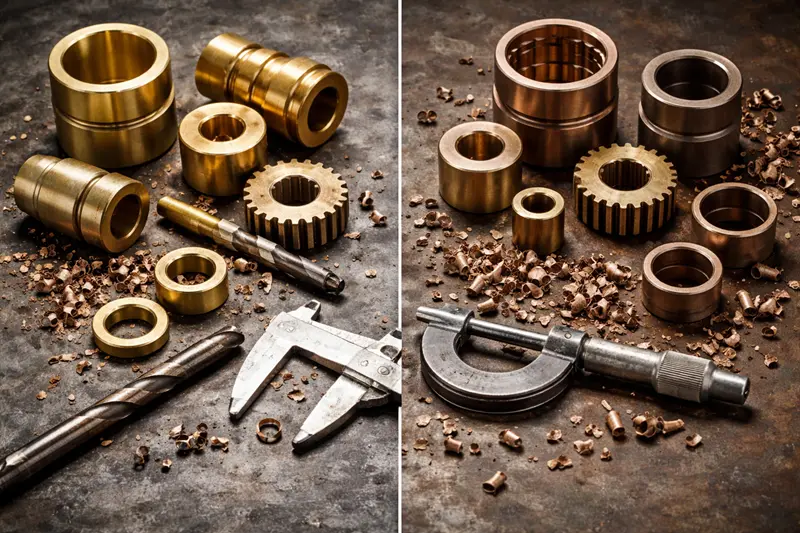
The choice between a "greased" bushing and a "greaseless" one isn't just a technical detail; it's a business decision. It comes down to the total cost of ownership, not just the upfront price of the part.
When to Choose a Lubricated Bushing
A traditional lubricated bushing is a great choice when maintenance is practical. For machinery where greasing points are easily accessible and part of a regular service schedule, these bushings offer excellent performance at a lower initial cost. The key is consistency. The lubrication schedule must be followed without fail, as a missed grease interval can quickly lead to catastrophic failure under high load. We can even customize oil groove patterns to optimize lubricant distribution for your specific application.
The Case for Self-Lubricating Bushings
Self-lubricating bushings are the answer for applications where maintenance is a problem. Think of a pivot point 50 feet up on a crane or a joint buried deep inside a complex machine. The higher upfront cost is quickly paid back by eliminating maintenance labor, machine downtime, and the risk of failure due to human error. They also provide a cleaner solution, which is critical in industries like food processing or textiles where grease contamination is not an option.
| Factor | Lubricated Bushings (e.g., Bronze w/ Oil Grooves) | Self-Lubricating Bushings (e.g., Graphite, PTFE) |
|---|---|---|
| Upfront Cost | Lower | Higher |
| Maintenance | Requires regular greasing schedule | None or minimal |
| Risk | Failure if lubrication is missed | Lower risk of human error |
| Best For | Accessible locations, controlled environments | Remote or inaccessible locations, clean operations |
Thinking about the lifetime cost, not just the part cost, will lead you to the most profitable and reliable solution for your equipment.
Is Your Shaft Ready for a High-Load Bushing?
You've installed a top-of-the-line, expensive bushing, but it still failed within months. You blame the bushing, but the real culprit is often the shaft it's running on.
A high-load bushing is only one half of the bearing system. If the mating shaft is too soft, has a rough surface finish, or is misaligned, it will quickly destroy even the best bushing, causing scoring, galling, and premature wear. The shaft's condition is just as critical as the bushing itself.
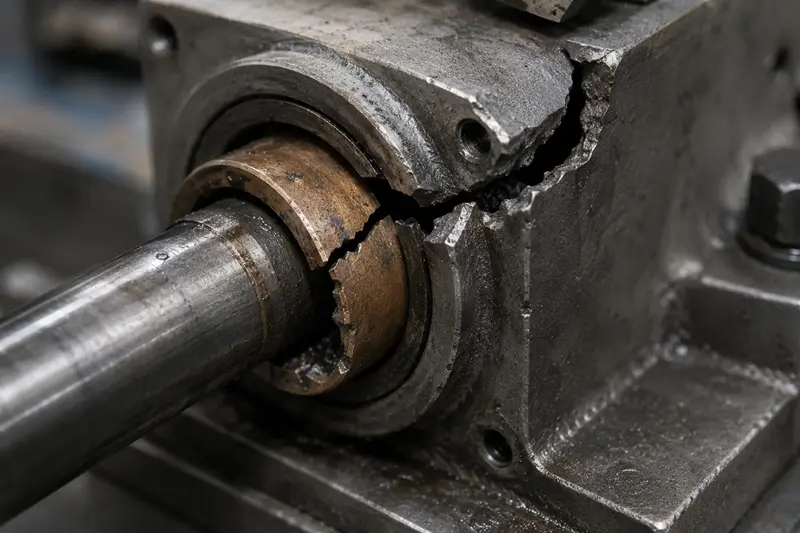
I cannot stress this enough: a bushing does not work in isolation. It forms a system with the shaft. When we see a premature failure in a high-load application, the shaft is one of the first things we investigate. Investing in a premium bushing without ensuring the shaft is properly prepared is like putting high-performance tires on a car with a bent axle.
The Importance of Shaft Hardness
Under high pressure, a soft shaft can deform or wear down. This process creates tiny, abrasive metal particles that get trapped between the shaft and the bushing. These particles act like sandpaper, grinding away at both surfaces and leading to rapid failure.[^4] As a general rule, the shaft should always be significantly harder than the bushing material to ensure the wear is confined to the replaceable bushing, not the expensive shaft.
Why Surface Finish Matters
A shaft's surface may look smooth, but at a microscopic level, it has peaks and valleys.[^5] A rough surface acts like a file, scraping away the soft bearing layer of the bushing.[^6] For high-load applications, a smooth, ground shaft surface is essential. It allows a proper lubrication film to form and dramatically reduces friction and abrasive wear.
| Shaft Property | Why It's Critical | General Recommendation for High Loads |
|---|---|---|
| Hardness | Prevents the shaft from deforming or wearing, which creates abrasive debris. | Shaft should be significantly harder than the bushing material. Hardened steel is common. |
| Surface Finish (Roughness) | A smooth surface allows a lubrication film to form and reduces friction and wear. | A smooth, ground surface (low Ra value) is required. A rough surface will act like a file. |
| Alignment | Ensures load is distributed evenly across the bushing. Misalignment causes edge loading and rapid failure.[^7] | Precise machining and installation are critical to prevent uneven pressure on the bushing edges. |
As a manufacturer, our ability to provide a truly reliable solution increases tenfold when a buyer provides us with the shaft's specifications—its material, hardness, and surface finish. With that information, we can create a perfectly matched system.
Conclusion
Choosing the right high-load bushing isn't about finding the strongest material. It's about building a reliable system where the bushing, shaft, load, and lubrication all work together perfectly.
[^1]: "Vibration Impact Analysis for Heavy Machinery: Best Practices", https://ivctechnologies.com/2025/12/09/vibration-impact-analysis-for-heavy-machinery-best-practices/. This source explains how sudden shocks and vibrations can create forces exceeding the rated load in heavy machinery applications. Evidence role: mechanism; source type: education. Supports: Sudden shocks and vibrations can create forces that exceed the rated load, leading to bushing failure.. [^2]: "[PDF] Impact Loads - UNM", https://www.unm.edu/~bgreen/ME360/Impact%20Loads.pdf. This source provides data on how impact forces in machinery can exceed rated loads by several times, particularly in heavy equipment applications. Evidence role: statistic; source type: research. Supports: Impact forces in machinery can exceed the rated load by several times, leading to potential failure.. [^3]: "Maximizing the Lubricant Film Thickness Between a Rigid ... - PMC", https://pmc.ncbi.nlm.nih.gov/articles/PMC8208301/. This source explains how lubrication is affected in oscillating motion, leading to boundary lubrication conditions. Evidence role: mechanism; source type: research. Supports: In oscillating motion, lubrication is squeezed out of high-pressure zones, leading to boundary lubrication and increased wear.. [^4]: "[PDF] A PHYSICALLY-BASED ABRASIVE WEAR MODEL FOR ... - OSTI", https://www.osti.gov/servlets/purl/836365. This source explains how abrasive particles generated by wear can accelerate damage in mechanical systems. Evidence role: mechanism; source type: research. Supports: Abrasive particles generated by wear can cause rapid failure by grinding surfaces in mechanical systems.. [^5]: "[PDF] Chapter D2 - The shaft running surface - Kalsi Engineering", https://www.kalsi.com/handbook/D02_The_shaft_running_surface.pdf. This source discusses the microscopic surface roughness of shafts and its impact on lubrication and wear. Evidence role: mechanism; source type: education. Supports: Shaft surfaces, though appearing smooth, have microscopic roughness that affects lubrication and wear.. [^6]: "Modeling Adhesive Wear in Asperity and Rough Surface Contacts", https://pmc.ncbi.nlm.nih.gov/articles/PMC9573368/. This source explains how rough surfaces can cause abrasive wear on bushings by acting like a file. Evidence role: mechanism; source type: research. Supports: Rough shaft surfaces can cause abrasive wear on bushings by scraping their soft layers.. [^7]: "Edge loading in metal-on-metal hips: low clearance is a new risk factor", https://pmc.ncbi.nlm.nih.gov/articles/PMC4107799/. This source discusses how misalignment in mechanical systems leads to edge loading and accelerated failure. Evidence role: mechanism; source type: education. Supports: Misalignment in mechanical systems can cause edge loading, leading to rapid failure of components like bushings..