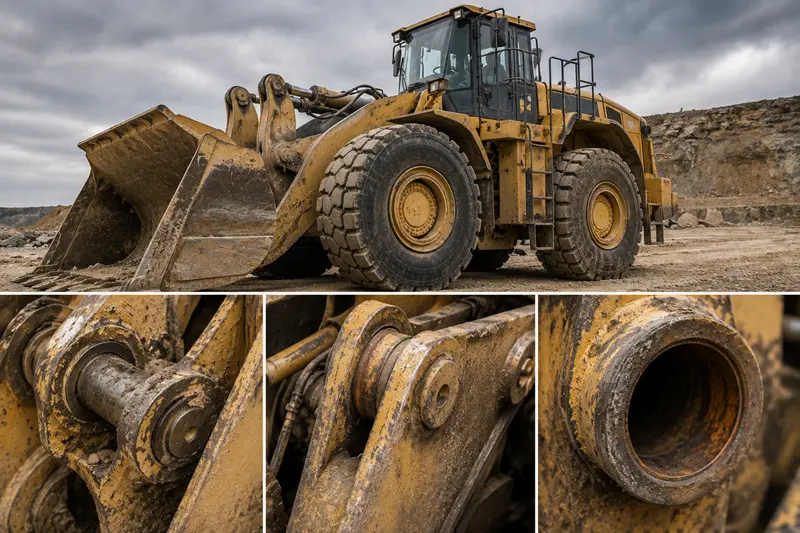
Your equipment keeps failing in dusty conditions. The constant downtime is costing you money. The right bushing and sealing system is the key to reliability and performance.
For dusty environments, the best solution is a complete system, not just a single bushing. Graphite-plugged bushings are excellent for low-speed, heavy loads.[^1] However, an effective sealing design to block dust is often more critical than the bushing material itself. A holistic approach is essential for longevity.
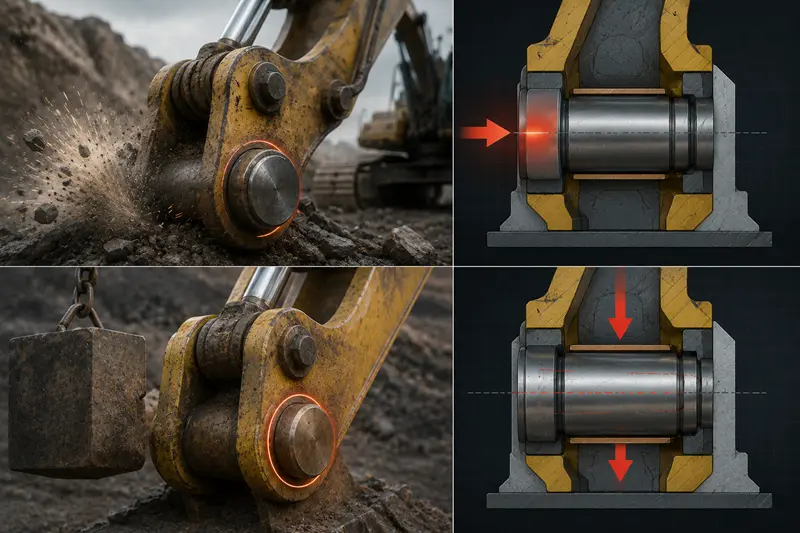
Many of our customers believe that choosing a "more wear-resistant" bushing is the simple answer for dusty job sites. From our factory's perspective, this is only part of the story. The real challenge isn't just normal wear and tear. It's something much more destructive. Understanding this difference is the first step to finding a truly reliable solution, and it's what separates a quick fix from a long-term engineering success. Let's look at what's really happening inside your machinery.
Why Do Standard Bushings Fail So Quickly in Dust?
Your bushings wear out fast in the field, causing expensive delays. You blame the material quality, but even upgrades fail. The real enemy is the dust itself, turning your equipment into a grinder.
The primary issue is abrasive wear.[^2] When fine particles like sand, mineral dust, or metal shavings get between the shaft and the bushing, they act like sandpaper. These hard particles grind away at both surfaces, causing rapid failure far sooner than expected, regardless of the material's inherent strength.
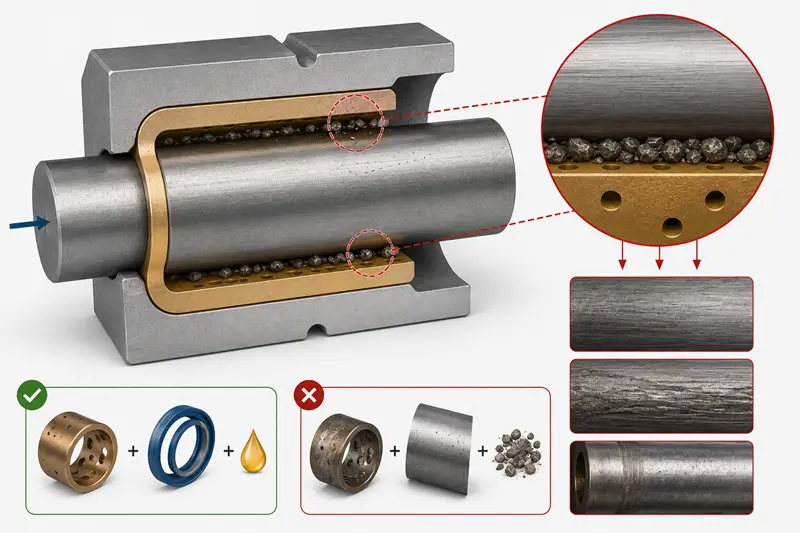
From our experience manufacturing for heavy industries, we see this problem constantly. In applications like mining equipment, agricultural machinery, and cement processing plants, the air is full of abrasive contaminants. These particles are tiny but destructive.[^3] They embed themselves into the softer bushing material or get trapped in the lubricant, creating a grinding paste. This process accelerates wear exponentially. A bushing that might last for years in a clean factory setting can be destroyed in weeks or even days.
The Real Enemy: Abrasive Wear
You can't fight an enemy you don't understand. Abrasive wear is different from the adhesive wear that happens when two clean metal surfaces rub together.
- Adhesive Wear: Metal-to-metal contact causes microscopic welds that break, pulling material from one surface to the other.
- Abrasive Wear: Hard particles cut or plow material from a surface. This is much more aggressive.
Think of it this way: a standard bushing is designed to handle pressure and friction. It is not designed to have sandpaper constantly rubbing against it. That's why simply upgrading to a harder material often doesn't work. The abrasive particles will still get in and start their destructive work. The solution must start by preventing these particles from ever reaching the bearing surface in the first place.
Which Bushing Materials Handle Dust Best?
You need a bushing that can survive dust, but the options are confusing. Choosing the wrong one means you'll face the same failures again. You need a clear guide to make the right choice.
There is no single "best" material for all dusty conditions. The ideal choice depends on load, speed, and maintenance access. Common effective options include graphite-plugged bronze, high-strength solid bronze, and certain composite bushings, each with specific strengths when paired with proper sealing.
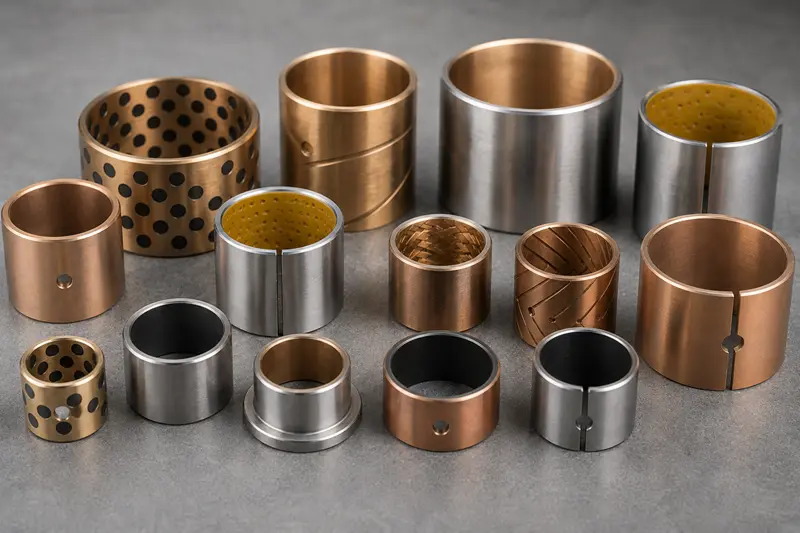
When a customer asks us for the "most wear-resistant" bushing for a dusty application, we start by asking about the operating conditions. A high-speed, low-load application has very different needs than a low-speed, high-load one.[^4] The type of dust also matters—fine cement dust behaves differently than coarse sand. Based on thousands of projects, we can group the most effective materials into a few key categories. Each has a role to play, but none are a magic bullet. The secret is matching the material's properties to the machine's specific demands and, most importantly, its sealing system.
Comparing Your Options
Let's break down the common choices. We often guide OEM buyers through this exact decision-making process. The key is to balance performance, cost, and the realities of the working environment.
| Material Type | Best Use Case | Strengths | Weaknesses in Dust |
|---|---|---|---|
| Graphite Plugged Bronze | Low-speed, high-load, hard to lubricate areas. | Self-lubricating graphite plugs provide lubrication even when grease is contaminated or absent. The bronze body offers high load capacity. | Can be more expensive. The graphite can be scraped out by very coarse abrasive particles over time.[^5] |
| High Strength Bronze | Heavy-load, moderate-speed equipment with reliable lubrication. | Excellent load-bearing capacity and durability. Can be machined with grease grooves to help flush out contaminants. | Absolutely requires a good seal and consistent greasing. If the seal fails, it will wear very quickly. |
| PTFE Composite Bushings | Light to medium loads, no-maintenance applications. | Self-lubricating and low friction. Can tolerate some dry running and are resistant to chemical corrosion. | The soft PTFE layer can be easily damaged by sharp, hard particles. Not suitable for severely abrasive environments without perfect sealing. |
As you can see, every material has a condition where it shines and a condition where it fails. The choice isn't about finding an indestructible material, but about building a system where the material is protected enough to do its job.
Is Upgrading the Bushing Material Enough to Solve Dust Problems?
You've tried stronger, more expensive bushings, but they still fail prematurely. This is frustrating and costly. You start to think no material can handle the conditions, but the problem lies elsewhere.
No, upgrading the material alone is rarely enough.[^6] In most dusty environments, the design of the seal is more important than the bushing material. If abrasive particles can freely enter the bearing area, even the most advanced bushing will eventually be ground down and fail.
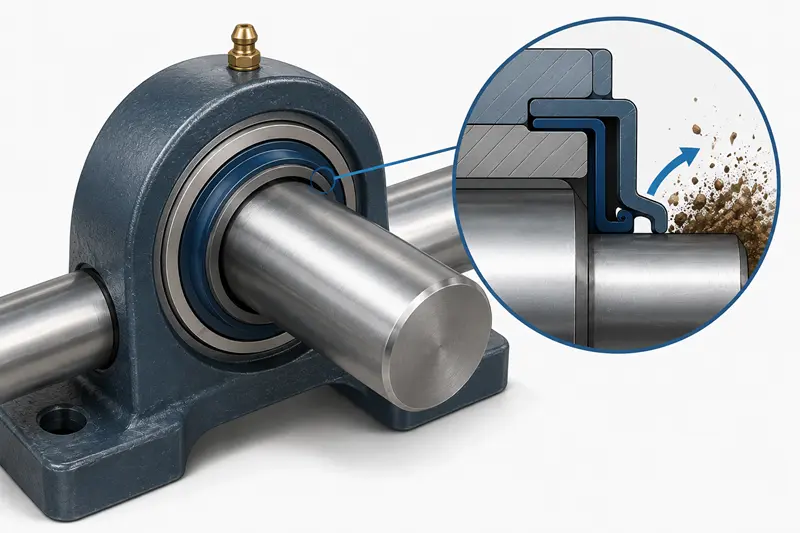
I remember a case with a customer who manufactured quarrying equipment. They were using our high-strength bronze bushings in a conveyor pivot point, but the bushings were failing every three months. They asked us for an even harder, more exotic alloy. We suspected something else was wrong. After discussing the design, we realized their seal was a simple felt washer that was quickly becoming saturated with abrasive dust. It was actually holding the dust against the shaft. We helped them redesign the housing to include a multi-lip polyurethane seal. They went back to using a standard bronze bushing, and its service life increased to over two years. The problem was never the bushing; it was the door being left wide open for the enemy to walk in.
Sealing: Your First Line of Defense
Think of the bushing as a soldier and the seal as its body armor. Sending the soldier into battle without armor is a recipe for disaster, no matter how strong the soldier is.
- Purpose of a Seal: A seal's job is twofold: keep lubricant in and keep contaminants out. In dusty environments, the second job is far more critical.
- Types of Seals: Effective options range from simple lip seals and V-rings to more complex labyrinth seals or sealed housing assemblies. The right choice depends on the shaft speed, potential for misalignment, and the type of contaminant.
- The System Approach: The bushing, shaft, housing, and seal must be designed to work together. A high-quality seal can protect a standard, cost-effective bushing, resulting in a system that is both reliable and economical. Conversely, a poor seal will undermine even the most expensive bushing.
How Should You Design a Complete Bearing System for Dusty Conditions?
You know a system approach is needed, but where do you start? Designing everything together seems complex. You need a clear, step-by-step process to ensure you cover all the critical points.
Start by analyzing the contaminants, then design the seal to block them. Finally, select a bushing material and lubrication method that complements the seal and handles the load. This three-step, integrated approach ensures all components work together for maximum reliability.
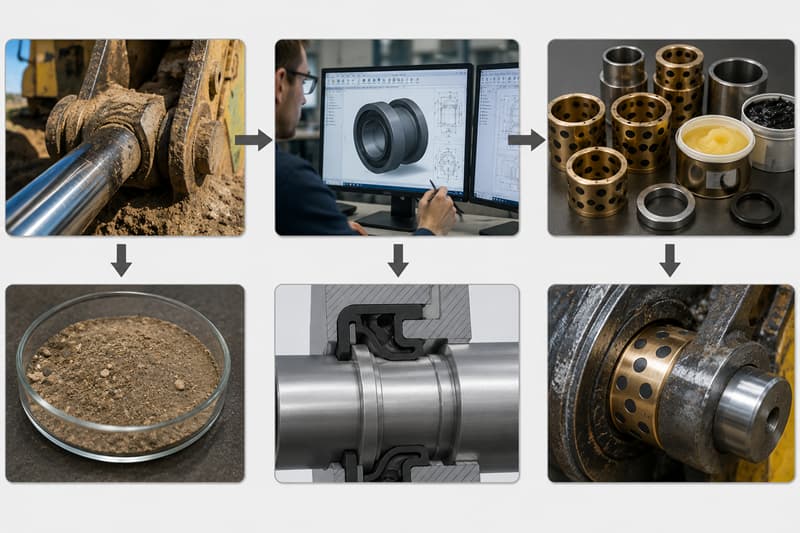
As a manufacturer, we don't just sell parts; we help our OEM clients build reliable machines. The most successful projects are those where the bearing system is considered early in the design phase, not as an afterthought. Trying to find a bushing to fit a pre-existing, poorly sealed design is much harder and less effective.[^7] By thinking about the problem systematically, you can create a robust solution that stands up to the harshest environments.[^8] This collaborative process between your engineering team and a manufacturing partner like us is the most direct path to success.
A Practical Design Framework
Here is the process we use with our OEM partners to develop bearing systems for dusty applications.
Step 1: Analyze the Environment and Contaminants First, understand what you're fighting against.
- Particle Size: Are you dealing with fine powder or coarse grit?
- Particle Hardness: Is it soft soil or hard mineral dust?
- Other Factors: Is there moisture, high temperature, or chemical exposure? This analysis will directly influence your seal selection.
Step 2: Design the Sealing System This is the most critical step. Based on your analysis, choose and design the seal.
- For Fine Dust: Multi-lip seals or tightly sealed housings work well.[^9]
- For Coarse Grit & High Speed: A labyrinth seal, which creates a difficult path for contaminants to travel, can be very effective.
- For Heavy Debris: Consider adding an external guard or deflector as a first line of defense to protect the primary seal.
Step 3: Select the Bushing and Lubrication Method With the seal protecting the system, you can now choose the best bushing.
- With an Excellent Seal: You may be able to use a cost-effective option like a standard bronze or PTFE composite bushing. Lubrication (grease) can be used to provide a secondary barrier and flush out any small particles that get past the seal.[^10]
- If Sealing is Imperfect or Maintenance is Difficult: This is where self-lubricating materials like graphite-plugged bronze become invaluable. They provide built-in protection for when the primary defenses are compromised.
By following this order—Contaminant, Seal, Bushing—you build a defense in layers, creating a system that is far more resilient than one based on a single "strong" material.
Conclusion
For dusty environments, focus on sealing first, then choose a suitable bushing. A complete system design is the only true way to achieve long-term reliability and performance.
[^1]: "What Are The Best Bushings For Low Speed, High Load ...", https://cnfesoda.com/what-are-the-best-bushings-for-low-speed-high-load-applications/. Graphite-plugged bushings are widely recognized for their ability to provide lubrication in challenging conditions, particularly in low-speed, high-load applications. Evidence role: expert_consensus; source type: encyclopedia. Supports: Graphite-plugged bushings are suitable for low-speed, heavy-load applications.. Scope note: The effectiveness of graphite-plugged bushings may vary depending on the specific environmental conditions and maintenance practices. [^2]: "The Particle Breakage Effect on Abrasive Wear Process ... - PMC", https://pmc.ncbi.nlm.nih.gov/articles/PMC10146463/. Abrasive wear is a well-documented phenomenon where hard particles cause material degradation by cutting or plowing surfaces. Evidence role: definition; source type: education. Supports: Abrasive wear is the main cause of bushing failure in dusty environments.. [^3]: "Review of Health Effects of Automotive Brake and Tyre Wear ...", https://pmc.ncbi.nlm.nih.gov/articles/PMC12030913/. Fine particles such as sand and mineral dust are known to cause significant wear in mechanical systems by embedding into softer materials or contaminating lubricants. Evidence role: mechanism; source type: research. Supports: Tiny particles like sand and mineral dust are destructive to bushings in dusty environments.. Scope note: The extent of damage may depend on the specific type and concentration of particles. [^4]: "Sliding material and bushing type selection guides", https://www.skf.com/us/products/plain-bearings/bushings-thrust-washers-strips/principles/type-selection-guides. Different operating conditions, such as speed and load, significantly influence the choice of bushing materials and designs. Evidence role: expert_consensus; source type: education. Supports: Operating conditions like speed and load affect the choice of bushing materials.. Scope note: Specific examples of applications are not provided, which may limit the generalizability of the statement. [^5]: "Exploring the Benefits: Bronze Bushings with Graphite Plugs", https://www.roccarbon.com/bronze-bushings/. Graphite in self-lubricating bushings can be vulnerable to coarse abrasive particles, which may reduce its effectiveness over time. Evidence role: mechanism; source type: research. Supports: Coarse abrasive particles can scrape out graphite from bushings over time.. Scope note: The vulnerability depends on the type and concentration of abrasive particles. [^6]: "Bushing Seals manufactured by the ...", https://steinseal.com/bushing-seals/. Upgrading bushing material alone often fails to address abrasive wear issues, as sealing systems play a critical role in preventing particle ingress. Evidence role: expert_consensus; source type: education. Supports: Upgrading bushing material alone does not solve abrasive wear problems in dusty environments.. Scope note: The effectiveness of sealing systems may vary depending on design and environmental factors. [^7]: "Seismic Evaluation and Retrofit of 230-kV Porcelain ...", https://peer.berkeley.edu/publications/1999-14. Retrofitting bushings into poorly sealed designs often leads to reduced effectiveness and increased wear. Evidence role: expert_consensus; source type: education. Supports: Retrofitting bushings into poorly sealed designs is less effective than designing a complete system.. Scope note: The statement assumes that the seal design is the primary issue, which may not always be the case. [^8]: "Timken ® Syber ® Bearing System Designer", https://engineering.timken.com/timken-syber-bearing-system-designer/. A systematic approach to bearing system design is widely recommended for improving reliability in harsh environments. Evidence role: expert_consensus; source type: education. Supports: A systematic approach to bearing system design improves reliability in harsh environments.. Scope note: Specific examples of systematic designs are not provided, which may limit practical application. [^9]: "Understanding Lip Seals: Types And Benefits", https://elastostar.com/what-is-a-lip-seal/. Multi-lip seals and tightly sealed housings are effective in preventing dust ingress in mechanical systems. Evidence role: mechanism; source type: research. Supports: Multi-lip seals and tightly sealed housings are effective against dust ingress.. Scope note: The effectiveness may depend on the specific type of dust and operating conditions. [^10]: "Grease lubrication: features and application examples", https://www.dropsa.com/en/blog/grease-lubrication. Grease lubrication is effective in creating a secondary barrier and flushing out small particles in mechanical systems. Evidence role: mechanism; source type: research. Supports: Grease lubrication can act as a secondary barrier against small particles in dusty environments.. Scope note: The effectiveness may depend on the type of grease and maintenance frequency.