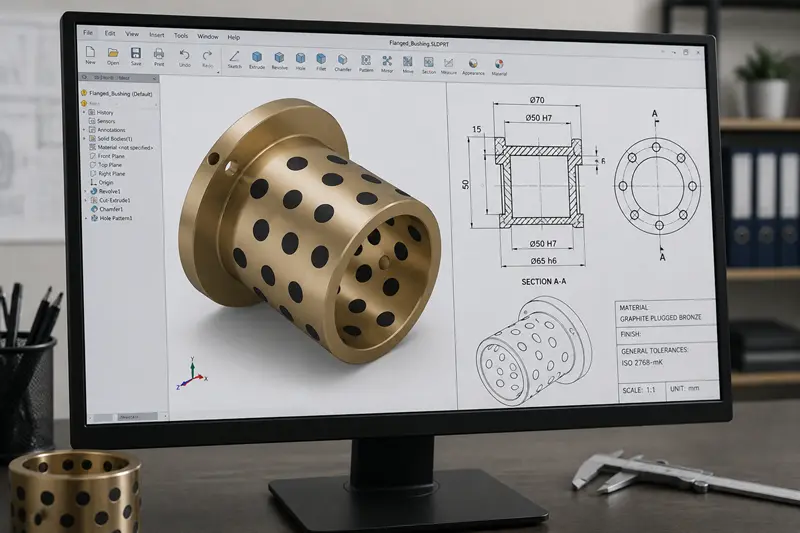
Getting a fast and accurate bushing quote can be frustrating. You send a request and get more questions back, delaying your project. The problem isn't the price, it's incomplete information.
To get a precise and fast quotation for bushings, you must provide a technical drawing or detailed dimensions (ID, OD, L), the required material, and the application's working conditions (load, speed, temperature). Additionally, specifying the order quantity, tolerance requirements, and any custom features is essential.
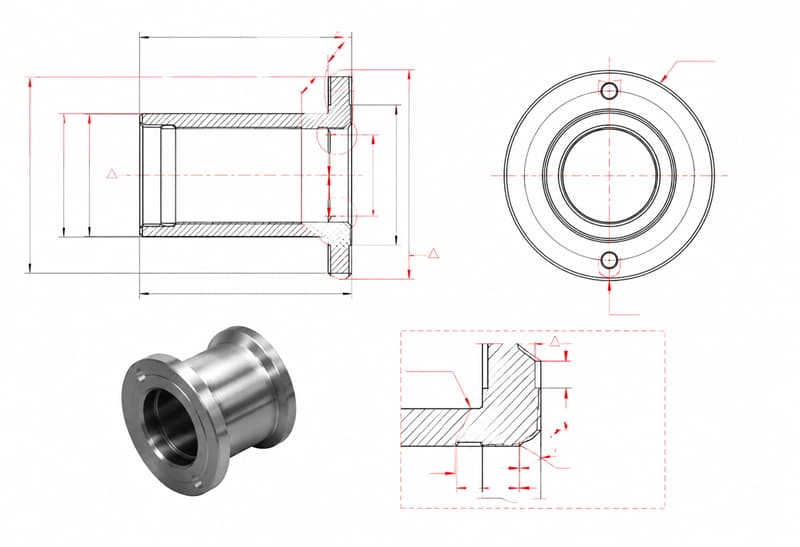
As a manufacturer, I've seen countless quotation requests. The most common one is just a single line asking for a price. But from a factory's perspective, a bushing is more than its size. The price can change dramatically based on material, precision, and other factors. That’s why we rarely give a price without all the details. The most time-consuming part of a project isn’t making the quote; it's the back-and-forth to confirm all the technical details. Let's explore what information helps us give you a perfect quote right away.
Are Drawings and Dimensions Enough for an Accurate Quote?
You send the basic inner diameter, outer diameter, and length, expecting a quick price. But this often leads to more questions from the factory, causing delays and frustration for your project.
No, basic dimensions alone are not enough for an accurate quote. While essential, a full technical drawing (PDF, CAD, or 3D file) is much better. It shows critical details like tolerances, material specifications, and special features, which prevents guesswork and ensures the final quote matches your exact needs.
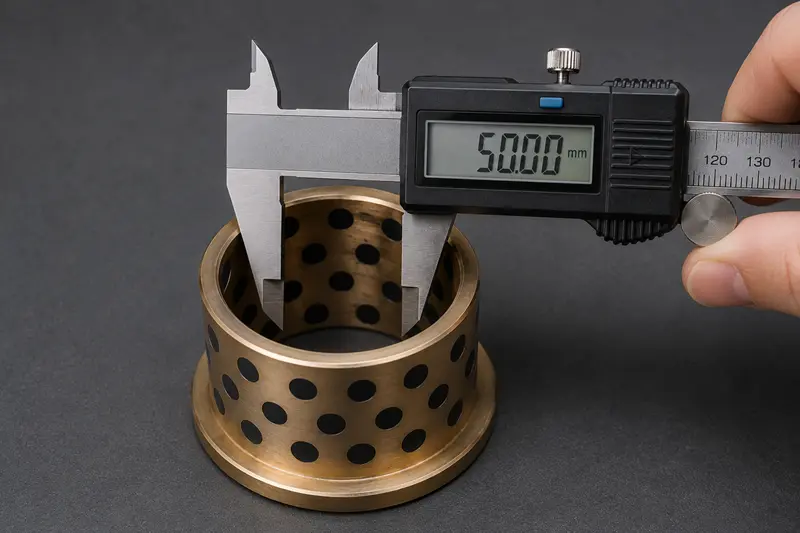
In my experience, a technical drawing is the single best piece of information you can provide. Basic dimensions are a starting point, but they don't tell the whole story. A full drawing communicates a level of detail that words often cannot. For us in the factory, it removes all doubt and allows us to quote with confidence.
The Difference Between Basic Dimensions and a Full Drawing
Think of basic dimensions as a rough sketch and a technical drawing as the final blueprint. The blueprint contains all the instructions needed to build something correctly. Two bushings can have the exact same ID, OD, and length but be completely different products.[^1] One might be a simple part, while the other requires high-precision grinding and a complex groove pattern. This is why a drawing is so valuable.
| Information Source | What It Tells Us | What It Misses |
|---|---|---|
| Basic Dimensions (ID, OD, L) | The general size and shape. | Tolerances, material, surface finish, chamfers, special features (grooves, holes). |
| Full Technical Drawing | All of the above, plus manufacturing details. | Nothing. It is the complete manufacturing instruction. |
Providing a complete drawing is the fastest way to get a reliable quote.[^2] It helps us understand exactly what you need and ensures the price we give you is the price you'll pay.
How Do Materials and Working Conditions Affect Your Bushing Price?
You need a bushing for a new machine but are not sure what material to use. Choosing the wrong one can lead to early failure, expensive repairs, and machine downtime.[^3]
Materials and working conditions have a massive impact on the price and lifespan of a bushing.[^4] A self-lubricating PTFE composite bushing costs more than a standard bronze one, but it's necessary for dry-running applications.[^5] Details like load, speed, and temperature help us recommend the most cost-effective solution.
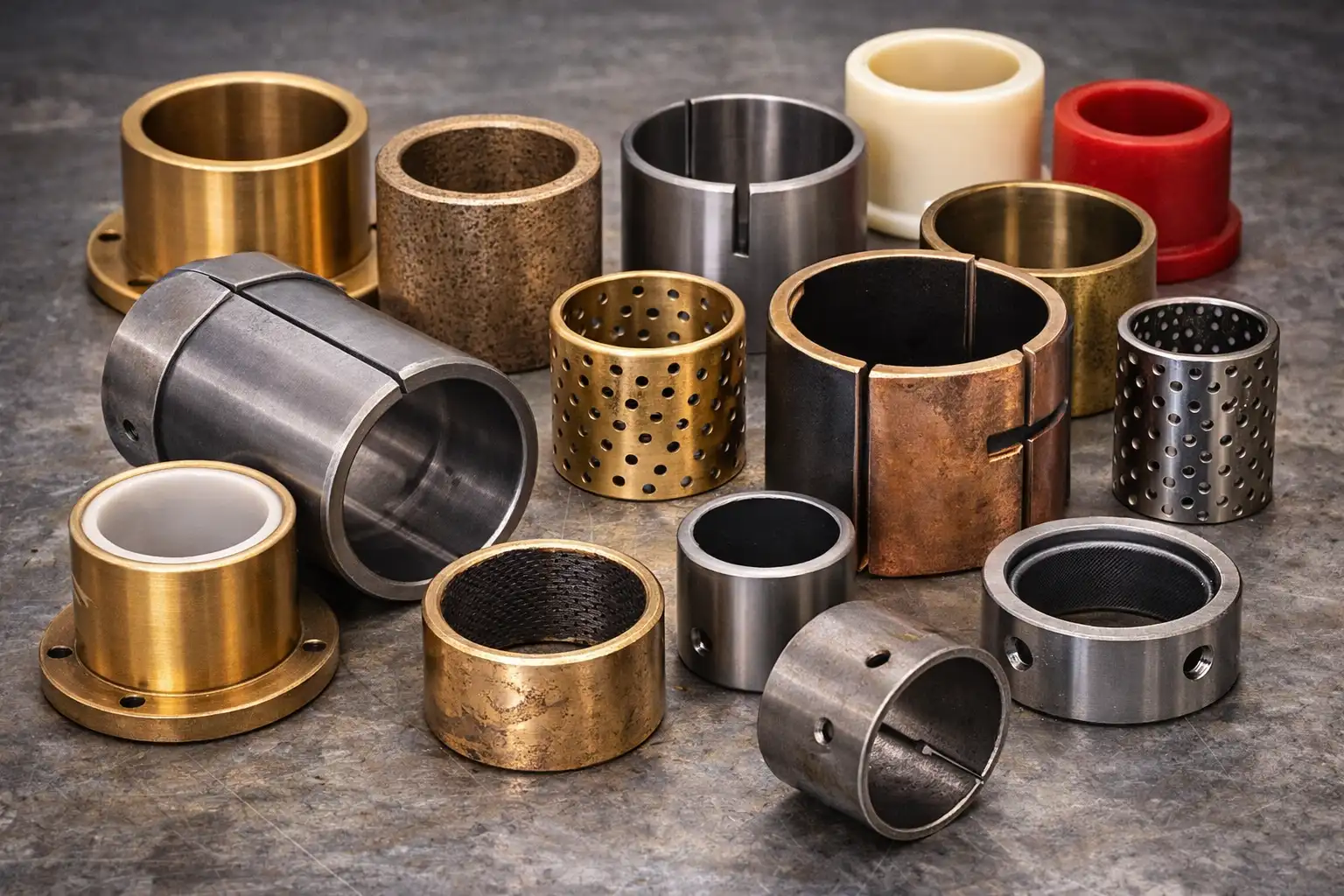
Many buyers overlook the importance of sharing the application details. They might ask for a "bronze bushing" without realizing that different bronze alloys exist for different jobs. The best approach is to describe the environment where the bushing will operate. This information allows us to act as your partner, not just a supplier. We can use our manufacturing experience to recommend a material that provides the best performance for the lowest possible cost over the life of your equipment. A cheap bushing that fails quickly is much more expensive in the long run.
Matching the Material to the Job
The working conditions directly determine the best material for your bushing. A high-load, low-speed application has very different needs than a low-load, high-speed one.[^6]
Here are some key factors we consider:
- Load: How much weight or force will the bushing support?
- Speed: How fast will it rotate or oscillate?
- Temperature: What is the minimum and maximum operating temperature?
- Lubrication: Will there be oil, grease, or will it run dry?
- Environment: Is it exposed to dust, water, or chemicals?
| Material Example | Best For... | Key Advantage |
|---|---|---|
| Bronze Bushing | High loads, slow speeds, with lubrication. | Strong and durable. |
| Graphite Plugged Bushing | High temperatures, hard-to-reach areas. | Self-lubricating. |
| PTFE Composite Bushing | Dry running, low friction applications. | No oil or grease needed. |
| Bimetal Bushing | High loads, good fatigue resistance. | Combines steel strength with bearing surface. |
When you share your working conditions, we can prevent problems before they start. We can ensure you don't overpay for a high-spec material you don't need or, worse, under-specify and cause a failure in the field.
Why Do Quantity and Tolerances Dramatically Change the Cost?
You ask for a price on 100 bushings and get a quote that seems high. You're not sure why, not realizing that setup costs for small batches can be significant.
Quantity directly affects production methods and unit cost. A small batch of 100 pieces has high setup costs per unit.[^7] An order of 10,000 pieces allows for automated production, making each part cheaper. Similarly, tight tolerances require extra machining and inspection, increasing the price.
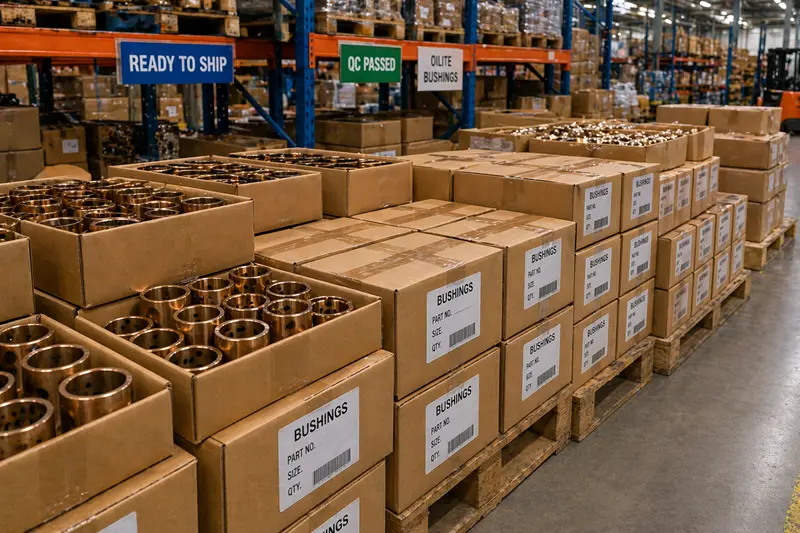
As an OEM factory, our entire process is built around efficiency at scale. The economics of manufacturing play a huge role in pricing, and understanding this can help you get a better price.[^8] It's not just about the material and labor in a single part; it's about the entire production run. This is especially true for custom parts that require specific tooling. That's why we always ask about quantity—it helps us choose the most cost-effective manufacturing method for your specific needs.
The Economics of Bushing Manufacturing
Let's break down the two biggest cost drivers: quantity and tolerances.
Quantity: Manufacturing works on economies of scale. Setting up a machine to produce a custom bushing takes time. Whether we make 100 parts or 10,000 parts, that setup cost is roughly the same. When we spread that cost over a larger number of units, the price per unit goes down. For long-term OEM projects, providing your estimated annual demand is much more helpful than a single order quantity. It allows us to plan our production schedule and offer you a stable, competitive price for the entire year.
Tolerances: Tolerance refers to the acceptable range of variation for a dimension. A "standard" tolerance might be easy to achieve with our regular processes. A "precision" or "tight" tolerance requires more work.
| Feature | Standard Tolerance | Precision Tolerance | Impact on Cost |
|---|---|---|---|
| Process | Stamping, Rolling | CNC Machining, Grinding | High |
| Inspection | Batch Sampling | 100% Individual Inspection | High |
| Scrap Rate | Lower | Potentially Higher | Medium |
Making a part more precise costs more money because it requires more machine time, more skilled labor, and more rigorous inspection. If your application doesn't truly need that level of precision, you can save money by using standard tolerances.
Do Special Features and Certifications Influence the Quotation?
Your design needs a simple bushing, but with a specific oil groove and a material certificate. You get a quote that's higher than you expected, surprised by the cost of these additions.
Yes, absolutely. Special features like oil grooves, holes, or coatings require extra manufacturing steps and tooling, which adds to the cost.[^9] Certifications like RoHS or PPAP involve specific sourcing, process controls, and documentation, which are also factored into the final price.[^10]
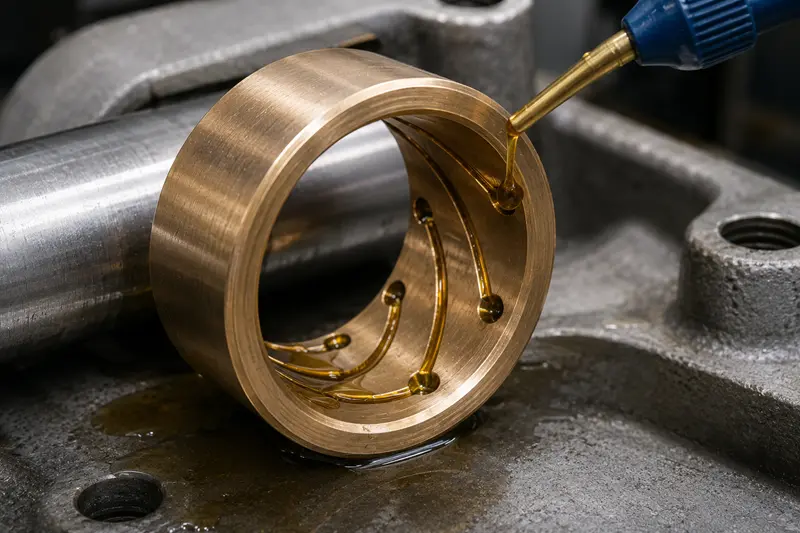
It’s easy to think of a feature like an oil groove as a minor detail, but from a manufacturing standpoint, it’s a whole new process step. A simple rolled bushing can be made very quickly. But adding a spiral groove means that bushing has to be moved to another machine, set up, processed, and then moved again. The same goes for certifications. They aren't just a piece of paper; they represent a promise of quality and compliance that requires a strict system of controls from raw material to final inspection. Mentioning these needs upfront is critical for a transparent and accurate quote.[^11]
Beyond the Basic Bushing
Many applications require more than just a plain, cylindrical bushing. These custom features are essential for performance but do affect the price.
Common Custom Features:
- Oil Grooves: These channels hold and distribute lubricant. They come in many patterns, like a simple spiral, a figure-eight, or a double loop. Each pattern requires a different setup.
- Oil Holes: Drilled holes that allow lubricant to enter the bearing surface.
- Graphite Inserts: Solid lubricant plugs embedded in the bushing for self-lubricating applications.
- Splits and Notches: Gaps or cutouts used for installation or locking the bushing in place.
Certifications and Market Needs: If you are selling your equipment in specific markets or industries, you may need to prove compliance with certain standards.
- RoHS/REACH: These are for environmental and health safety, mainly for products sold in Europe.
- PPAP (Production Part Approval Process): This is a comprehensive quality assurance report required by the automotive industry.
- Material Certificates: These trace the raw material back to its source to verify its composition and quality.
Fulfilling these requirements involves more than just paperwork. It means using certified material suppliers, maintaining strict process controls, and conducting specific tests. By telling us about these needs from the start, we can build them into our process and give you a single, all-inclusive quote.
Conclusion
To get the best quote, provide complete details: drawings, application conditions, quantity, and special needs. This helps us give you an accurate price and the right bushing for your project.
[^1]: "Design of bushing arrangements - SKF", https://www.skf.com/us/products/plain-bearings/bushings-thrust-washers-strips/bushings/design-bushing-arrangements. This source explains how identical dimensions can result in different bushing designs due to variations in tolerances, materials, and features. Evidence role: mechanism; source type: education. Supports: Bushings with identical dimensions can differ significantly due to tolerances, materials, and features.. Scope note: The explanation may focus on specific manufacturing processes or industries. [^2]: "Why is Computer-Aided Design (CAD) Important to Manufacturing?", https://www.goodwin.edu/enews/why-is-computer-aided-design-cad-important/. This source emphasizes the importance of complete technical drawings for accurate and efficient quotation processes. Evidence role: expert_consensus; source type: institution. Supports: Complete technical drawings are essential for accurate and efficient quotation processes.. Scope note: The source may focus on specific industries or types of manufacturing. [^3]: "ASCE Failure Case Studies", https://engr.charlotte.edu/asce-failure-case-studies/. This source explains how material selection impacts the durability and operational efficiency of bushings, emphasizing the risks of incorrect choices. Evidence role: mechanism; source type: education. Supports: Choosing the wrong material for a bushing can result in early failure, costly repairs, and machine downtime.. Scope note: The source may focus on specific types of bushings or applications. [^4]: "Aging Failure Mechanism of Transformer Bushing Sealing Rings ...", https://pmc.ncbi.nlm.nih.gov/articles/PMC12897839/. This source discusses how material properties and environmental factors influence the cost and durability of bushings. Evidence role: mechanism; source type: research. Supports: Material and working conditions significantly affect the price and lifespan of bushings.. Scope note: The source may not cover all material types or working conditions. [^5]: "[PDF] Performance of PTFE-Lined Composite Journal Bearings", https://ntrs.nasa.gov/api/citations/19820009389/downloads/19820009389.pdf. This source provides comparative data on the cost and application suitability of PTFE composite versus bronze bushings. Evidence role: statistic; source type: institution. Supports: PTFE composite bushings are more expensive than bronze ones but are essential for dry-running applications.. Scope note: The cost comparison may vary by manufacturer or region. [^6]: "Bushings vs. Bearings: Key Factors to Consider - PIB Sales", https://pibsales.com/bearings/bushings-vs-bearings-key-factors-to-consider/?srsltid=AfmBOoo8qMRCF6Eyt0zRA6OkG87PQO8FpVfBZlXMddME7PIkrr_EyGAz. This source outlines how load and speed requirements influence bushing material and design choices. Evidence role: mechanism; source type: research. Supports: Load and speed requirements significantly affect the material and design of bushings.. Scope note: The source may not address all possible load-speed combinations. [^7]: "Small-batch production: Definition, Methods and Management - Tacto", https://www.tacto.ai/en/procurement-glossary/low-volume-production. This source discusses how small batch sizes lead to higher per-unit costs due to setup expenses. Evidence role: statistic; source type: education. Supports: Small batch sizes result in higher per-unit costs due to setup expenses.. Scope note: The cost analysis may vary depending on the manufacturing process or industry. [^8]: "Batch size optimization based on production part cost", https://rrpress.utsa.edu/items/8fec1340-1bb4-4ce6-8d40-6dd5b0ddcdc3. This source explains how manufacturing economics, including setup costs and batch sizes, influence pricing. Evidence role: mechanism; source type: education. Supports: Manufacturing economics, including setup costs and batch sizes, significantly influence pricing.. Scope note: The source may focus on specific manufacturing industries or processes. [^9]: "Oil Grooves Designs For Bronze Bushings", https://bronzeoilless.com/services/oil-grooves/. This source explains how custom features like oil grooves and coatings increase manufacturing complexity and cost. Evidence role: mechanism; source type: research. Supports: Custom features like oil grooves, holes, or coatings increase manufacturing complexity and cost.. Scope note: The source may not cover all types of special features or their cost implications. [^10]: "Production part approval process", https://en.wikipedia.org/wiki/Production_part_approval_process. This source details the requirements and cost implications of certifications like RoHS and PPAP in manufacturing. Evidence role: mechanism; source type: government. Supports: Certifications like RoHS and PPAP require specific sourcing, process controls, and documentation, affecting the final price.. Scope note: The source may focus on specific industries or regions where these certifications are required. [^11]: "When It Comes to Communication from the Top, Less Isn't More", https://www.gsb.stanford.edu/insights/when-it-comes-communication-top-less-isnt-more. This source highlights the importance of upfront communication about custom features and certifications for accurate quotations. Evidence role: expert_consensus; source type: education. Supports: Upfront communication about custom features and certifications is critical for accurate quotations.. Scope note: The source may not address all types of custom features or certifications.