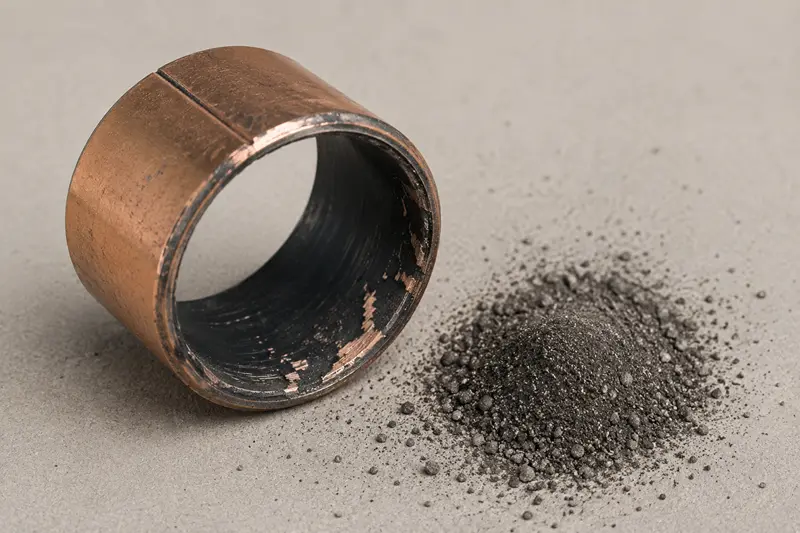
Your bushings are failing long before their expected lifespan, causing costly downtime and frequent replacements. The real cause of this rapid wear might not be what you think.
Bushings wear out too fast not because of the bushing itself, but due to system-level issues.[^1] The most common causes are a mismatch between the material and the application, poor lubrication, problems with the mating shaft, contamination, and unexpected impact loads. Fixing the system is the real solution.
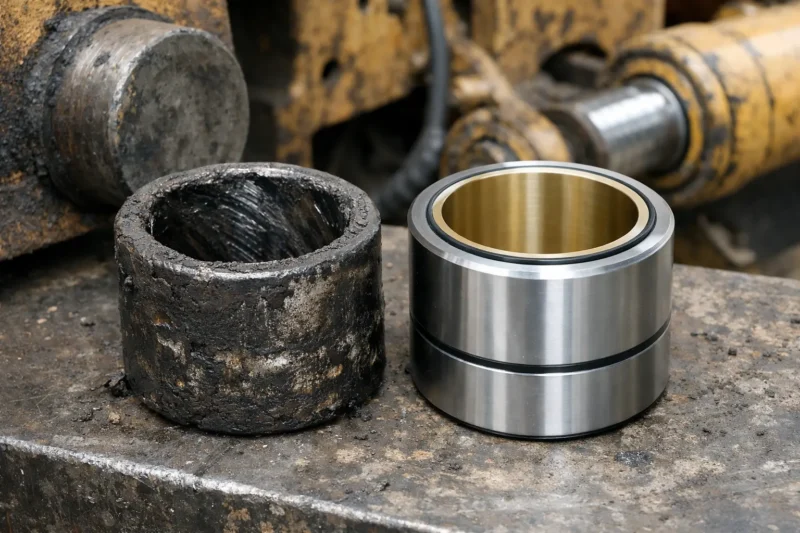
From my experience in our factory, I've seen countless cases of premature bushing failure. A customer will call, frustrated that the new bushings they installed only lasted a fraction of the expected time. Their first instinct is often to blame the bushing's quality or material. However, after talking with them, we usually discover the problem lies elsewhere in their system. Upgrading to a more expensive bushing rarely solves the problem if the root cause isn't addressed. Let's break down the five most common reasons we see for bushings wearing out too quickly.
Is the Bushing Material a Mismatch for Your Application?
You chose a high-quality bushing, but it still failed quickly. It's frustrating when expensive parts don't solve the problem, but the issue might be a mismatch, not poor quality.
Yes, a material mismatch is a frequent cause of rapid wear. Using a light-duty plastic bushing in a high-load application or a standard bronze bushing in a non-lubricated environment will lead to premature failure, even if the bushing itself is perfectly made.
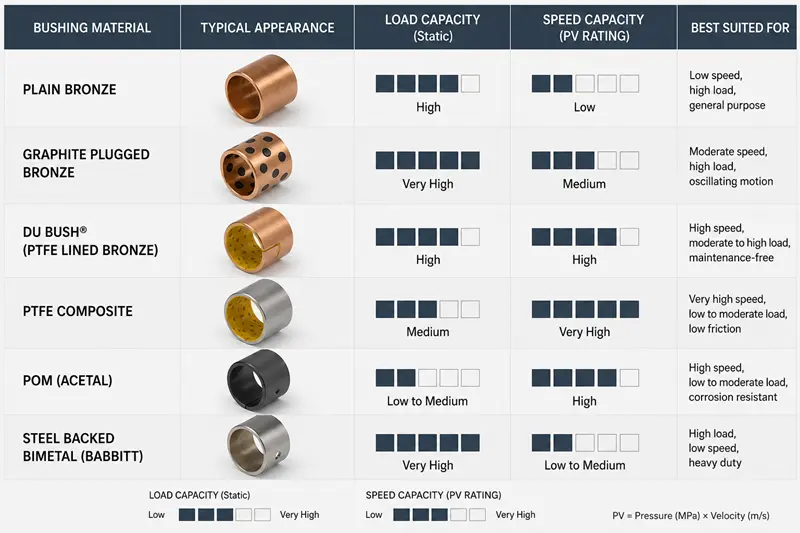
A bushing can be manufactured to the highest quality standards, but if it's placed in an environment it wasn't designed for, it will fail. It’s like using a sports car to haul gravel; the car isn't bad, it's just the wrong tool for the job. We often see this with new customers who are looking for a quick fix. They might request a "stronger" material, when the real problem is something else entirely. For example, a client operating equipment in a very wet environment kept having issues with their steel-backed bushings. The problem wasn't wear, it was that the steel backing was corroding and falling apart. The solution wasn't a harder material, but a different one. We switched them to a bronze-backed bushing, which resists corrosion, and their problem was solved. Analyzing the true operating conditions is always the first step.
Common Material Mismatches
| Operating Condition | Wrong Bushing Choice | Why It Fails Fast |
|---|---|---|
| High Load, Slow Speed | Standard Plastic Bushing | Deforms and wears quickly under the high pressure. |
| No Lubrication Access | Plain Bronze Bushing | Seizes from high friction and heat without oil. |
| Wet or Corrosive Area | Standard Steel-backed Bushing | Backing material rusts, causing structural failure. |
| High-Speed Rotation | Sintered Bronze (low oil) | Overheats because self-lubrication can't keep up. |
Is Poor Lubrication the Real Culprit?
You lubricate your machines regularly, but the bushings are still wearing down much faster than they should. This makes you question your entire maintenance schedule and the costs involved.
Absolutely. In our factory's experience, poor lubrication is behind the majority of premature wear cases. Issues like not using enough grease, using the wrong type, long service intervals, or poorly designed oil grooves prevent a stable oil film from forming, causing metal-to-metal contact and drastically accelerating wear.
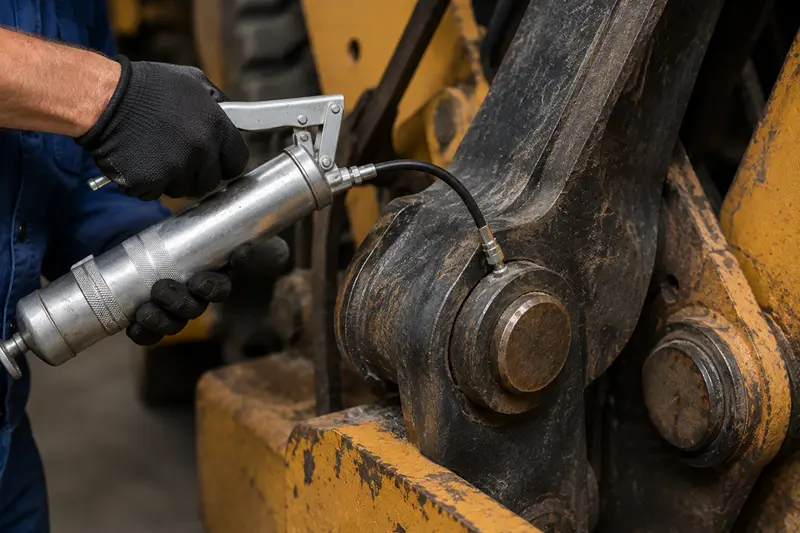
The primary job of lubricant is to create a thin film that separates the bushing surface from the shaft surface. When this film is present, friction is low and wear is minimal. But if that film breaks down, the two metal surfaces rub directly against each other. This instantly increases friction and heat, and the wear rate can increase by ten or even a hundred times. A well-lubricated bushing can last for years, while the exact same bushing with poor lubrication might fail in a matter of days. The problem is often more complex than simply "not enough grease."
The Wrong Grease
Not all grease is the same. A general-purpose grease might be fine for simple applications, but it will fail in demanding conditions. For example, high-temperature environments require a grease with a high-temperature rating, otherwise it will melt and run out. High-pressure applications need a grease with Extreme Pressure (EP) additives to prevent the oil film from being squeezed out. Using the wrong type of grease is a common and costly mistake.
Inadequate Supply
The oil grooves inside a bushing are not just for decoration. They are critical reservoirs that hold grease and help distribute it across the entire surface. If these grooves are blocked, or if they are not designed correctly for the type of movement (for example, using straight grooves for a rotating application), parts of the bushing will starve for lubrication. We once had a client whose bushings failed every few hundred hours. It turned out their maintenance team was only greasing half the required points. Once they restored the correct schedule, the bushing's lifespan tripled.
Could It Be a Shaft Problem, Not a Bushing Problem?
You find yourself replacing the same bushing over and over again on a piece of equipment. The cost and downtime are adding up, and it feels like there is no end in sight.
Yes, very often the root cause of the failure is the shaft, not the bushing. A shaft that is too soft, has a rough surface finish, is misaligned, or has scratches will act like a file, grinding down even the toughest bushing.[^2] The bushing and shaft must be viewed as a system.
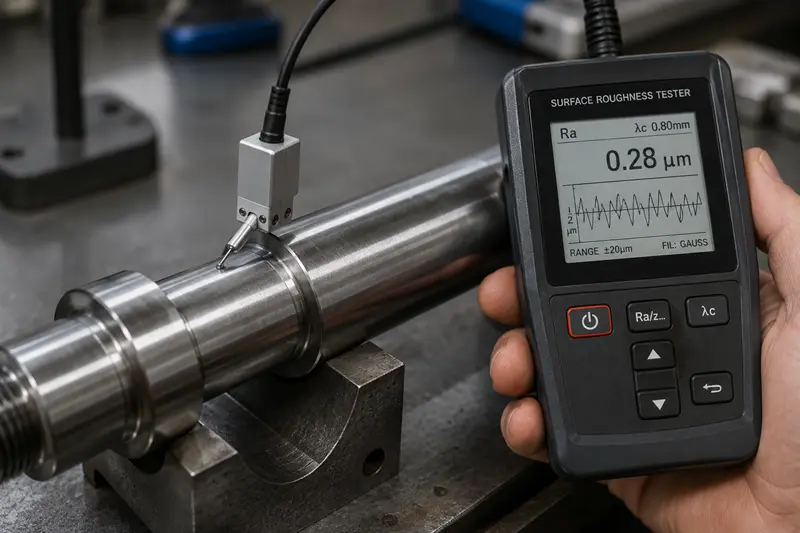
Many buyers focus all their attention on the bushing, because it's the part that is visibly failing. But the bushing is only half of the equation. I like to think of the shaft and bushing as work partners. If one partner isn't right, the team cannot perform well. No matter how high-quality your bushing is, it cannot survive if it is running against a damaged or unsuitable shaft. From our perspective as a manufacturer, we always ask about the shaft specifications. Ignoring the shaft is like building a strong wall on a weak foundation; the wall is destined to fail.
The Importance of Surface Finish
A shaft's surface may look smooth, but at a microscopic level, it has peaks and valleys. If the surface is too rough, those peaks will act like tiny cutting tools, shaving away the softer bushing material. This creates abrasive particles that get trapped in the assembly, making the wear even worse. On the other hand, a surface that is too smooth can also be a problem, as it may not hold lubricant effectively. There is an optimal surface finish range that balances low friction with good lubricant retention.
Key Shaft Problems
| Shaft Issue | How It Destroys the Bushing |
|---|---|
| Rough Surface | Acts like sandpaper, grinding away the bushing lining. |
| Low Hardness | Gets easily scored by debris, which then damages the bushing. |
| Misalignment | Creates uneven, high pressure on one edge of the bushing. |
| Scratches/Gouges | Creates sharp edges that shave off bushing material. |
Are Dust and Contamination Killing Your Bushings?
Your equipment operates in a tough, dirty environment like a construction site or a farm. The bushings are failing constantly, even though you are using a material that is supposed to be "wear-resistant."
Yes, dust, sand, and other abrasive particles are silent killers for bushings. When these contaminants get between the shaft and the bushing, they mix with the grease to create a grinding paste. This "abrasive wear" is far more destructive than normal friction and can destroy a bushing very quickly.
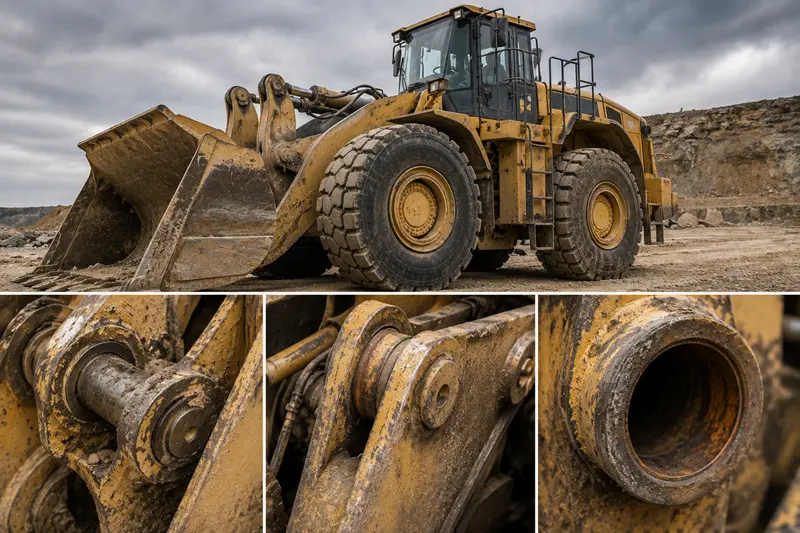
In heavy industries like construction, agriculture, and mining, equipment is constantly exposed to dirt and grit. Many customers in these fields call us looking for a more "durable" or "abrasion-resistant" bushing material. They believe the current material is too soft for the environment. However, the truth is that no standard bushing material is designed to survive a constant grinding process. The issue isn't the bushing's toughness; it's the failure to keep contaminants out of the bearing area in the first place. Once hard particles like sand or metal shavings get inside, they embed themselves into the soft lining of the bushing and begin to scratch and wear down the shaft.
Sealing is the First Line of Defense
The real solution to this problem is almost always better sealing. Worn-out seals, poor seal design, or a complete lack of seals are the true culprits. Before even considering a different bushing material, you must ensure that the assembly is properly protected from the outside environment. We always advise our clients in heavy industries to first inspect and upgrade their seals, wipers, and protective boots. Preventing contaminants from ever entering the system is far more effective and less expensive than trying to find a material that can resist them once they are inside.[^3] It is a perfect example of prevention being better than the cure.
Are Overloads and Impacts Accelerating Wear?
The bushing you installed is rated for the load of your machine, but it's still failing prematurely. You followed the technical specifications in the manual, but reality seems to be telling a different story.
Yes, uncalculated loads are a major factor in accelerated wear. Standard load ratings are for smooth, ideal conditions.[^4] Real-world operation involves shock loads from sudden stops, vibrations, and side loads that were not part of the original design calculation. These events create momentary pressure spikes that can far exceed the bushing's capacity, causing rapid fatigue and wear.
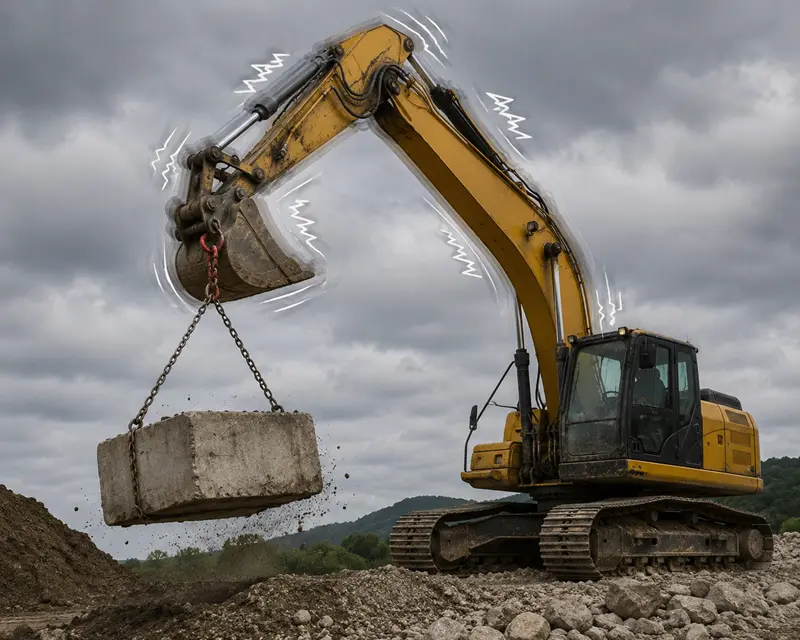
A bushing's load capacity is often listed in a catalog as a simple number, like a maximum pressure (N/mm²). This number is based on a steady, evenly distributed load. However, machines in the real world rarely operate so smoothly. Consider a hydraulic arm on an excavator. When it starts or stops moving a heavy load, it creates a powerful jolt. That jolt, or shock load, generates a force that can be many times higher than the machine's static lifting capacity. These peak pressures can literally squeeze the lubricating oil film out from between the shaft and the bushing for a split second, causing direct metal-to-metal contact.
The Peak Pressure Problem
This momentary peak pressure is the hidden enemy. It can deform the bushing's lining, create small cracks, and accelerate the fatigue process. Frequent starting and stopping, heavy vibrations, or forces that push the shaft to one side (deflection) all contribute to these damaging pressure spikes.[^5] For our OEM projects, we work closely with the design engineers to understand not just the machine's average workload, but also the worst-case scenarios. Sometimes, the best solution isn't the bushing with the highest static load rating. Instead, a material with better impact resistance or elasticity, like a fiber-wound composite bushing, might be the right choice because it can absorb these shock loads more effectively. It’s about matching the bushing to the true working conditions, not just the numbers on a spec sheet.
Conclusion
Fast bushing wear is almost always a system issue, not just a material issue.[^6] Before you spend more money on a material upgrade, analyze the lubrication, shaft condition, sealing, and actual loads. Finding the true root cause will save you far more money and downtime in the long run.[^7]
[^1]: "Aging Failure Mechanism of Transformer Bushing Sealing Rings ...", https://pmc.ncbi.nlm.nih.gov/articles/PMC12897839/. This source explains how system-level factors like lubrication, shaft condition, and contamination contribute to premature bushing wear. Evidence role: mechanism; source type: education. Supports: Bushings wear out too fast not because of the bushing itself, but due to system-level issues.. [^2]: "iglide® Plastic Bushings: Shaft Materials - Igus", https://www.igus.com/plastic-bearings/resources/plain-bearings-iglide-plastic-bushings-shaft-materials-ca?srsltid=AfmBOootIRCDoSvBpsQtljhdJDHSAv0TwDAseiJ_bflNVxpar4eq-s7e. This source explains how shaft properties like hardness and surface finish affect bushing wear. Evidence role: mechanism; source type: education. Supports: A shaft that is too soft, has a rough surface finish, is misaligned, or has scratches will act like a file, grinding down even the toughest bushing.. Scope note: The explanation may not address all possible shaft-related issues. [^3]: "Contamination in Vacuum Systems: Sources and Remedies", https://www.normandale.edu/academics/degrees-certificates/vacuum-and-thin-film-technology/articles/contaminations-in-vacuum-systems.html. This source emphasizes the importance of sealing systems in preventing contamination-related wear. Evidence role: expert_consensus; source type: institution. Supports: Preventing contaminants from ever entering the system is far more effective and less expensive than trying to find a material that can resist them once they are inside.. Scope note: The advice may not apply to all machinery types or environments. [^4]: "Chapter 6: Load Ratings and Load Postings", https://www.txdot.gov/manuals/brg/ins/chapter-6-load-ratings-and-load-postings.html. This source explains how load ratings are calculated and their limitations in real-world applications. Evidence role: definition; source type: education. Supports: Standard load ratings are for smooth, ideal conditions.. Scope note: The explanation may not cover all types of load ratings or machinery. [^5]: "The intelligent engine start-stop trigger system based on the actual ...", https://pmc.ncbi.nlm.nih.gov/articles/PMC8232425/. This source explains how operational factors like vibrations and deflection lead to pressure spikes in bushings. Evidence role: mechanism; source type: research. Supports: Frequent starting and stopping, heavy vibrations, or forces that push the shaft to one side (deflection) all contribute to these damaging pressure spikes.. Scope note: The examples may not cover all operational scenarios. [^6]: "[PDF] TESTING AND MAINTENANCE OF HIGH-VOLTAGE BUSHINGS", https://www.usbr.gov/power/data/fist/fist3_2/vol3-2.pdf. This source provides an overview of system-level factors contributing to bushing wear. Evidence role: expert_consensus; source type: education. Supports: Fast bushing wear is almost always a system issue, not just a material issue.. Scope note: The overview may not address all possible system-level issues. [^7]: "Root Cause Analysis: What It Is & How to Perform One", https://online.hbs.edu/blog/post/root-cause-analysis. This source discusses the economic benefits of addressing root causes in mechanical failures. Evidence role: general_support; source type: institution. Supports: Finding the true root cause will save you far more money and downtime in the long run.. Scope note: The economic analysis may not apply to all industries or machinery types.