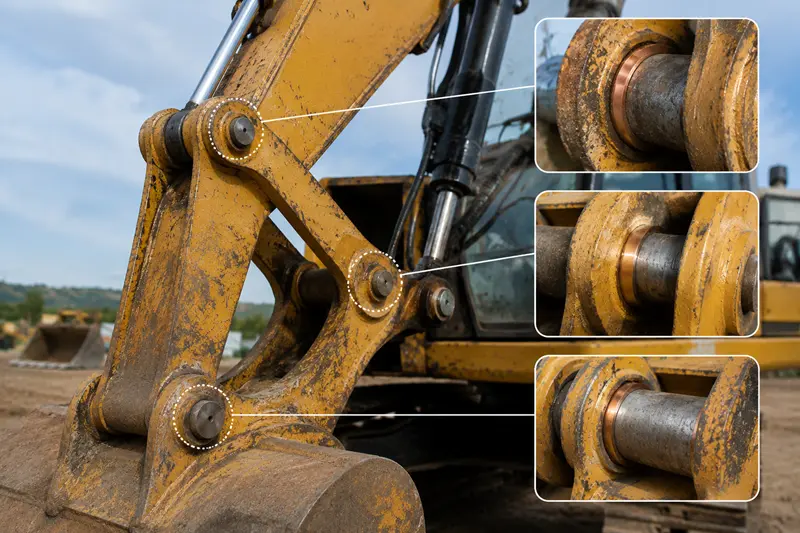
Bushings in your heavy machinery failing too soon? This means unexpected downtime and repair costs that hurt your bottom line. We see it all the time from a factory perspective.
Bushings in construction equipment often fail because of a combination of factors. It's rarely just about heavy loads. The real culprits are usually shock loads, misalignment, dirt contamination, and lubrication failure all happening at once, creating a harsh environment that overwhelms the part.
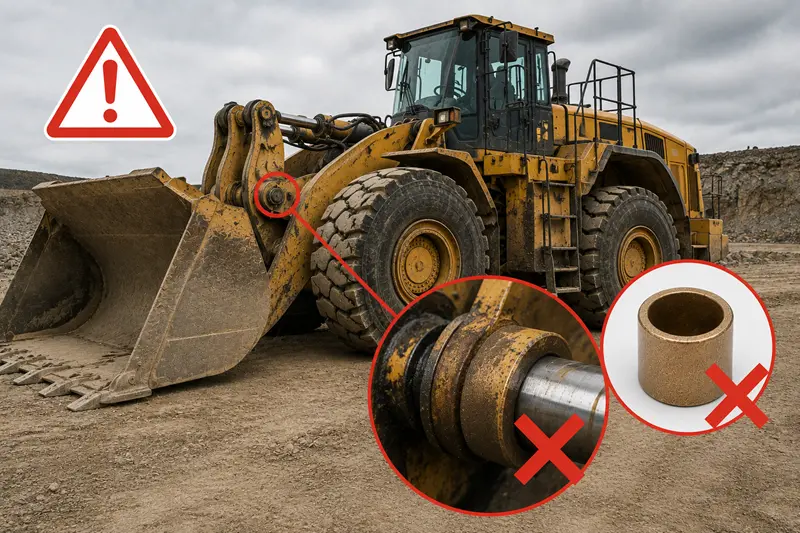
Many buyers think the solution is just a stronger material. But as a manufacturer, I can tell you the problem is more complex. To find a real, long-lasting solution, we need to look at how these parts actually work—and fail—in the field. Let's break down the real reasons your bushings are giving out.
How Do Shock Loads and Misalignment Destroy Bushings?
You've noticed uneven wear on your bushings. Sometimes, the expensive pins are getting damaged too. This happens when the load isn't spread out evenly across the bushing's surface.
Shock loads and misalignment force all the pressure onto a very small area of the bushing.[^1] This is called edge loading. It creates intense localized stress that can quickly wear down, deform, or even crack the bushing, leading to failure much faster than you'd expect.
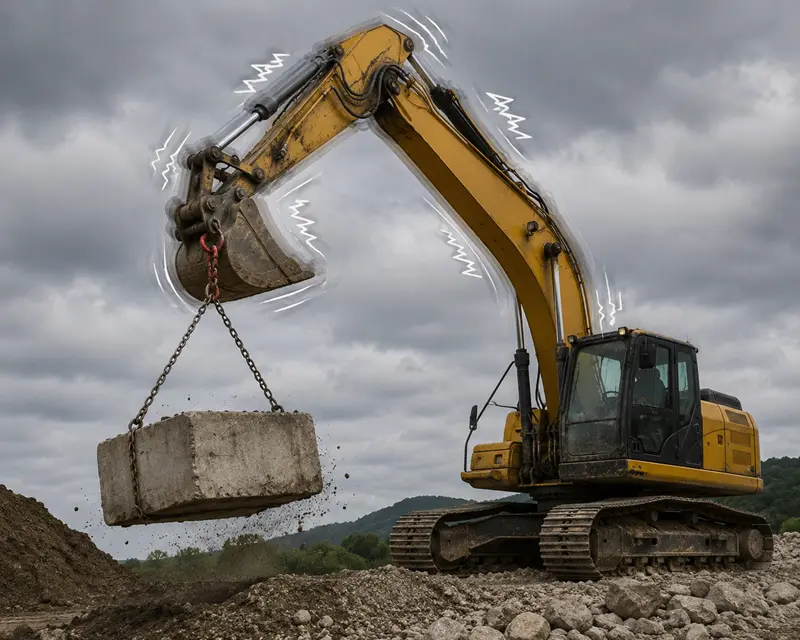
Construction equipment like excavators and loaders don't operate smoothly. Their arms and buckets are constantly starting, stopping, and digging. These movements create sudden, high-impact forces, or shock loads. At the same time, perfect alignment is rare in the real world. The pin and the bushing are often slightly off-center. When you combine a shock load with this misalignment, the entire force of the machine gets concentrated on the edge of the bushing.
Think of it like trying to balance on the very edge of your heel instead of your whole foot. The pressure is immense. This localized stress causes rapid, single-sided wear and can even deform the steel backing of a composite bushing. A laboratory test under a perfect, steady load will never show this type of failure.[^2] As a factory, we must consider this reality when recommending or designing a bushing for heavy machinery.
| Failure Factor | Ideal Laboratory Condition | Real-World Construction Site |
|---|---|---|
| Load | Static, evenly distributed | Dynamic, with high shock loads |
| Alignment | Perfectly concentric | Often misaligned, causing edge loading |
| Result | Predictable, even wear | Unpredictable, rapid localized wear |
Can Dirt and Poor Lubrication Act Like Grinding Paste?
You're greasing your joints regularly, but the bushings are still wearing out at an alarming rate. It feels like you're wasting time and money on maintenance that isn't working.
Absolutely. When dirt, sand, or dust gets into a greased joint, it doesn't just sit there. It mixes with the grease and creates a thick, abrasive slurry. This mixture acts exactly like a grinding paste, aggressively wearing away both the bushing and the pin with every movement.
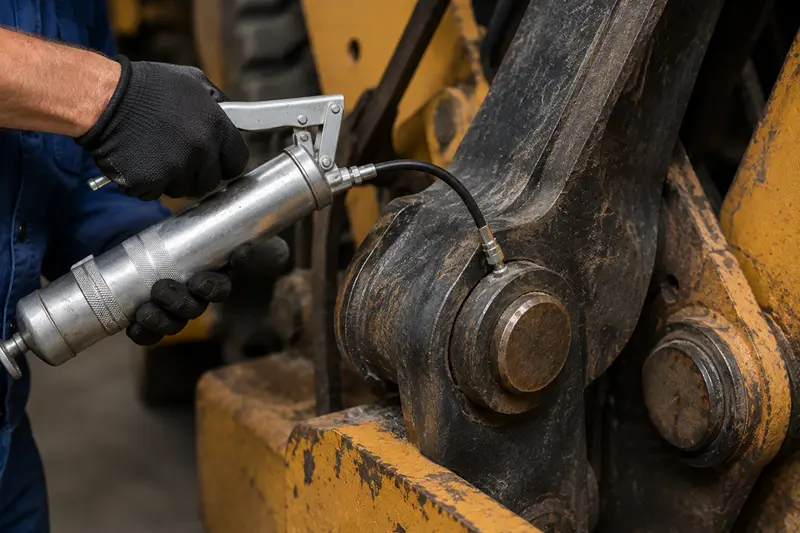
Construction sites are full of abrasive particles.[^3] Dust, mud, and sand are everywhere. Even the best seals can't keep everything out forever. Once these contaminants get inside a bearing joint, they embed themselves in the grease. The lubricant, which was supposed to reduce friction, now becomes a carrier for these abrasive particles.
Every time the joint pivots or oscillates, this "grinding paste" is scraped back and forth between the pin and the bushing. This process, called three-body abrasion, is incredibly destructive. It causes deep scratches and scoring, quickly ruining the smooth surfaces needed for low-friction operation. In my experience, this grinding effect often causes more damage than the actual operational loads. It explains why a joint can fail even when the machine isn't working at its maximum capacity. Proper sealing and lubrication strategies are critical to prevent this destructive cycle from starting.[^4]
The Abrasive Wear Cycle
- Contamination: Dust and sand bypass worn seals and enter the bearing area.
- Mixing: The particles mix with the grease, forming an abrasive slurry.
- Abrasion: Movement grinds this paste between the pin and bushing, causing scratches and rapid wear.
- Failure: The components quickly wear beyond their tolerances, leading to a loose joint and eventual failure.
Why Isn't a "Harder" Bushing Always the Best Solution?
Your first instinct after a failure is to ask for a "harder" or "more wear-resistant" bushing. But then that new bushing either cracks or, even worse, destroys the expensive pin.
A harder bushing isn't always better because the joint is a system.[^5] A very hard material can be brittle and crack under shock loads. It also transfers abrasive wear to the softer mating pin, causing a more expensive failure. The best solution balances hardness with toughness and compatibility.[^6]
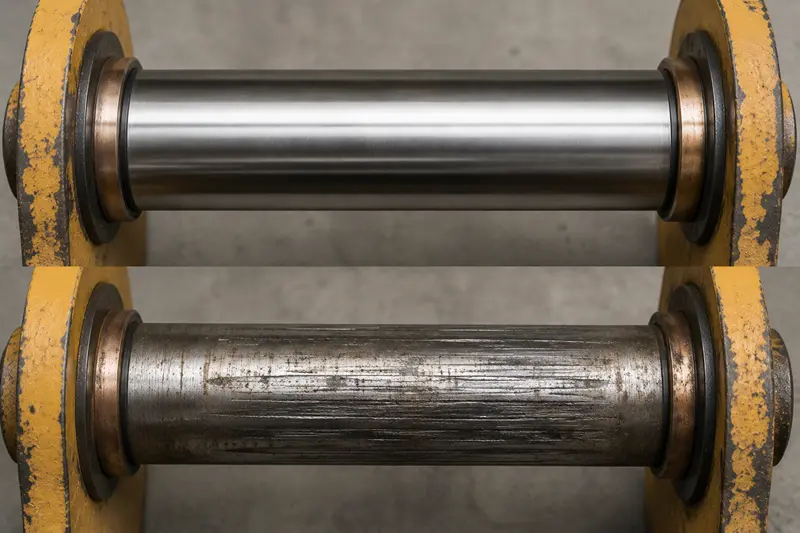
When we see a worn-out bushing, it's easy to blame the material for not being "tough enough." But switching to a much harder material, like a hardened steel bushing, can create new problems. While it might resist abrasive wear from dirt, it has very little "give." Under the intense shock loads common in construction, it can simply crack.
Furthermore, a very hard bushing offers no protection for its mating part—the pin. If abrasive particles get in, the hard bushing will just grind them into the softer pin, destroying it. Now you have to replace a much more complex and expensive component. A good bushing should sometimes act as a sacrificial part, protecting the more valuable components of the assembly. This is why we, as manufacturers, look at the entire system. We need to choose a material that works with the pin, the loads, and the environment.
| Material Type | Pros | Cons | Best Use Case |
|---|---|---|---|
| Hardened Steel | Very high wear resistance | Brittle, can crack; damages the pin | High load, clean environment |
| Bronze | Good balance of strength & wear | Requires constant lubrication | General purpose, lubricated joints |
| Composite | Self-lubricating, absorbs shocks | Lower static load capacity | Oscillating, hard-to-lube joints |
Conclusion
Bushing failure in heavy equipment is a system problem, not just a material one. A lasting solution means looking at loads, alignment, contamination, and lubrication all together to find the right balance.
[^1]: "Challenging Edge Loading", https://thordonbearings.com/docs/default-source/hydro-power/technical-papers/challenging-edge-loading---a-case-for-homogeneous-polymer-bearings-for-guidevanes.pdf?sfvrsn=18a18abe_8. This source explains how shock loads and misalignment contribute to edge loading and localized stress in bushings, leading to premature wear and failure. Evidence role: mechanism; source type: research. Supports: Shock loads and misalignment create edge loading, causing intense localized stress that leads to rapid wear or deformation of bushings.. Scope note: The study may focus on specific machinery types, which could limit generalizability. [^2]: "Structural & Load Testing", https://clarktesting.com/service/mechanical-structures-fatigue-load-testing/. This source contrasts laboratory testing conditions with real-world dynamic loads and misalignment in machinery. Evidence role: case_reference; source type: education. Supports: Laboratory tests under steady loads fail to replicate real-world conditions like dynamic loads and misalignment that cause bushing failures.. Scope note: The findings may be specific to certain types of laboratory tests or machinery. [^3]: "Silica, Crystalline - Overview", http://www.osha.gov/silica-crystalline. This source highlights the prevalence of abrasive particles like dust and sand in construction environments and their impact on machinery. Evidence role: general_support; source type: institution. Supports: Construction sites contain abundant abrasive particles that can infiltrate machinery joints and cause wear.. Scope note: The source may focus on specific types of construction sites, limiting its general applicability. [^4]: "Tech Brief: Joint Sealing - Federal Highway Administration", https://www.fhwa.dot.gov/pavement/pubs/hif18019.pdf. This source emphasizes the importance of sealing and lubrication strategies in preventing abrasive wear in machinery joints. Evidence role: expert_consensus; source type: research. Supports: Effective sealing and lubrication strategies are essential to prevent abrasive wear caused by contaminants in machinery joints.. Scope note: The findings may focus on specific sealing and lubrication methods, limiting their general applicability. [^5]: "Material Compatibility - an overview", https://www.sciencedirect.com/topics/engineering/material-compatibility. This source explains why harder materials can lead to brittleness and increased wear on mating parts in mechanical systems. Evidence role: expert_consensus; source type: education. Supports: Harder bushings can crack under shock loads and transfer wear to softer mating parts, making them unsuitable for all applications.. Scope note: The discussion may focus on specific material types, limiting its applicability to all bushing systems. [^6]: "Mass balance", https://en.wikipedia.org/wiki/Mass_balance. This source discusses the importance of balancing material hardness, toughness, and compatibility in mechanical systems. Evidence role: expert_consensus; source type: education. Supports: Balancing hardness, toughness, and compatibility is essential for selecting materials in mechanical systems like bushings.. Scope note: The findings may focus on specific material combinations, limiting their general applicability.